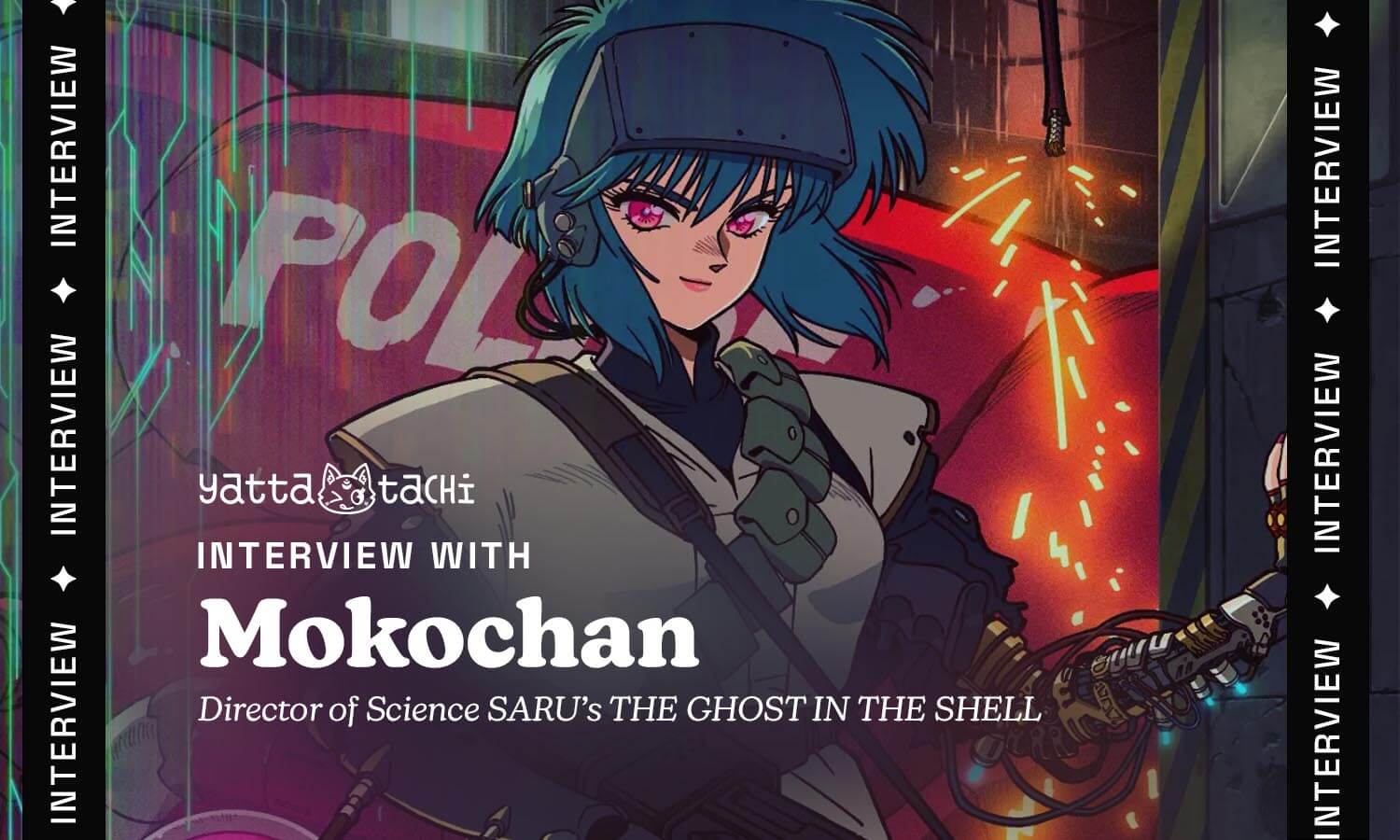
Shirow Masamune’s Ghost in the Shell is one of the most influential manga series ever made. It’s also been adapted into anime many times, including Mamoru Oshii’s 1995 film, as well as the television series Ghost in the Shell: Stand Alone Complex. Yet while these adaptations have borrowed characters, images, and plot points from the original, there has never been a strictly faithful animated version of the manga. Until now, that is, with Science SARU’s THE GHOST IN THE SHELL.
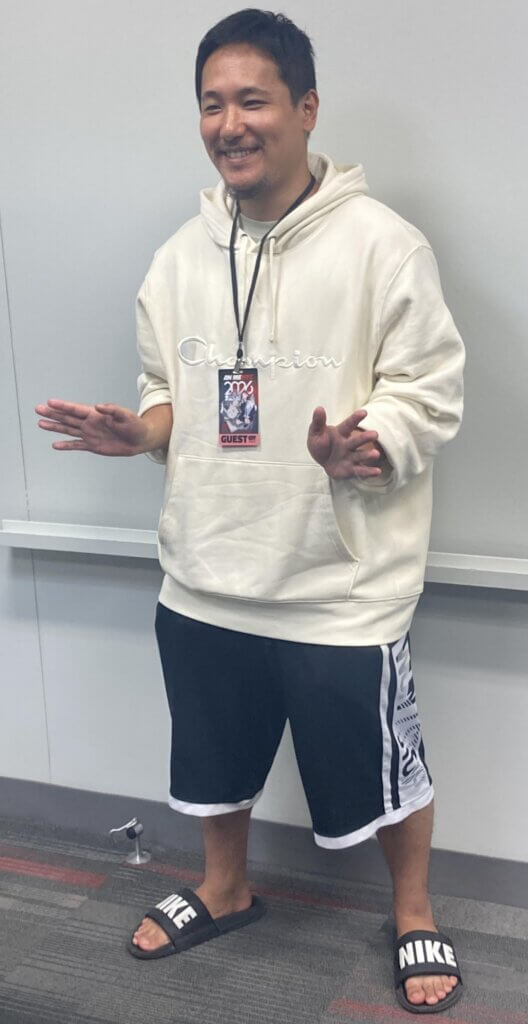
This new adaptation is directed by Mokochan, who has rapidly become one of Science SARU’s premiere directors. His episode of Scott Pilgrim Takes Off, “Ramona Rents a Video,” is my pick for best in the series. He’s also contributed excellent work to The Heike Story and Dandadan. For THE GHOST IN THE SHELL, Mokochan sought to embrace his power as a “drawing machine” and capture the spirit of Shirow’s original manga series.
Yatta-Tachi had the chance to speak to Mokochan at Anime NYC as part of a roundtable interview. Our conversation touched on such topics as Mokochan’s “origin story,” his thoughts on generative AI, and why he travelled to Kobe so he could understand Shirow’s sense of humor.
Director Machine
INDIEWIRE: The first Ghost in the Shell movie is one of the most influential anime of all time. How did it feel to return to the source material and readapt it with that kind of legacy behind it?
MOKOCHAN: I’ve always been a fan of Mamoru Oshii’s film. I also have a lot of respect for its influence as someone who works in the anime industry. There’s an undeniable pressure that comes with readapting it. But I’ve been focusing on the quality to make sure it’s at the level of what Mamoru Oshii’s film was able to depict.
ANIME HERALD: How does a drawing machine evolve into a director machine?
MOKOCHAN: For clarification, do you mean motivation-wise?
ANIME HERALD: I mean developing the skills. It’s one thing to draw a series, but to direct, you need a larger perspective.
MOKOCHAN: As an animator, you’re only ever given the storyboards beforehand and told to draw the animations for each cut. But the more I drew, the more I felt the desire to create storyboards. To say, “I want this cut to transition into this cut.” That was my first step to becoming a director.
Also, I’ve always liked movies in general. As I’ve created more storyboards, I’ve wanted to be even more involved in the process.
“A mockumentary of Shirow-sensei’s world”
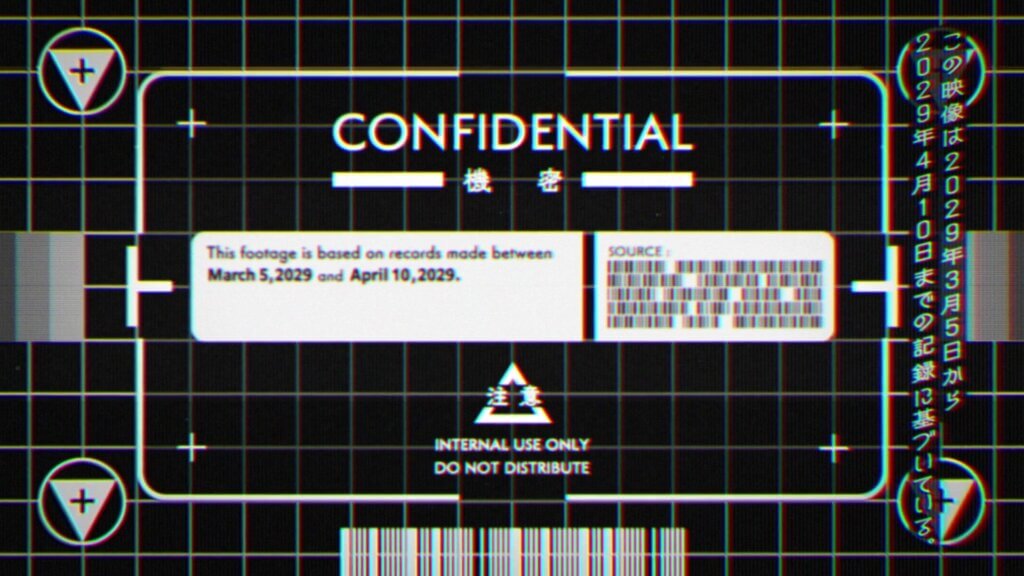
YATTA-TACHI: Many scenes in your adaptation THE GHOST IN THE SHELL are framed as video footage, a distinction that is not in the manga. What was the staff’s reasoning behind that decision?
MOKOCHAN: The concept of Shirow Masamune’s original work is that the scenes depicted are “real events” that happened within the world he created. While reading the manga, I felt that things were also happening outside what we saw on the page. You could say the manga is like a mockumentary of Shirow-sensei’s world in that respect. I wanted to capture that feeling when adapting it to the anime.
BENTO RADIO: THE GHOST IN THE SHELL has been a much more serious property in the past. Is it daunting to take it in a more comedic direction considering how famous it is?
MOKOCHAN: Most of the audience is familiar with Mamoru Oshii’s Ghost in the Shell film with its more serious vibes. The original manga has a more comedic side to it. So there was some worry that people might be surprised by the sudden shift in tone. That said, even though Shirow-sensei’s manga had its comical aspects, the themes themselves were psychological and spiritual in nature. The challenge was balancing out the jokes with the serious themes.
A New Understanding of AI
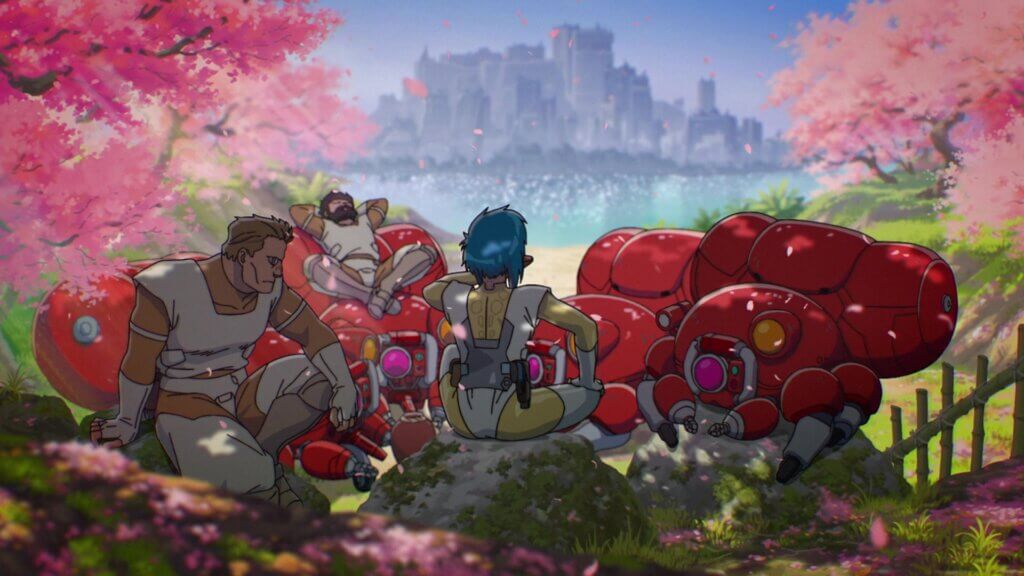
YAHOO! NEWS: This work explores AI, cybertechnology, and what it means to be a human. Has the rise of generative AI changed how we view THE GHOST IN THE SHELL today?
MOKOCHAN: I think that the rise of AI has increased the understandability of this work. Back in the 90s, when this series first came out, I’m sure many readers didn’t quite understand the power of AI. Now that we’ve actually been able to interact with AI in real life, I think we can understand what Shirow-sensei was saying better than before.
One example that I fondly remember is that in the series, the characters use brainwaves to communicate. In the 90s, though, Wi-Fi wasn’t a familiar concept, so people had no idea what they were actually doing. “Were they using telepathy?” they asked. Now that we have a deeper understanding of these technologies, it’s the perfect time to revisit the series.
DOCTOR ANIME: Anime characters traditionally wear the same outfit to streamline production. Yet your team designed an incredible 38 outfits for Mokoto Kusanagi. Between that, and recreating Shirow’s intricate typography entirely by hand without generative AI, what was the most agonizing part of building such a meticulously detailed world?
MOKOCHAN: Quite honestly, it was fitting all of that within the schedule. Does that answer your question?
100-200 kg
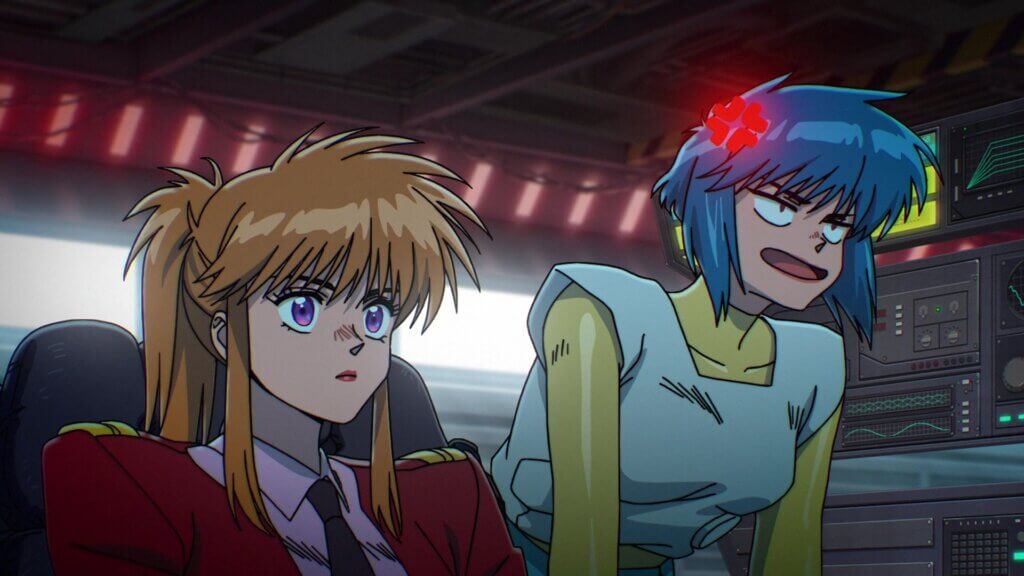
INDIEWIRE: Can you talk about capturing the retro look of the original manga? The show looks like a 90s anime in terms of art style, and I’m curious how the team at Science SARU figured out that look.
MOKOCHAN: When it comes to the art style itself, I don’t think it’s that retro. I just like the art style that Shirow Masamune drew in his original manga, so I tried to recreate it as much as possible. But one thing I did focus on was the character outfits and hairstyles. The outfits are more what we’d consider “bubble fashion,” from the 90s. I did some research into capturing that as much as possible.
ANIME HERALD: How much effort did you put into capturing the weight and density of Motoko Kusanagi? Specifically the scene where she jumps, flies gracefully and lands like a bowling ball.
MOKOCHAN: Kusanagi is a combat cyborg, so there is a lot of machinery built within her. There’s no official document about her actual weight, but I estimate it’s around 100-200 kg. [Roughly 220-440 pounds.] I made sure to depict that amount of weight when drawing debris.
“The reason why I came to like zombies”
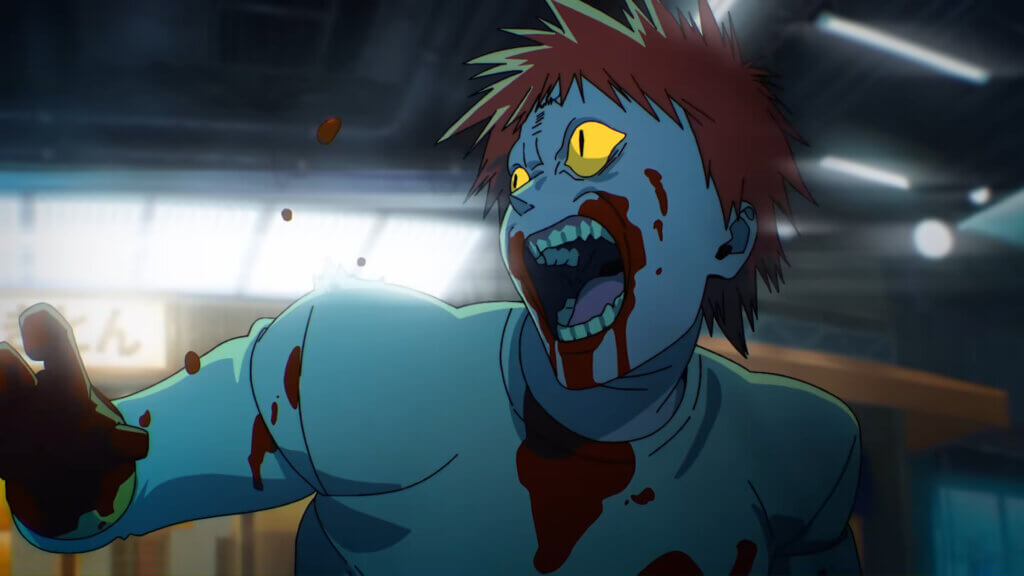
YATTA-TACHI: In a recent magazine interview, you said that two films that influenced you were Eyes Wide Shut and the remake of Dawn of the Dead. When did you see those films, and what did you find most interesting about them?
MOKOCHAN: Both movies I watched for the first time in middle school. The camerawork in Eyes Wide Shut was so clean and neat. That was the first time I really internalized the usage of the camera. As for Dawn of the Dead, that was the first zombie movie that I watched, and it’s the reason why I came to like zombies.
DOCTOR ANIME: This is the first time that you’ve directed a whole series. How different is it from contributing key animation or episode directing?
MOKOCHAN: The biggest factor is the communication aspect. The amount of things I had to talk about with my colleagues was a lot more than I had to do before. The whole idea of creating this work together with various people, and to share the same vision with everyone, was the biggest difference.
“You are still yourself”
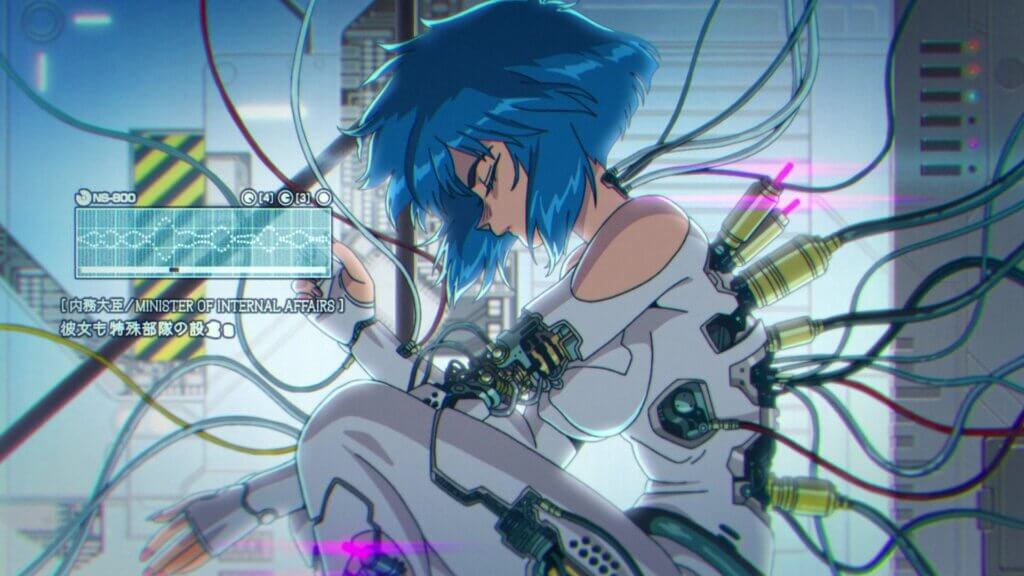
YAHOO! NEWS: Ghost in the Shell has influenced SF writers and filmmakers around the world. Why do you think it has remained influential for so long?
MOKOCHAN: I think what’s made Ghost in the Shell beloved for so many years is the relevancy of its themes. Its question, “What does it mean to be a human?” is something that we ponder even today.
DOCTOR ANIME: You’ve spoken about adopting the pseudonym Mokochan after deciding to discard your sense of self and become a pure drawing machine. The line between a human ghost and a cybernetic machine is a central theme in THE GHOST IN THE SHELL. Did this philosophy of erasing your own self change the way you thought about its cybernetic characters?
MOKOCHAN: That’s a very difficult question. As someone who’s always talking about throwing myself away to become a drawing machine, even then, my personality comes out in the art that I draw. There’s a comparison you could draw to THE GHOST IN THE SHELL in that no matter how many body parts you change into machinery, you are still yourself. You can’t completely throw away your own individuality.
“They’re all good dogs”
INDIEWIRE: Was there a standout sequence in the series that was particularly difficult for you to animate? How did you and your team overcome that challenge?
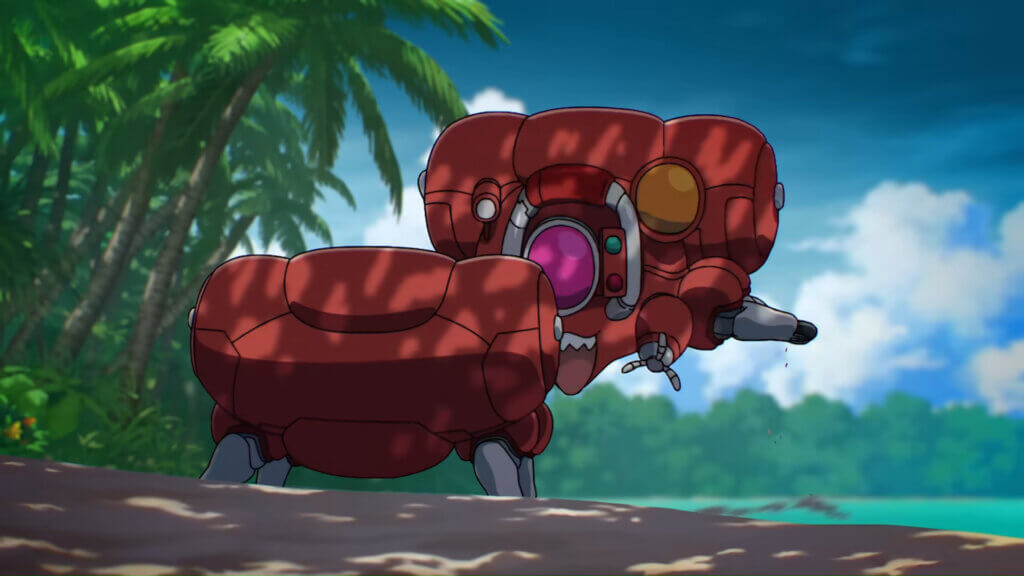
MOKOCHAN: The conversation scene between the Puppet Master and Kusanagi, which takes place within the neural network. The Puppet Master has no face, so it’s hard to express their emotions or what they’re saying, even though all the lines that they’re saying are very complex.
ANIME HERALD: What is your origin story? How did you decide that you wanted to enter the industry?
MOKOCHAN: At the start, I tried different jobs to find a fit for me. The first industry didn’t work out too much. But I’ve loved anime since I was little. So I came to the industry to try it out, and it lasted a lot longer than I thought it would.
YATTA-TACHI: Mamoru Oshii, who directed the earlier Ghost in the Shell film, famously loves basset hounds. What is your favorite breed of dog, and if you don’t like dogs, what is your favorite animal?
MOKOCHAN: I do like dogs, but I’ve never thought about my favorite breed of dog. I like all kinds.
ANIME HERALD: They’re all good dogs.
Expressing My Own Perspective
BENTO RADIO: The animation style of THE GHOST IN THE SHELL reminds me of Scott Pilgrim Takes Off. Was the similarity intentional, and if so, what inspired that visual direction?
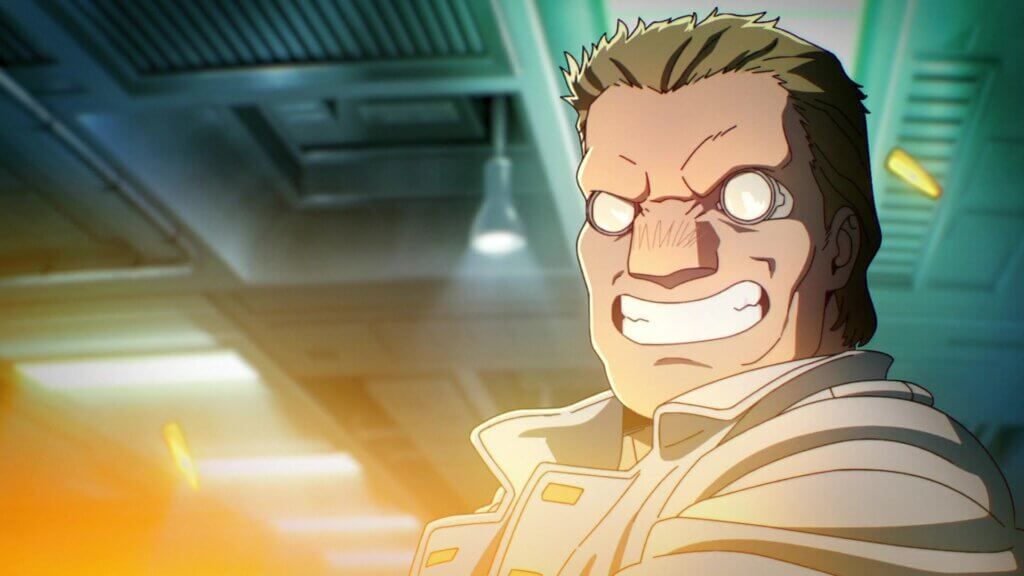
MOKOCHAN: That similarity is not intentional. But this goes back to one of the previous answers: a lot of the things that I draw, I draw without intent. The stylistic similarities might just come from my personality. [Editor’s Note: The character designer for THE GHOST IN THE SHELL, Shuhei Handa, was also the character designer for Scott Pilgrim Takes Off.]
YAHOO! NEWS: Nowadays, AI can be used even by the common people. Do you believe that its usage is a threat, or more a thing that people should utilize for the future?
MOKOCHAN: There are two layers to this answer. The first is the commercial layer. Because of the use of AI, inevitably the structure of the commercial sphere will change. In this respect, people should tread carefully in using it. The second layer is the artistic layer. I personally don’t feel threatened by AI, because when I express myself using art, I believe I am expressing my own perspective towards a work. If someone were to use AI to produce work, that’s also just another method to depict their own perspective. We’ll just leave it at that.
“A spiritual communion”
DOCTOR ANIME: You said that to capture the unique comedic sense of the original manga, you sought a spiritual communion with Shirow Masamune to the point of fusing with the work. What was the exact scene or moment in production when it finally clicked and you felt that spiritual communion actually happened?
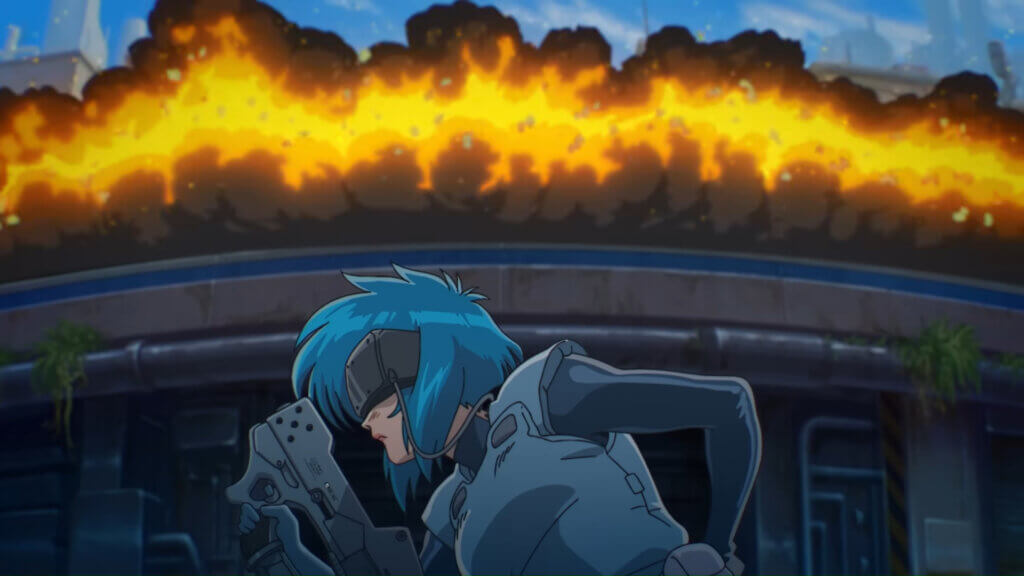
MOKOCHAN: There was a point that it clicked, which is when I understood Shirow-sensei’s sense of humor. From the start, Shirow-sensei and I have very different upbringings. He is from Kobe, which is in the Kansai region, the western side of Japan. They love to joke around and have fun. I was born in Miyagi, where people don’t joke around. There’s a lot of points when I was working on the series when I would look at Shirow-sensei’s jokes and think, “Why would he add that here?” So to understand the culture, I went to Kobe and interacted with the people. As I continued my research, I started to think, “Oh, wouldn’t it be funny if…”
Article edited by: Anne Estrada
Big thank you to our supporters
From their continous support, we are able to pay our team for their time and hard work on the site.
We have a Thank-You page dedicated to those who help us continue the work that we’ve been doing.
See our thank you page