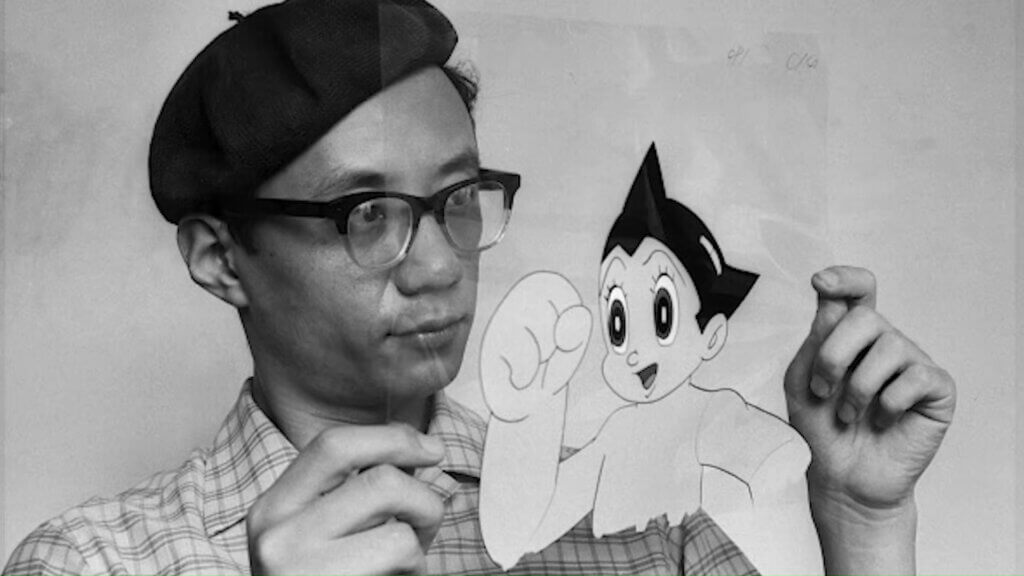
The upcoming documentary TEZUKA! God of Manga represents yet another attempt to understand the importance of manga artist and anime director Osamu Tezuka. It features interviews with artists and Tezuka fans from around the world including Samuel Sattin (Unico Awakening) and Naoki Urasawa (Monster). But director Jason Andrew Cohn (EAMES: The Architect and the Painter) and his crew can’t do it alone; they’re launching a Kickstarter to help fund and raise awareness for the project.
As part of that process, Cohn was kind enough to answer some questions from us at Yatta-Tachi regarding the upcoming documentary. Subjects of our discussion include Cohn’s favorite Tezuka manga, whether Tezuka should be blamed for the current anime industry’s bad work conditions, and why the Trump administration’s refusal to fund the arts has required that his team get creative in order to produce their documentary.
When The Seed Was Planted
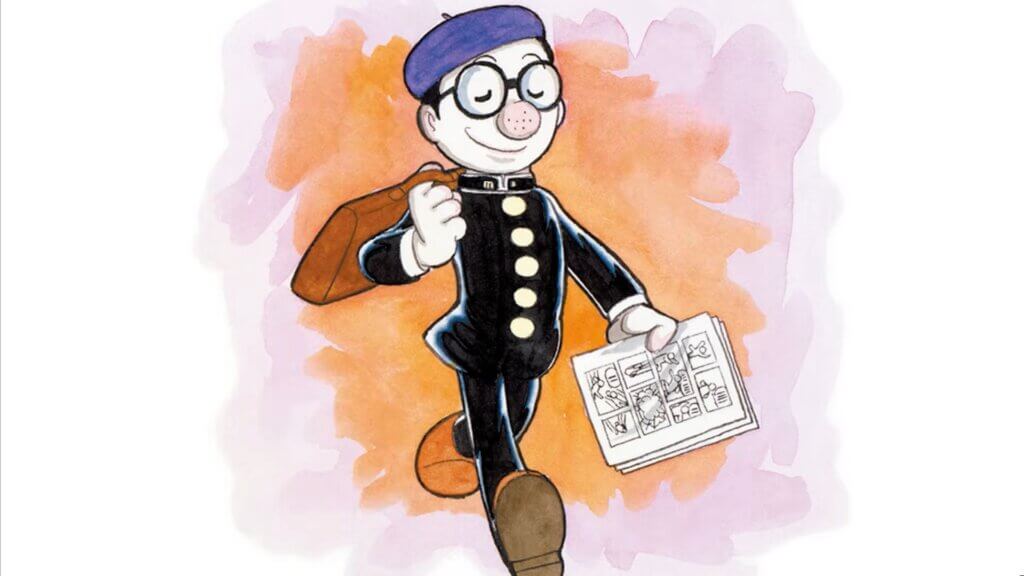
ADAM WESCOTT: How and when did you first discover Osamu Tezuka? Through one of his manga, or an anime that he helped make? Do you remember the specific title, and what you thought?
JASON ANDREW COHN: I first found out about Tezuka decades ago because I was living in Sapporo. I was trying to get better at reading Japanese, so reading manga was a good way to practice. My roommate, who was Japanese, had a really big collection of manga, so I tried reading some of his books. He was into some pretty avant garde mangaka, and I found the language and the humor a little hard to understand because it was very Japanese and I wasn’t ready for it. So my roommate told me I should “start at the beginning” and read Osamu Tezuka.
I went to a bookstore and bought the first thing that caught my eye, which was Fushigi na Shōnen. It’s not one of Tezuka’s most famous stories. It’s a series about a boy named Saburo who has the superpower of being able to stop time by yelling “Stop time!” Then he can fix problems around him because he’s the only one who can move around and do things while everyone else is frozen in time. I thought that was cute, but it was targeted at little kids, and I was in my twenties. So I went back to the bookstore and picked up another book by Tezuka, which was called Gringo. Gringo is very much a seinen manga about a Japanese businessman living in South America who gets involved in a scandal.
The main thing I remember thinking was that it was amazing the same author had written these two completely different stories. That’s what impressed me most, that this was an artist who could work in completely different styles and genres. The more I’ve learned about Tezuka the more I continue to be amazed by him.
It took me many years after that to decide to make a documentary about him, but that was when the seed was planted.
Sophisticated Messages, Entertaining Storylines
WESCOTT: What is your favorite work by Osamu Tezuka, and why?
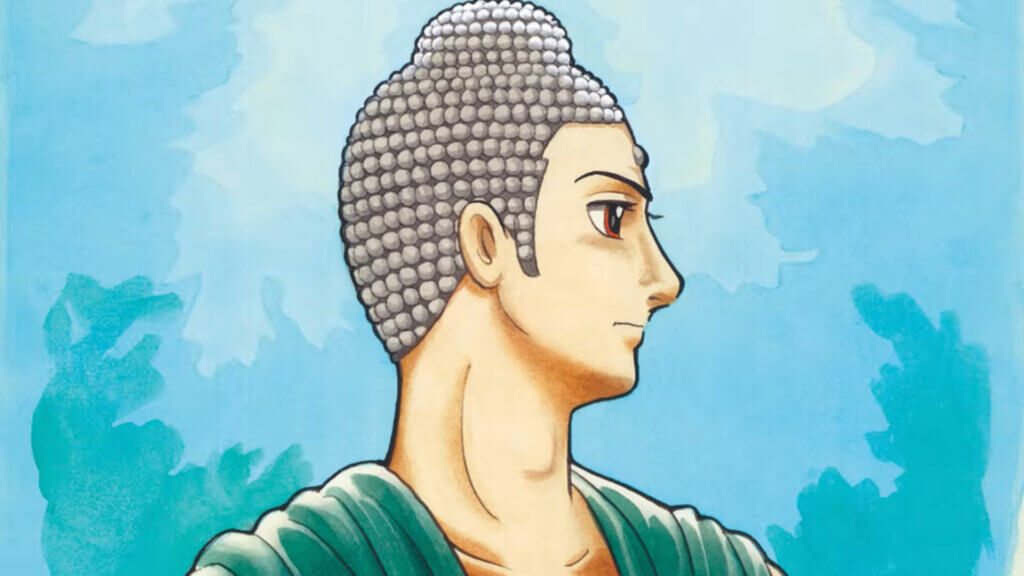
COHN: It’s hard to choose a favorite because he did so many things and evolved so much from one decade to the next. But I read Buddha with my son recently, and that was a great experience. Buddha has awesome characters and fun adventure elements, so for my son it reads like an action story. But it also has deep spiritual and philosophical layers that I appreciated as an adult with an interest in philosophy. Tezuka’s ability to weave sophisticated messages into entertaining storylines sets him apart from other artists, in my opinion.
WESCOTT: Osamu Tezuka’s anime adaptation of Astro Boy was influential not just for proving serialized narrative animation could work on television, but that it could be done very cheaply. As a result, multiple generations of animators in the industry have been overworked and underpaid. How does this complicate Tezuka’s creative legacy?
COHN: It’s an interesting question that we hope to explore in some detail in the documentary. It’s true that the industry can be very exploitative of animators, especially young animators who are trying to break into the business. And it’s true that a lot of people think Tezuka established that template at Mushi Pro, because he agreed to make the first episodes for Fuji TV with ridiculously low budgets. I think Miyazaki, for example, has criticized Tezuka for that.
On the other hand, I don’t think Tezuka in 1963 was trying to create a standard for how animation would be financed in Japan for all eternity. He was just trying to do something that he was passionate about and had never done before in Japan. He was willing to lose money because he loved doing it so much and he could always finance the animation with his manga revenue.
“He really cared about the work”

COHN: I’ve talked to people who worked at Mushi Pro in the early years, like Rintaro, Masao Maruyama and Yoshihiru Tomino, who told me that they thought they were paid quite well at the time. The pay was at least as good as what they would have gotten at Toei. They considered Mushi Pro to be a place where artists were respected. The work environment could be chaotic because Tezuka wasn’t necessarily a great manager or businessman. But he really cared about the work and they appreciated that. If you haven’t read it, the guy who writes the Animétudes blog has researched this extensively and did a thorough job of it.
You’d also have to admit that the cost-saving innovations they came up with at Mushi Pro to work with such low budgets became stylistic innovations that created the aesthetic of Japanese animation, which is now popular all around the world and made a lot of Japanese artists pretty rich. I love those kinds of unexpected consequences. So while I don’t think it’s a simple answer, I also don’t think it’s right to blame Tezuka for all the problems in the anime industry.
WESCOTT: Your previous documentaries, such as EAMES: The Architect and the Painter as well as Modernism, Inc., show the influence of individual artists on modernism and design. How does Tezuka fit within this framework? Does he complicate it in any way?
COHN: That’s an interesting question! I haven’t really thought about whether I’d call Tezuka a modernist. [Interviewer’s note: Per Ghibli Blog, Miyazaki was quoted by Yumiuri Shinbun saying that Tezuka “realized the absurdity of modernism more deeply than Disney.”] Some of the experimental animation created in the early years at Mushi Pro relates to modernist work created by American animation studios like UPA, which I like a lot.
“Failure is fascinating!”
COHN: Beyond that, I’d just say that as a documentary filmmaker there are many similarities between Tezuka and the American artists I talked about in those films. He had a long and varied career, so from a storytelling perspective it’s a similar challenge to figure out how to fit so much interesting stuff into 75 minutes or so. He also fits in because all these films take place primarily in the postwar period.
Postwar America and postwar Japan are very different, but equally fascinating. I studied Modern Japanese History in college and am excited to figure out how to weave some of that history, of how Japan emerged from the devastation of war to become a rich and powerful nation with a globally influential culture, into Tezuka’s story. I personally believe that Tezuka played a significant role in that narrative. So much of the world identifies with Japan through its pop culture. That culture would be very different if Tezuka hadn’t achieved what he did.
WESCOTT: Tezuka was in competition with many other artists and movements, such as his former assistant Shotaro Ishinomori and the magazine Garo, which drove him to greater heights. Does the influence of these other artists complicate the “great man” theory that drives the legend of the “God of Manga?”
COHN: It complicates his story and makes it so much more interesting! There’s nothing interesting about a person who has nothing but success in their life. Failure is fascinating! And I think Tezuka did something that very few artists manage to do. He was surpassed by a younger generation of artists but he didn’t resign himself to being irrelevant. He actually re-engineered his approach to his art in order to fit into the new realities of the manga market. He said, “I can do gekiga, too!” And he spent years trying to figure out how to do it.
Episodics Versus Telenovelas
COHN: Some of it was really bad. Personally, I couldn’t make it through the first volume of Alabaster, and it’s my job! But after a while he came up with his own version of gekiga that still felt like Tezuka and succeeded at a high level both artistically and commercially. So he was competing with the younger generation at their own game. Very few people can do that. It would be like Pearl Jam making a great hip hop album. I think that may be my favorite part of his story.
WESCOTT: What were you most surprised to learn while working on this documentary? Which interview subject are you particularly excited to share with others?
COHN: One thing I found out about recently that surprised me is the popularity of Tezuka (and Japanese pop culture in general) in Latin America. I just did a fun interview with the great animator Jorge Gutierrez, who lives in Los Angeles now but grew up in Mexico. He told me that he and his friends all grew up watching anime on TV. He was obsessed with Astro Boy when he was a kid.
Gutierrez said the reason Mexican TV stations showed a lot of anime was that it was cheaper to buy than the American cartoons. He also said he thought it was a better cultural fit, because Astro Boy’s serialized arcs fit better with Mexican audiences. American cartoons were all gag-based episodics where there is not much continuity from one episode to the next. But Mexicans love telenovelas where the story goes on and on. Jorge said he could watch Astro Boy with his grandmother and she would get into the story because of its emotional content.
Building an Audience
WESCOTT: What made you choose Kickstarter as a source of funding rather than programs such as the National Endowment of the Humanities? Does this indicate how the state of funding has changed in this country more broadly? What new opportunities or challenges have come about due to Kickstarter’s involvement?
COHN: Yes, one reason we’re doing a Kickstarter campaign is that the Trump administration canceled a $600,000 federal grant that we had been awarded by the National Endowment for the Humanities under President Biden. As you note, the canceling of our grant is part of a larger attack on funding for the arts and humanities in the U.S. under the Trump administration. Ours was just one of thousands of grants canceled. It’s been terribly disruptive and heart-breaking for so many people.
Fortunately for us, our Executive Producer Glen S. Fukushima, who is a Japanese-American businessman with a longstanding interest in US-Japan relations, stepped in and supported us with enough funding to keep the project moving forward. That’s how we were able to conduct those interviews in Japan with legends like Otomo-sensei and Urasawa-sensei. But we still have a lot of funding to make up, so crowdsourcing through Kickstarter is one way to do that. We think that if we have a very successful Kickstarter campaign, we can still make the film in time for the celebrations around Tezuka’s 100th anniversary in 2028, which is important for us.
I’ll also add that there is another reason to do Kickstarter campaigns. It is a great way of building an audience long before the film is ready to be released. I’ve already been in touch with dozens of people who have reached out to me to talk about Tezuka after they found out about our film through Kickstarter. People have even sent me academic papers they’ve written about Tezuka. While it is a lot of work to do these Kickstarter campaigns, they can also be very rewarding in more than one way.
The TEZUKA! God of Manga Kickstarter launches October 14, 2026!
Big thank you to our supporters
From their continous support, we are able to pay our team for their time and hard work on the site.
We have a Thank-You page dedicated to those who help us continue the work that we’ve been doing.
See our thank you page