Synopsis
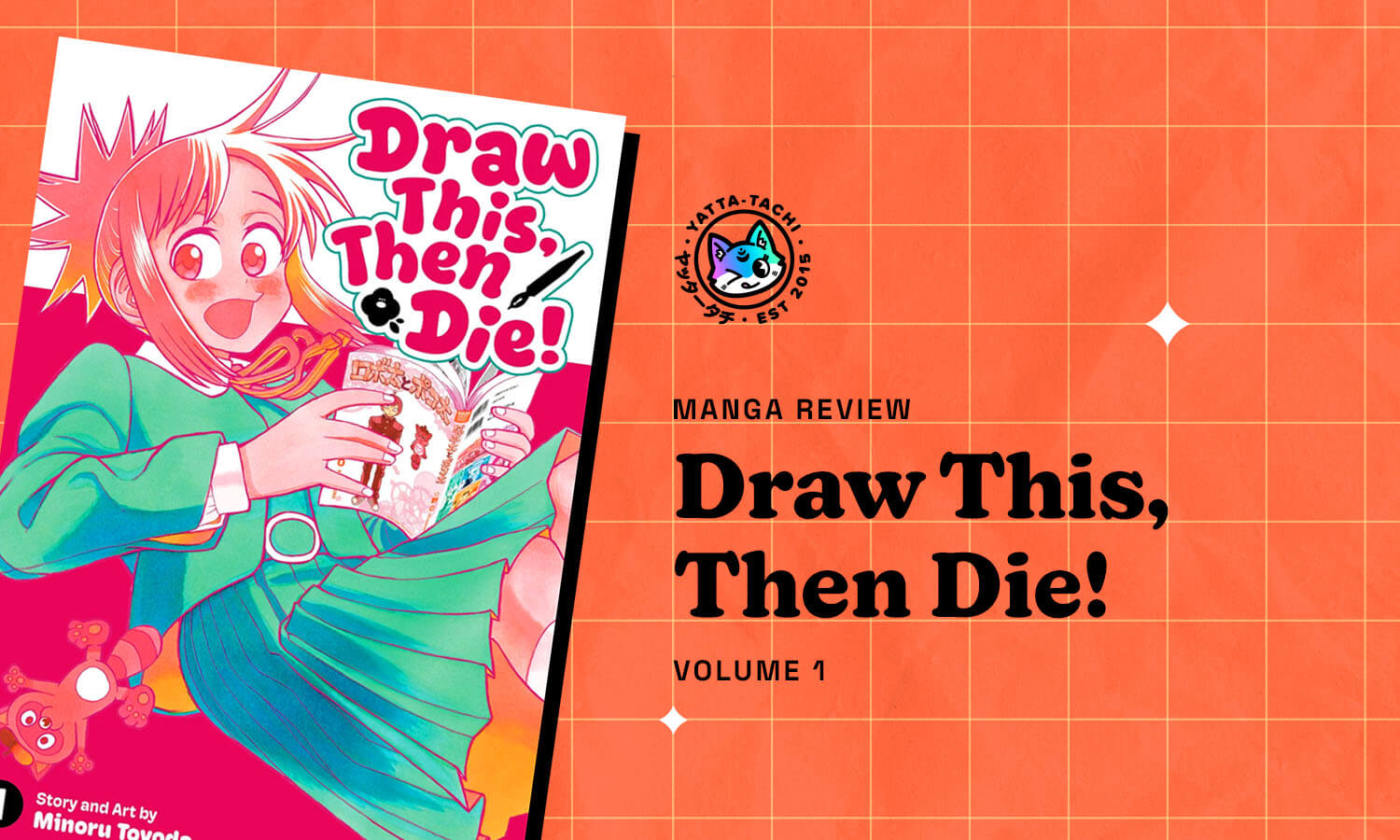
When Ai Yasumi travels to Comiket from her home in Izu Oshima, she discovers that her teacher Rei Teshima is the manga artist behind her favorite series Robota & Pokota. She begs Teshima to teach her the ways of manga. Teshima grudgingly accepts—but only if Ai draws as a hobby, never as a career. What manga will Ai create with her friends? And why did Teshima quit the manga industry to begin with?
Communication
Manga is full of stories explaining how things work. Draw This Then Die! is no exception, with Ai’s teacher Teshima giving her a crash course in how to write and draw manga. Yet the series is less concerned with the specifics than it is with larger philosophical questions. If manga is communication, what does Ai want to communicate? How might drawings help somebody like Ai’s shy classmate Kokoro express her own feelings? If you worked hard to overcome your limits and become a great artist, and failed, was that time wasted?
It’s also significant to me that this series, which is full of love for the manga medium, shows a particular affinity for bad manga. There’s an incredible scene early on where Teshima reads Ai’s first work and is taken aback by how poor it is. Yet Ai’s sincerity is so overpowering that it makes her tear up. Artist Minoru Toyoda understands that manga can make an impression on the reader even when (perhaps especially when) the artist has no technical skill. He also does a good job conveying each artist’s style, so that Ai and Kokoro’s drawings of a cat person look completely different.
Lost World
The most fascinating part of the series so far for me is “Lost World,” a segment at the end of the volume depicting Teshima’s struggles creating manga. Unlike her student Ai, who dives into the medium without fear, Teshima struggles to convey what she wants. Eventually she succeeds, winning “honorable mention” at the Newcomer Comic Grand Prix, but she has to nearly obliterate herself to do it. Reality reconstructs at the award ceremony layer by layer. After, we’re left with the question: Was it really worth it?
Teshima’s manga Tokimeki Love Romance reminds me of Love Roma, Toyoda’s own romance manga and breakthrough title. Friends of mine loved that series because of its warmth and sincerity (and despite–or perhaps because of–its unpolished art.) I don’t know what Toyoda himself thinks of Love Roma. But I suspect that Draw This Then Die! is a reflective work, drawing from Toyoda’s past struggles to inspire and entertain the reader.
The Verdict
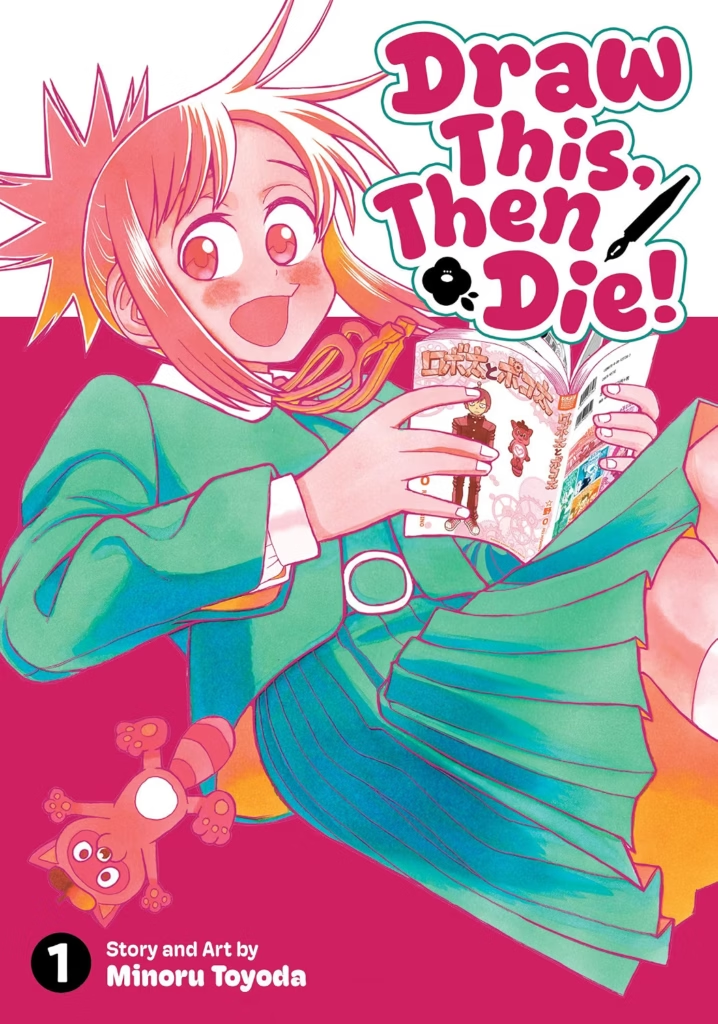
Draw This Then Die! shows Toyoda’s growth as an artist. While his character drawings remain static, their expressions are great, with some (particularly in the “Lost World” chapter) that I found just gutting. Toyoda’s page layouts also do a great job capturing the mood of each scene, conveying joy and claustrophobia alongside full-page jokes.
This is the kind of work you only see from somebody who’s thought long and hard about manga’s appeal. What is that little spark of life in art (even bad art) that moves us? I’m excited to see Ai and her friends (and maybe Teshima, too) find their own answer to that question.
Draw This Then Die! is available in print and digitally from Bookshop, Amazon, and Barnes & Noble.
If you liked Draw This Then Die!, you may also like…
- Keep Your Hands Off Eizouken! by Sumito Owara
- Love Roma by Minoru Toyoda
- The Cartoonist’s Club by Raina Telgemeier and Scott McCloud
Credits
Story & Art: Minoru Toyoda
Translation: Evan Ward
Lettering: Isabell Struble
Cover Illustration: Minoru Toyoda
Original Design: Hitoshi Shirayama+Bay Bridge Studio
Cover Design: H. Qi
Copy Editor: B. Lillian Martin
Proofreader: Elliott Santomare
Production Designer: Melina
Editor: K. McDonald
Published in English by Seven Seas Entertainment
Thank you to Seven Seas Entertainment for providing a review copy. Receiving this copy had no effect on the reviewer’s opinions as expressed here.
Article edited by: Anne Estrada
Big thank you to our supporters
From their continous support, we are able to pay our team for their time and hard work on the site.
We have a Thank-You page dedicated to those who help us continue the work that we’ve been doing.
See our thank you page