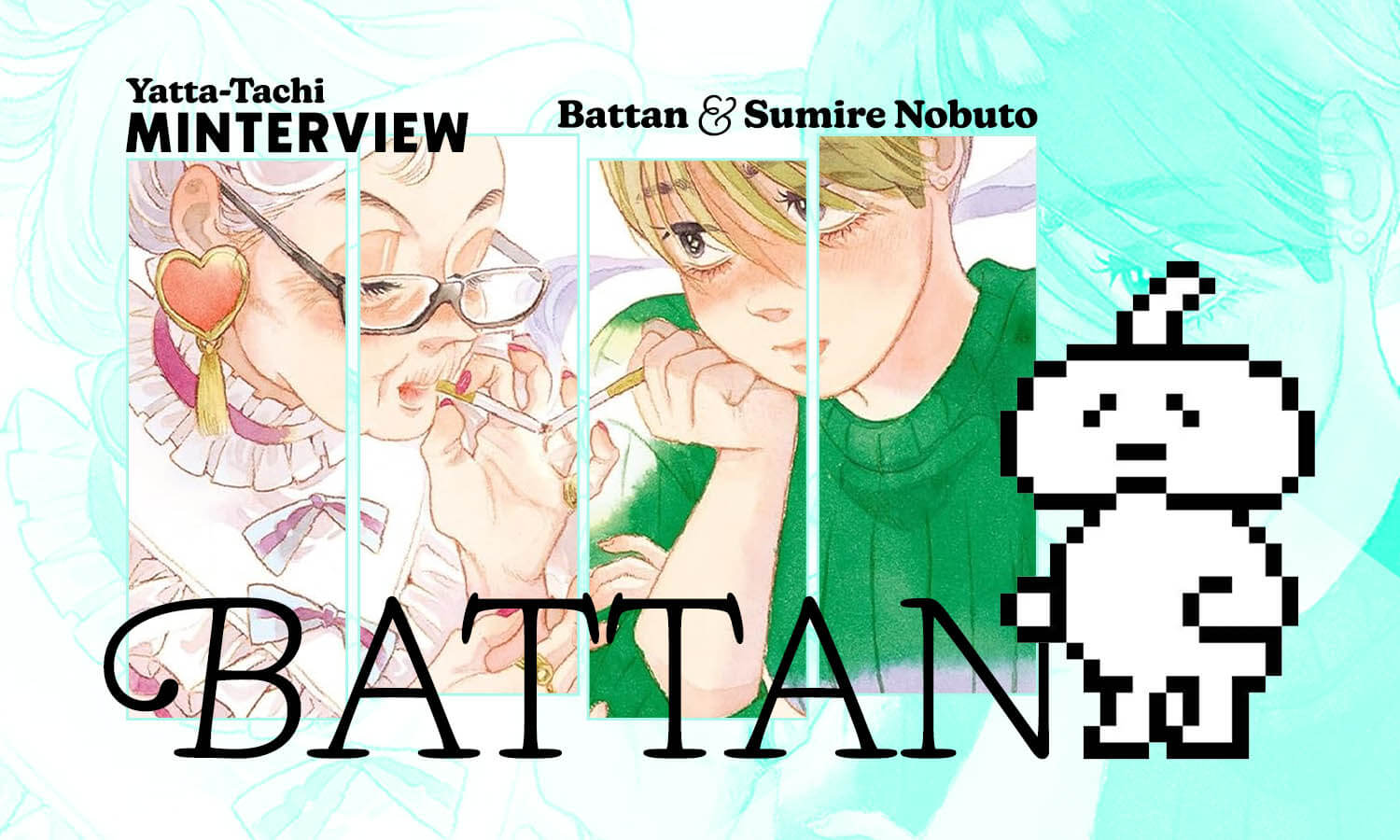
Manga’s greatest strength is its breadth. There is a series for every subject matter that you can imagine, and an artist for every taste. Despite this fact, only a narrow slice of the medium has broken through abroad. That’s where MINT (Manga International Network Team) comes in. Founded in 2024, this organization champions six artists (and five editors) that each offer something unique through their manga.
This is MINTERVIEW, a series of Yatta-Tachi interviews profiling manga artists and editors associated with MINT. This time we spoke with MINT affiliated artist Battan and her affiliated editor Sumire Nobuto. Battan is one of my personal favorite manga artists; her representative work, And Then There Were No Heroines, tells the tale of two women at very different times in their lives who form an unexpected friendship. Sumire Nobuto on the other hand is a member of Futabasha’s editorial department who previously graduated from Meiji Gakuin University’s Department of French Literature.
Battan
Stories that always have hope
ADAM WESCOTT: When did you start reading manga? Are there any artists today that you would call influences?
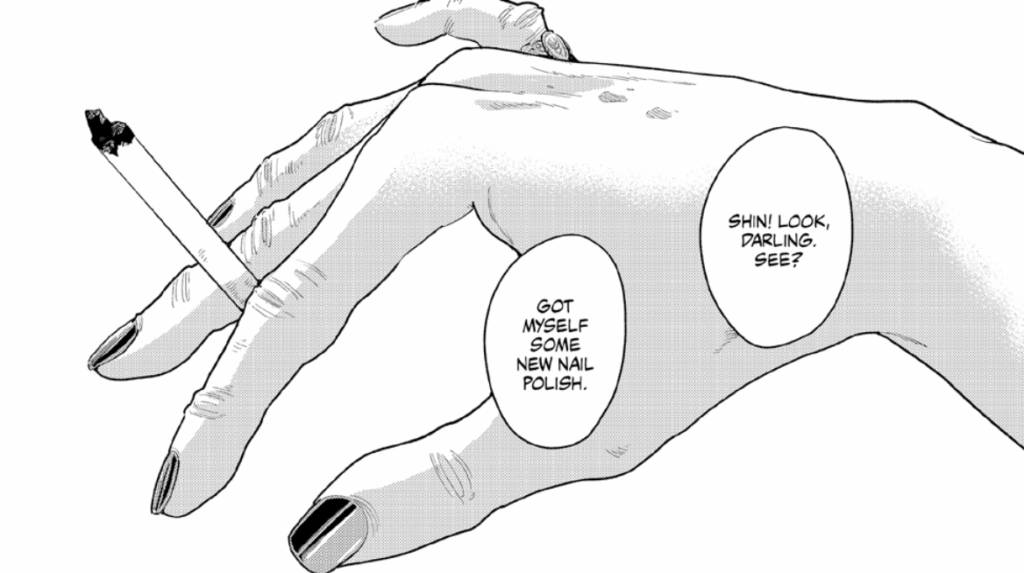
BATTAN: I normally hardly ever read manga. All of my inspiration comes from novels and other print media. I recently read Anthony Doerr‘s newest work and reread his other works. I’m moved by stories that always have hope even in the worst of situations. Visually, I’m inspired by drawings of voluptuous women reminiscent of the Belle Époque era. Those are the women I admire and idolize.
WESCOTT: When did you start drawing comics? How did you get your start in the industry? Did you work as an assistant? If so, what was that experience like?
BATTAN: I started drawing manga about 10 years ago. What started it was the passing of my mother. When I tried expressing my grief through manga, I became surprisingly enchanted by it. During that time, I didn’t feel sad at all. That hasn’t changed even now. I’ve never worked as an assistant and it all started when I sold my first manga at COMITIA and was contacted by an editor from a publishing company.
I want to convey that charm to the readers
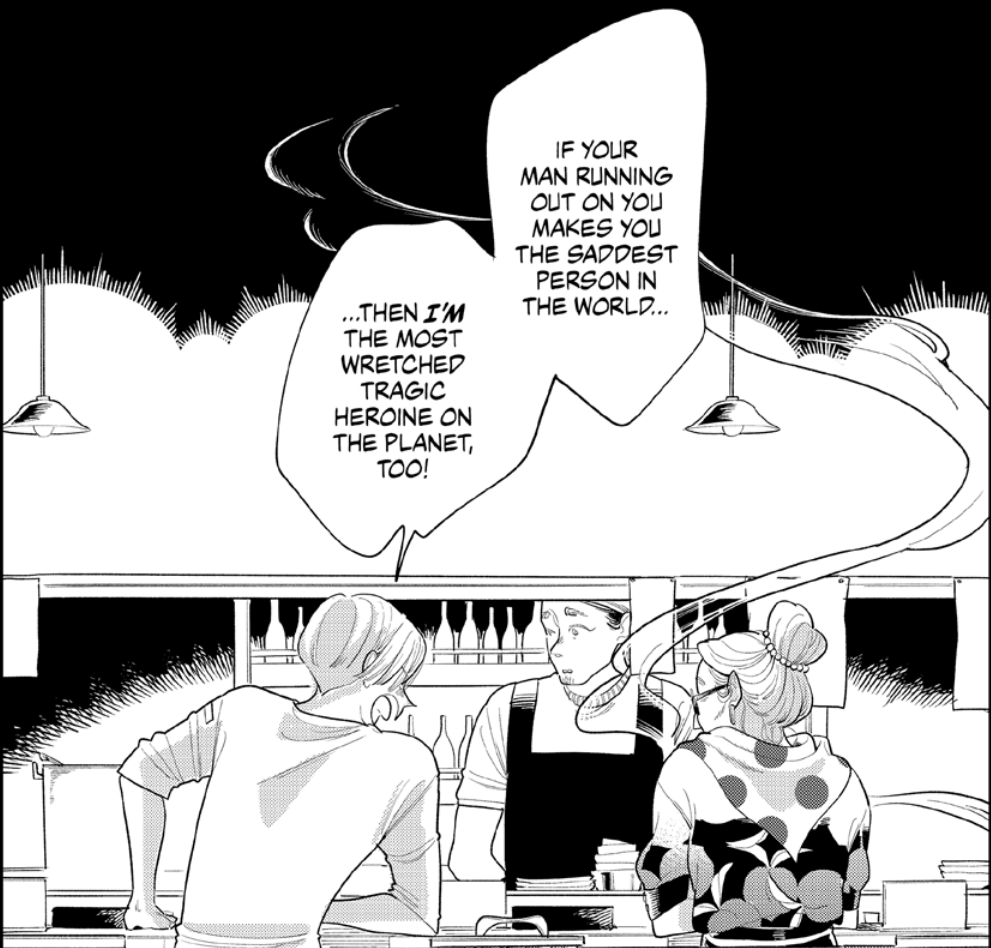
WESCOTT: Many of your manga series are about close relationships between women, either positive or negative. What draws you to these stories?
BATTAN: Being a woman myself might be a big part of it. Having lived life as a woman, I’ve experienced many things: joyful moments, times when I hated being a woman, and times when I was glad to be a woman. Perhaps I want to depict these things without explicitly pointing them out. I think the closest way to describe it is that my manga is a form of self-reflection, a way of organizing my thoughts about my own femininity.
WESCOTT: The two heroines of And Then There Were No Heroines are about 50 years apart in age. What made you decide to choose both of them rather than just one or the other?
BATTAN: It’s something I tend to express in my manga, but I feel such a human charm in my characters that I want to show them from their perspectives. I want to convey that charm to the readers in its entirety, so inevitably, both characters ended up becoming protagonists (laughs).
There are still so many things I want to draw
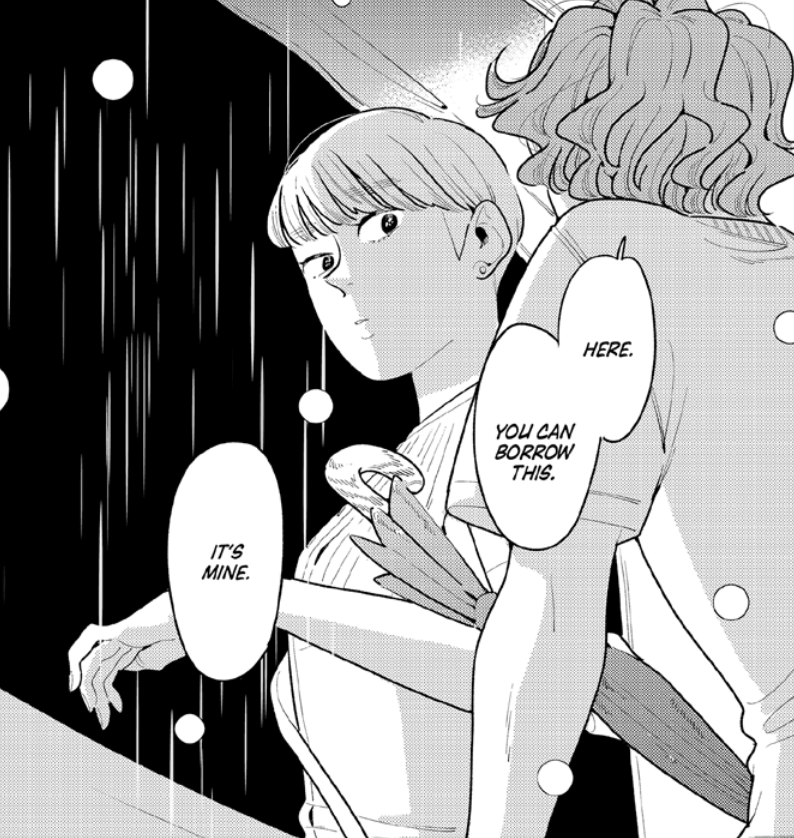
WESCOTT: There have been many other great manga series starring older women that have been published over the past few years, like BL Metamorphosis and Credits Roll Into the Sea. Why do you think this is?
BATTAN: I don’t know about other manga, but in my case, I feel like as if there’s a subtle trend in Japan where the younger you are, the better (at least from what I’ve seen, there are lots of manga focused on boys and girls), so I may have wanted to find hope by drawing a manga about an older woman living happily and making friends!
WESCOTT: What do you like most about drawing manga? What do you like least?
BATTAN: I love everything related to manga. I have manga on my mind all the time, and there are still so many things I want to draw. However, I’m not so good at presenting and promoting my work. I draw manga for myself, and I’m really afraid of being judged by others. However, since it’s unavoidable when I’m getting paid for it, I hope that readers will feel free to share their opinions.
WESCOTT: Do you have any personal favorite tools or techniques that you use to draw manga?
BATTAN: I’m not particular about tools. However, I instantly fell in love with these lace-covered amulets I saw at Shimogamo Shrine in Kyoto and bought one. I have a routine of touching it before I start working on my manuscripts. I also love watercolors. I like the happenstance that can be obtained with analog techniques and the soft hues that express the emotions I want to convey.
His paws smell like popcorn
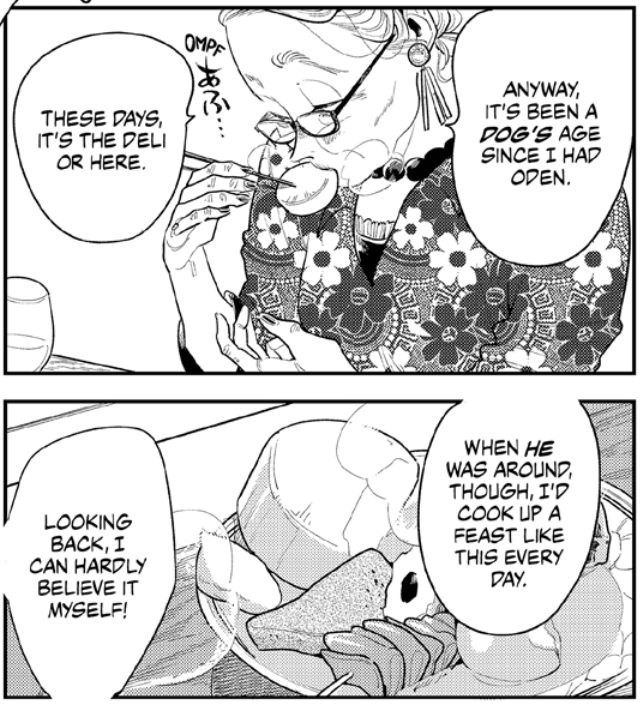
WESCOTT: And Then There Were No Heroines was serialized via web Action, an online comic platform. Do you make different choices when drawing comics to be published on the internet versus in print?
BATTAN: There’s no difference to me. With print though, the deadlines are earlier so I always feel like I’m in a hurry (laughs).
WESCOTT: Do you have hobbies outside of drawing manga? If so, what are they?
BATTAN: I love manga so much that it’s both my job and my hobby, but I suppose reading is also something I would call a hobby. When it comes to novels, I generally like stories that delve into the lives of women. I collect books, everything from old works to new titles. I also like Sanrio. I love Hello Kitty. To me, she’s a dear friend and a woman I adore.
WESCOTT: Do you have a dog? If so, what are they like?
BATTAN: Yes, I have an Italian greyhound named Tsuru. In Japan, the word for something slippery-smooth is tsuru tsuru. His fur is smooth so I named him Tsuru. I met him at a time when life was wearing me down. His birthday just so happens to be on the same day my mother passed so it felt like fate and I welcomed him into my life. Tsuru has really helped me out a lot. His paws smell like popcorn.
Sumire Nobuto
Dadaism
WESCOTT: According to the MINT website, you graduated from Meiji Gakuin University’s Department of French Literature. Did you specialize in a particular time period? Fiction or poetry?
SUMIRE NOBUTO: I studied Dadaism and Surrealist painting. During my fourth year of university, my focus shifted to film and I researched Leos Carax specifically.
WESCOTT: What can you tell us about Manga Action and web Action?
NOBUTO: I’m in the manga editorial department which is part of the e-book division. Manga Action and web Action are handled by a different department. So, to give a brief explanation, Manga Action is a print magazine, and web Action is an online manga website.
WESCOTT: When and how did you start working with Battan?
NOBUTO: I first met Battan after reading her debut work, Nijiiro Complex (Rainbow Color Complex, Kodansha), and approached her at COMITIA. Due to various reasons, it didn’t immediately lead to working together, but a few years later, around 2019, Battan contacted me and we had a meeting at LEED Publishing. At that time, she showed me several of her dojinshi, and I told her they were exceptional and that I wanted to read more.
I asked if there was more and she agreed to draw the rest. That was Ane no yujin (My Sister’s Friend), which was published by LEED Publishing. We have been working together ever since, even after I changed jobs.
No one can imitate her
WESCOTT: What do you think is Battan’s greatest strength as a manga artist?
NOBUTO: Both her stories and the illustrations are exceedingly unique. No one can imitate her.
WESCOTT: Where does And Then There Were No More Heroines fit within Battan’s larger body of work?
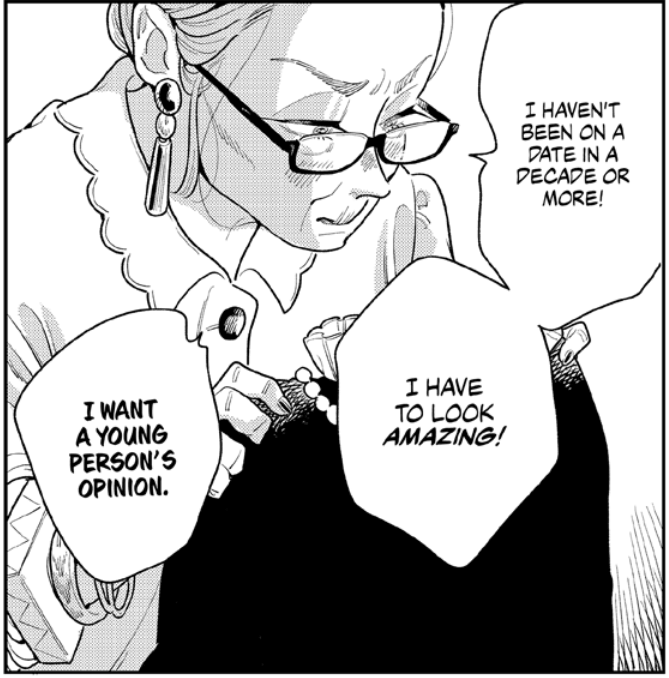
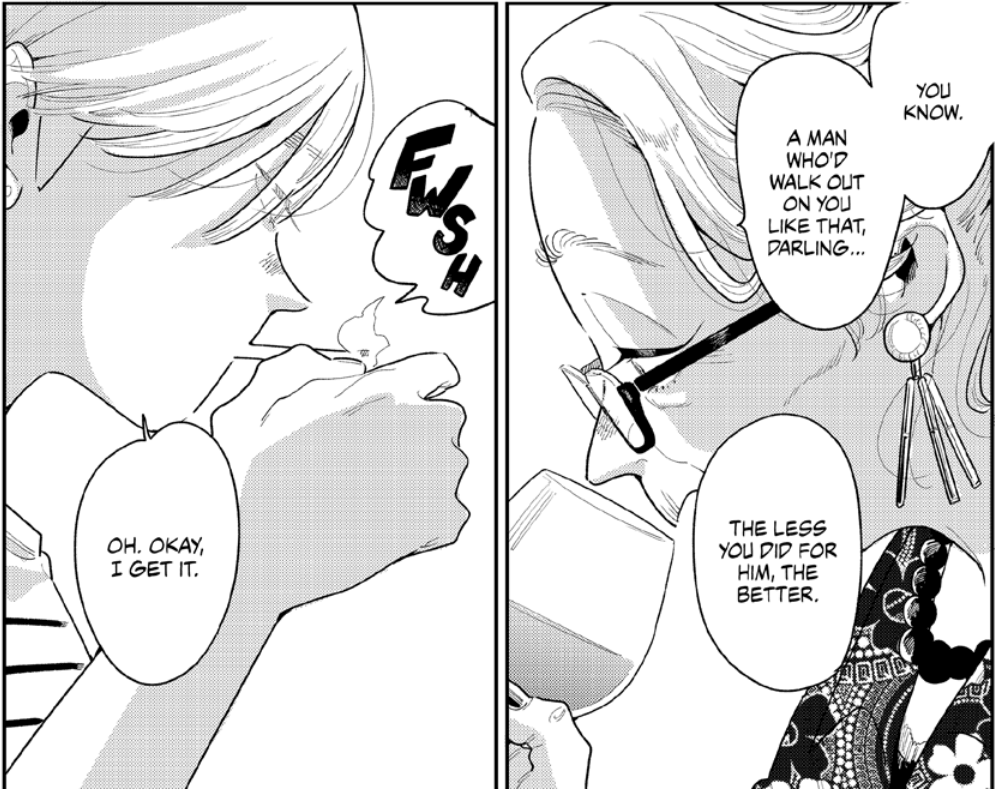
NOBUTO: There has been a recent increase in works featuring middle-aged to elderly women as protagonists, but I recall there were hardly any around 2020, just before this series began. Even now in Japan, it’s considered somewhat vulgar for older women to be engrossed in romance. That’s why this story of friendship between the young Taeko and the elderly Tora-san, who are supporting each other while caught up in their own love lives, is quite a challenging one compared to Battan’s previous works.
Thank you to MINT for this opportunity! You can find out more about MINT, including a sample catalog of manga chapters drawn by the organization’s representative authors, at its official website.
Article edited by: Bill Curtis
Big thank you to our supporters
From their continous support, we are able to pay our team for their time and hard work on the site.
We have a Thank-You page dedicated to those who help us continue the work that we’ve been doing.
See our thank you page