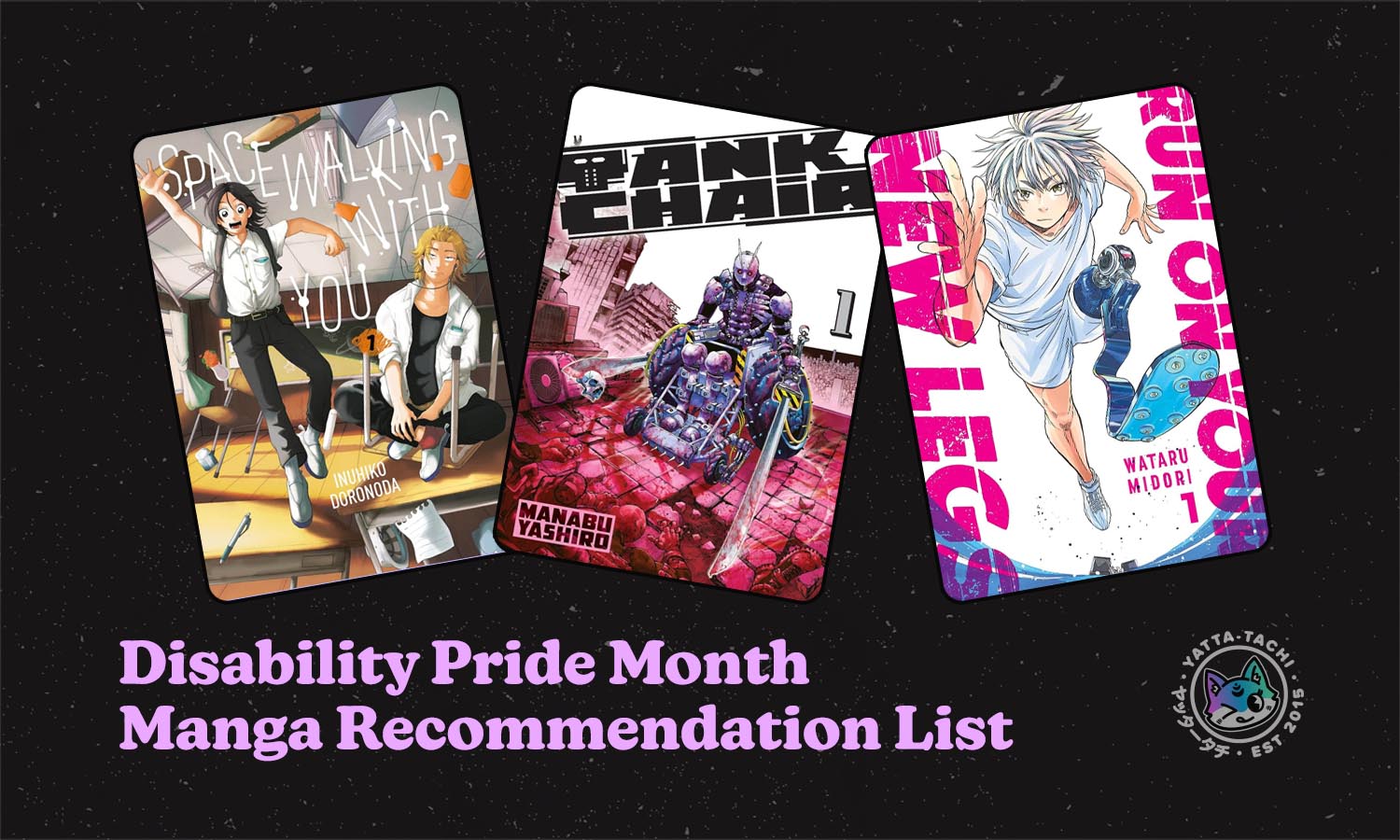
I’ve found it incredibly difficult to find manga with good disabled representation. So many of the lists out there are curated by able-bodied people and are often filled with inspiration porn. It can be incredibly frustrating to invest in a series and then find out that it’s just offensive in a way nobody bothered to warn you about. But I’ve managed to put together an entire shelf full of manga with great disabled representation, and I’m here to share it with you all!
Obviously, many of these series will include characters who do not share my own disability. I’m not here to speak to those experiences. I’m always eager for feedback from disabled people on manga! But to do that we need to actually talk about the series that are out there. I’ve applied the social model of disability to these recommendations, but equally stuck to conditions that exist in the real world rather than just fantasy ones.
When putting together this list, I made sure that all the series on it were available digitally. There’s nothing more frustrating than getting a recommendation for disabled people that disabled people can’t actually read. So if you’re wondering why your favorite might not be on here, that may be why. I hope that in the future, all publishers will make their manga available digitally so they can be read by more people, especially those who use screen readers. And if they could be DRM-free, that would be amazing too.
But for now, don’t worry, there’s bound to be something here for everyone!
The Invisible Man and his Soon to be Wife
Vibes: Romantic Comedy, Adorable, Well-Researched, Inclusive SciFi/Fantasy, Urban Fantasy, Work Colleagues to Friends to Lovers, Detectives, Furries and Aliens and Elves, Oh My!
Type of Disabled Representation: Visually Impaired Main Character
Content Warning: Fantasy Discrimination, Colorism, Panic Attack
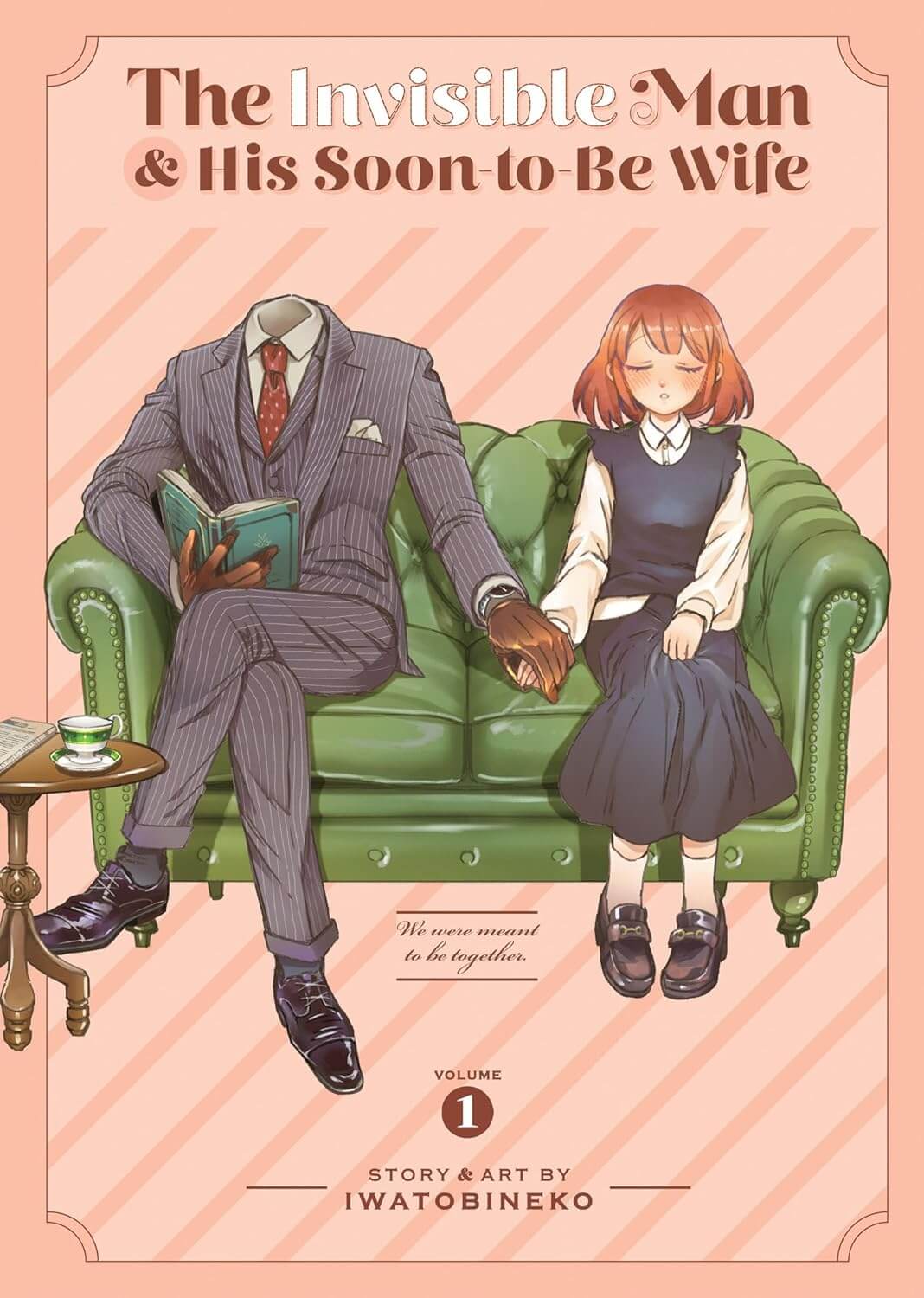
Yakou works as a secretary at a Detective Agency that specialises in non-human mysteries! She is Blind, but her work place does all it can to accommodate her since she’s a vital member of the team. This inclusive workspace also includes a sporty and spot-conscious beast woman, a grumpy, sarcastic IT guy and his perky lawyer husband, and their boss Tounome—a stylish and charming invisible gentleman detective. It doesn’t take long for Yakou and Tounome to give in to the romantic tension between them, and to many, they seem to be the perfect couple in a number of ways since being invisible doesn’t matter to a blind woman – but that doesn’t mean they don’t face their own unique challenges!
Tounome and Yakou’s romance is so adorable that I can’t help but flail due to their cuteness. The other relationships between the characters are also really well-developed, with time given to developing the platonic relationships as well as the romantic ones. There’s such a wide range of characters from across the sci-fi/fantasy spectrum, with Iwatobineko seeking to show minority representation wherever she can. This is both in the form of real world minorities, as well as fantasy parallels. The manga even has a high school sweethearts BL side story! And who can say no to that?
What makes Invisible Man and His Soon-to-Be Wife stand out from every other series on this list, is that creator Iwatobineko has taken accessibility into immediate consideration. Whilst it just started out as a fun idea of what if an invisible person and a blind person fell in love, her dedication to research has made it a work of wonders. The sky blue backgrounds not only look gorgeous, they also help to add significant contrast to the artwork. This makes it easier for visually impaired people to see and understand the artwork. Iwatobineko has also used larger than usual speech bubbles to, again, make it easier to read. Whilst The Invisible Man and His Soon-to-Be Wife is a silly, sweet, funny, fantasy romance series that doesn’t take itself too seriously, Iwatobineko’s dedication to representation makes this light-hearted nonsense something that can be embraced by all. In fact, she even managed to produce some novelizations of the manga exclusively for the visually impaired people who she interviewed—and was excited about the anime being announced since it meant even more visually impaired people could enjoy the story! Sadly, there is no English language dub of the anime, so for some English-speaking fans the series remains inaccessible. But we cannot hold the author at fault for that one.
Story and Art: IWATOBINEKO
Translation: Elena Kirillova
Lettering: Vanessa Satone
You can buy The Invisible Man and His-Soon-to-Be Wife from Amazon, Barnes & Noble, and Bookshop.
Knight of the Ice
Vibes: Olympic Ice Skating, Complex Platonic Relationship Dynamics, Childhood Friends to Lovers, Life with a Chronic Illness, Comedy, In-jokes, Magical Girls, Secret Otaku
Type of Disabled Representation: Chronic heart condition, major sports injury
Other Minority Representation: Trans Masc character, Trans Man X Cis Woman couple, closeted M/M couple
Content Warning: Discussions of Transphobia and Homophobia
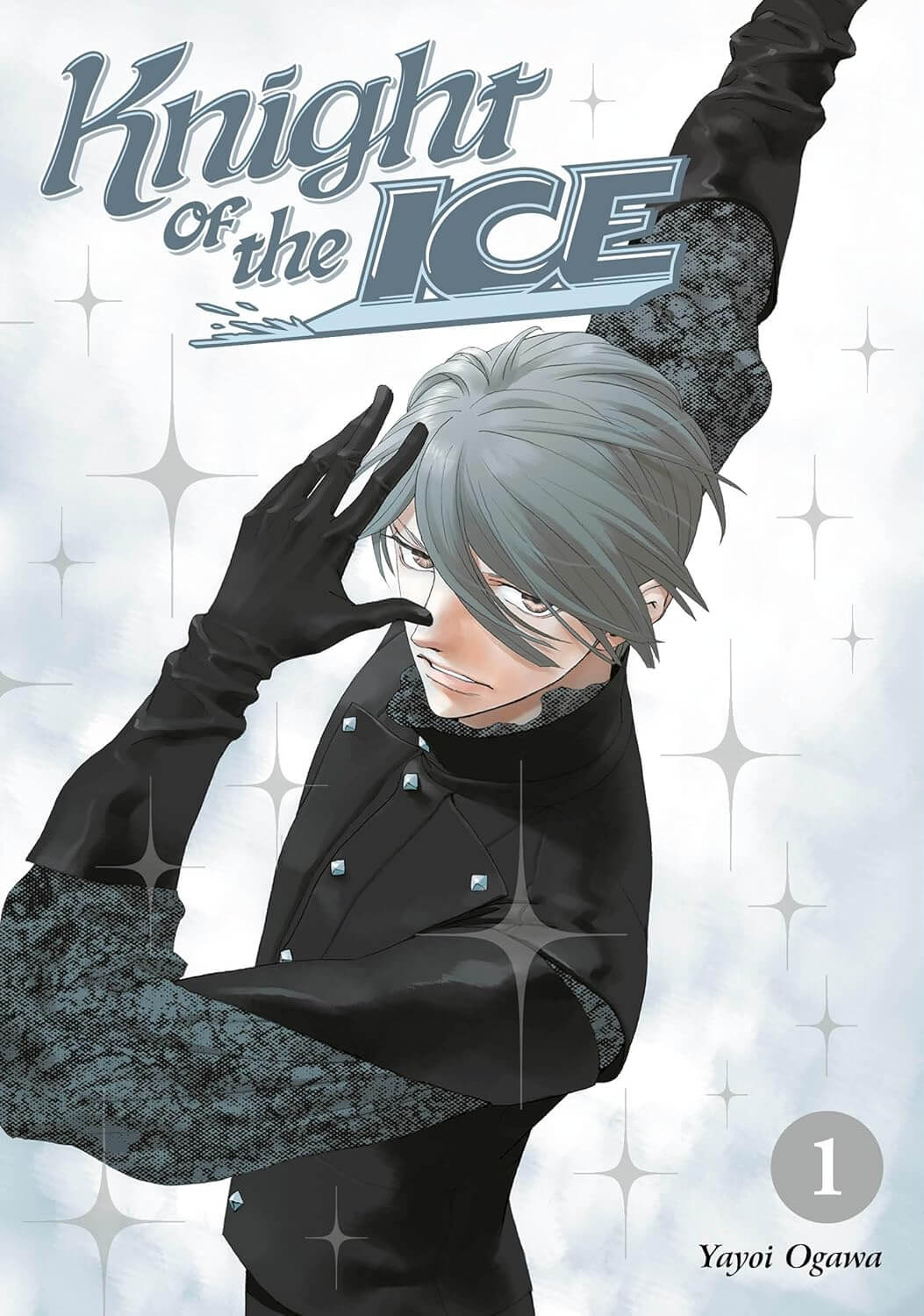
Kokoro Kijinami is one of Japan’s top figure skating stars. He has a secret though: he can only perform when his childhood friend and crush, Chitose, performs a special spell from his favourite magical girl anime! The more time they spend together behind the scenes, the more in love they fall. Chitose has always tried to live a simple, stress-free life due to her chronic heart condition. That life is incompatible with an elite sports star, but that doesn’t mean their love isn’t worth it.
To get it out of the way, no, this is not Yuri on Ice but with straight people. The series ran between 2012 and 2017, whilst Yuri on Ice first aired in 2016. Also Yuri on Ice doesn’t feature a trans man addicted to Aloha shirts.
In all my previous searches for disabled narratives, I have never seen this on a recommendation list. I think it’s because some people have a very narrow idea of what a disability is. Chitose lives an apparently normal life, but her heart condition still plays a role in her day-to-day life. Like many with chronic conditions, she must plan her day carefully. She must attend regular medical appointments. She must go through the struggles of international travel, daily medication, and weighing up the pros and cons of major surgery. I found that element particularly relatable, as I too knew that major surgery would improve my life but was terrified of the potential consequences. There’s also a parallel narrative of Kokoro coping with a sports injury that also requires surgery and whilst not life threatening, would impact his professional career.
Knight of the Ice is a great story that shows what it is like to have a hidden chronic illness, as well as a temporary disability. It absolutely earns its place on this list.
Story and Art: Yayoi Ogawa
Translation: Rose Pargett
Lettering: Jennifer Skarupa
You can buy Knight of the Ice from Amazon, Barnes & Noble, and Bookshop.
Love’s in Sight
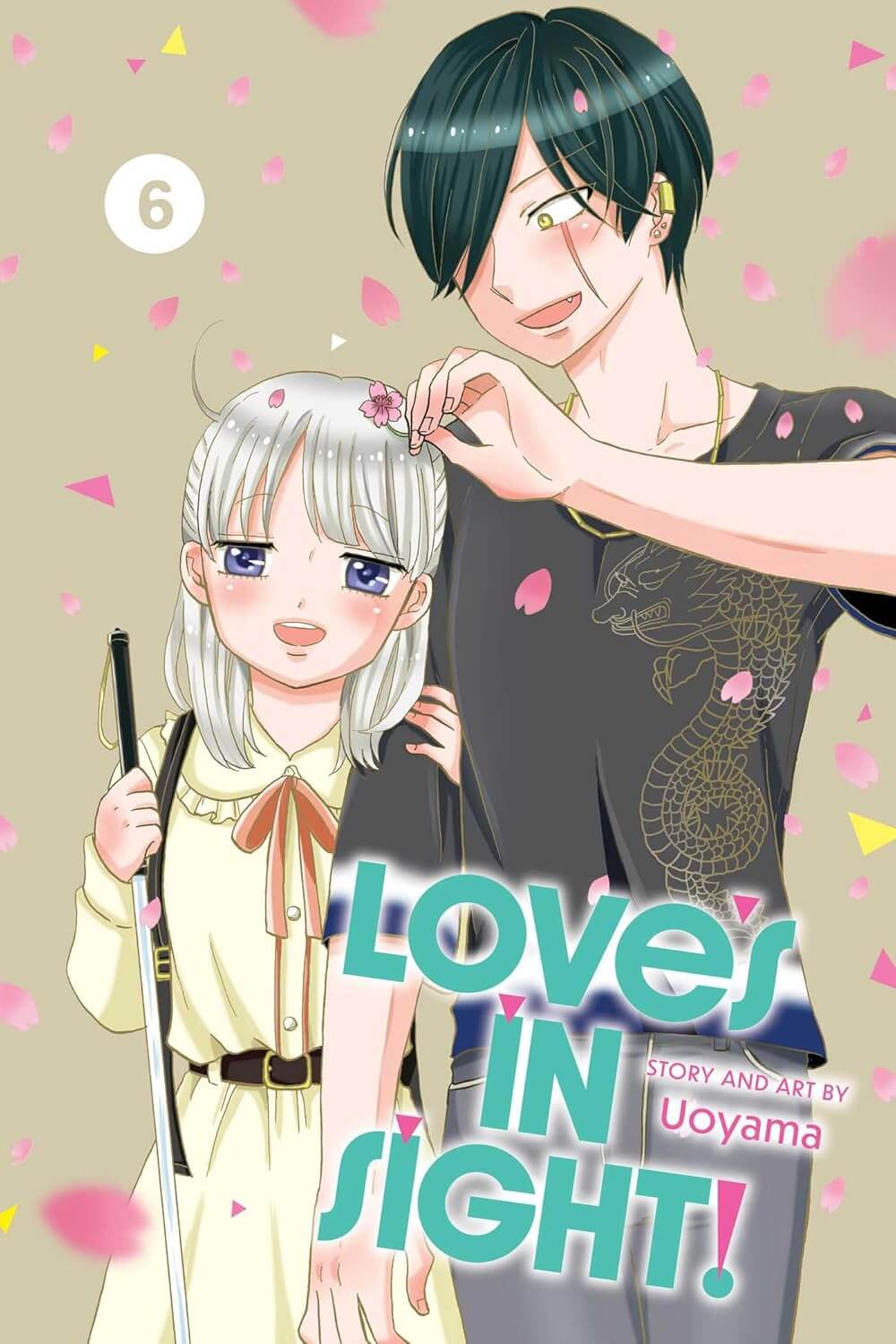
Vibes: Romantic Comedy, Slice of Life, Tsundere X Deliquent, Simping On Main
Type of Disabled Representation: Visually Impaired Characters, characters with facial scars
Other Minority Rep: Gay Male Character
Content Warning: Class Discrimination, LGBTQIA+ Discrimination, Disability Discrimination, Hate Crimes, Internalized Homophobia, Suicidal Ideation
When Mori meets Yukiko, it’s love at first sight for the tsundere and the delinquent. The pair face a few more challenges than the average high schoolers, though. Mori dropped out of school when nobody believed in him, a feeling that the visually impaired Yukiko can definitely relate to. The pair face lots of problems along their way to happiness. They gotta work out how to make their relationship work, and then convince their friends and family that it can actually work too! Love might not be able to move mountains, but it certainly can trample over these molehills.
When I first saw the book, I was a little worried that it was just going to be a series of offensive one-off jokes, but I am happy to say it is an absolute delight throughout! Yukiko is a classic Tsundere type, and Mori is the man simping for her. Whilst comedy is born from her disability, it is always in a way where she has the power. For example, her complaint that if he wears dark colours she can’t see him, but if he wears vibrant fluorescents she doesn’t want to be seen with him. I personally also related to the dynamic between Yukiko and her sister. It can be incredibly frustrating having to deal with family members who won’t let you make your own mistakes, or assume that being older than you makes them an expert in everything about you.
Unlike a lot of romance manga featuring disabled characters, in Love’s in Sight we actually get to meet Yukiko’s school friends! Since she isn’t the only visually impaired character, we don’t have to see her as the sole representation for all visually impaired people. Not just in terms of how she acts and behaves, but also the exact nature of her condition too. For example, Aono was born with no vision, and Sora is photophobic so she can see much better at night than she can during the day.
The series also looks into the Curb Cut Theory of Inclusivity—how providing for one group of disabled people will provide for able-bodied people too. Discrimination and community is a big theme in the series, but it all comes back to Mori and Yukiko being two teenage lovebirds.
Story and Art: Uoyama
Translation: Nova Skipper
Touch Up and Lettering: Kyla Aiko
Additional Touch Up: Amethyst Xuan
You can buy Love’s In Sight from Amazon, Barnes & Noble, and Bookshop.
Run On Your New Legs
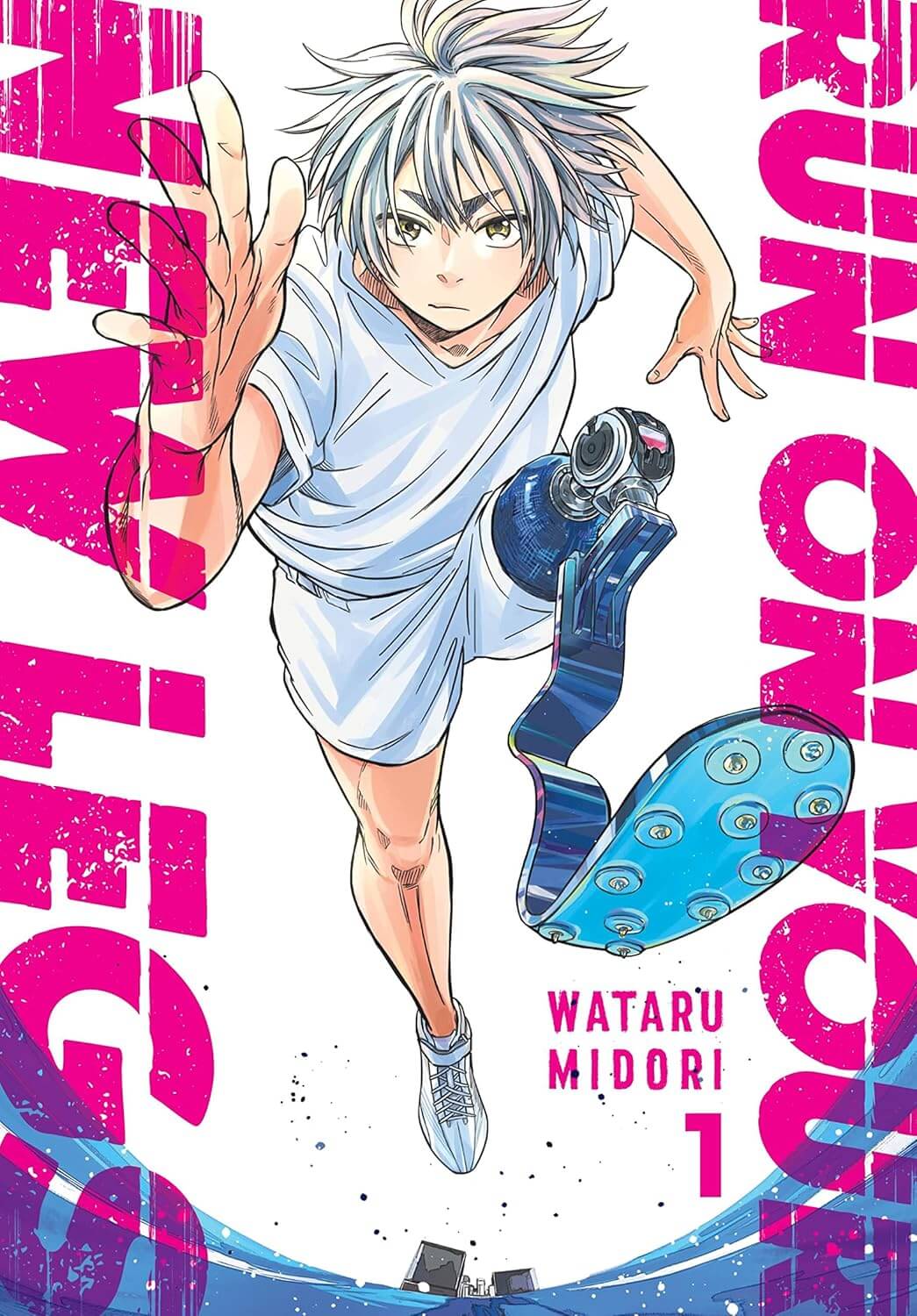
Type of Disabled Representation: Single leg amputee, double leg amputee, wheelchair user
Vibes: We Gotta Make It to Nationals, Pandemic Life, Learning to Live with a Disability, Friendship, High School Drama, Football Ain’t Coming Home =(
Content Warning: COVID-19 Pandemic, Everyday Ableism
When promising soccer star, Shouta Kikuzato, loses his leg, he starts to think that all his dreams are over. The time taken away for recovery means he’s not even in the same class as his school friends anymore. But a chance encounter with a prosthetic engineer has him running against the best in Japan and craving more. He learns that his dreams of playing in the world cup might be over, but with the 2020 Paralympics on the horizon, he discovers both a whole new way to run and people to run with.
There’s a familiar formula at play here. A person who was good at one sport loses a limb and takes up another. It’s something you see in real life, with many athletes transferring sports due to injury— for example, gold medalist Matt Weston transferring from taekwondo to skeleton due to a back injury. Whilst this trope does come with some amount of inspiration porn based on seeing someone overcome the odds, I think this is forgivable given the narrative. Plus overcoming the odds is a basic element of any sports drama. What makes Run on Your New Legs interesting to me is that creator Wataru Midori really rolled with the punches on the production. The story was originally intended to run parallel to the 2020 Paralympics. However, everything changed when the COVID virus attacked. This left them in a tough position—wait and continue their story line when they came back on, or keep their original schedule and completely re-write the series. They chose the latter, and so Run on Your New Legs becomes a fascinating snap shot of what it was like to be both a student athlete at that time and also a disabled person, from having to race in an empty stadium, to yelling at people to put on a mask. I also appreciated that Shouta makes friends with people who have multiple disabilities, helping to show the community aspect that para-sports brings.
Story and Art: Wataru Midori
Translation: Caleb Cook
Lettering: Abigail Blackman
You can buy Run on Your New Legs from Amazon, Barnes & Noble, and Bookshop.
Tank Chair
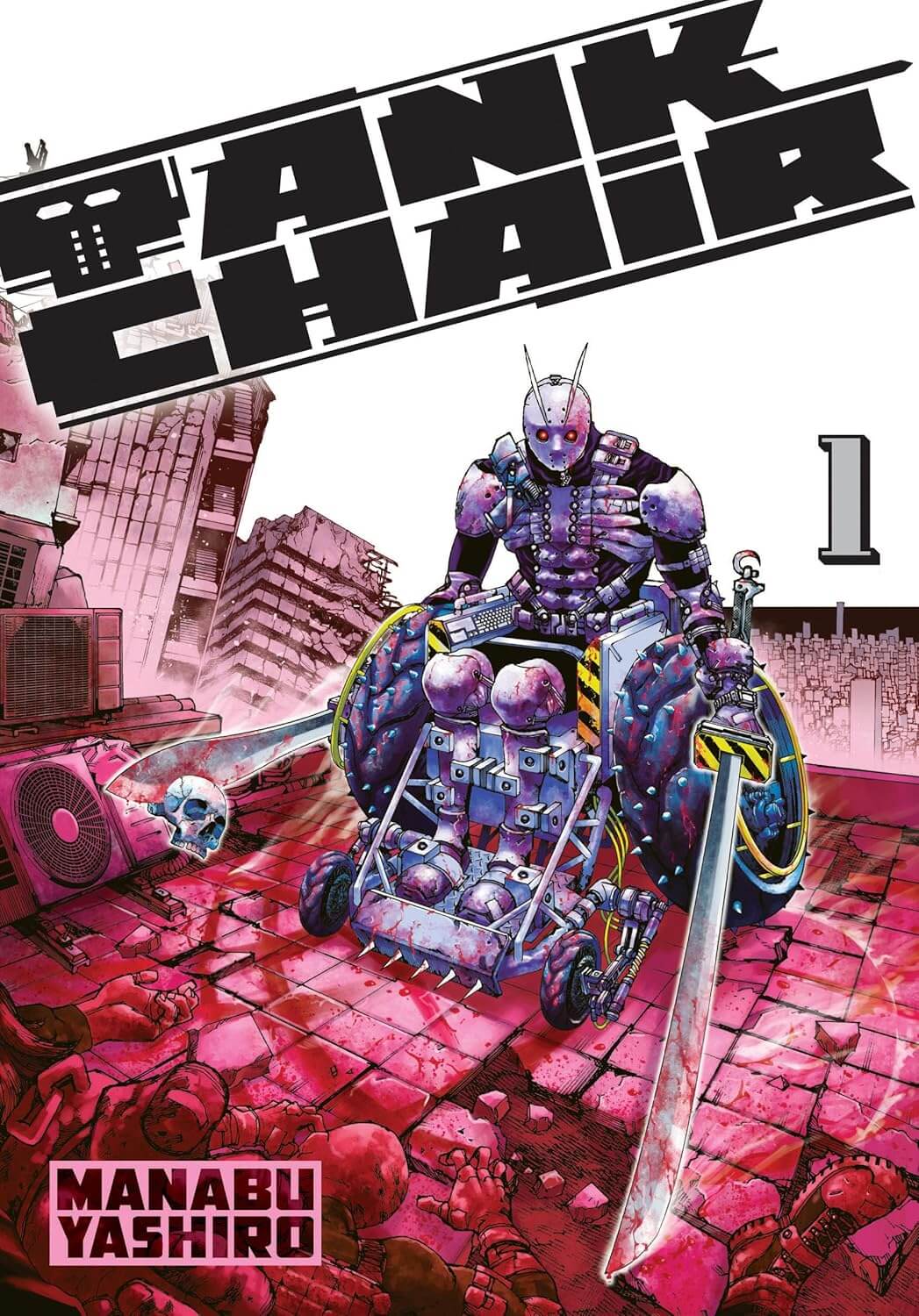
Vibes: Diesel Punk, Post-Apocalypse, Sisters and Brothers, Found Family, Supernatural Aliens, Disabled Power Fantasies
Type of Disabled Representation: Wheelchair User, Chronic Illness, Mental Health Disorders, Prosthetic Users
Content Warning: Hyper Violence, Ableism, Medical Malpractice, Child Abuse, Childhood Trauma
It ain’t easy living on Guicheng Island. Known as the most dangerous town in the universe, gangs of genetically modified criminals roam the streets with a thirst for blood. After an encounter with such gangs lead to Nagi being put into a coma, his sister Shizuka makes it her mission to revive him. She discovers that Nagi’s heightened fight or flight instinct means he can detect killing intent sent in his direction and wake up for just long enough to defend himself. With this in mind, Shizuka signs him up for all the most dangerous assassin jobs. Others might underestimate him because he’s in a wheelchair, but they soon learn their lesson after he’s run them into the ground.
Tank Chair spits in the eye of inspiration porn and then stabs it through its chest. The disabled characters are well rounded and vicious. They’re messy, complex, and the heroes of the story ready to defend their loved ones. They have their moments of suffering, but it’s never about overcoming their disability or searching for a cure. It’s an absolute cinematic romp, with brilliant character designs and mobility aids to drool over. I could not recommend it more.
I wrote more about the depiction of disabled characters in this series on Anime Feminist.
Story and Art: Manabu Yashiro
Translation: Max Greenway
Lettering: Evan Hayden
You can buy Tank Chair from Amazon, Barnes & Noble, and Bookshop.
Gangsta
![[ID: Two men stand next to each other, one facing the viewer and one looking away. The man facing the viewer has short black hair, is wearing dog tags around his neck, and carries a sword at his side. The man facing away has longer, light-colored hair. Both are wearing black jackets and trousers with gray collared shirts. White bullet holes with what look like blood splatters coming out of them dot the two men.]](https://yattatachi.com/wp-content/uploads/2026/07/gangsta_1.jpg)
Type of disabled representation: d/Deaf Main Character, Visually Impaired Main Character, PTSD, Addiction, Drug Withdrawal, Medical Trauma, Chronic Pain, Chronic Illness, Terminal Illness
Other Minority Representation: Bi-racial Main Character
Vibes: Urban Fiction, Light Sci-Fi, Dystopian Thriller, Gangster Paradise, Psych Meets The Wire, That feeling when you know the author reads BL, Dead Dove Do Not Eat
Content Warning: Sexual Content, Sexual Assault, Sexual Coercion, Domestic Abuse, Sex Work, Forced Prostitution, Past Child Prostitution, Transphobic Language, Graphic Violence, Graphic Depictions of Mutilated Bodies, Emergency Field Medicine, Discrimination in a Sci-Fi setting
Set in a dystopian future that feels like something not so fantastical these days, Gangsta follows the exploits of two assassins for hire, Worick Arcangelo and Nicolas Brown. Friends since a misfortune in childhood threw them together, they work in a prison city where criminals are dumped so the rest of society doesn’t have to think about them. Left to their own devices, life is hell for the residents. Especially since a crime in this world includes being born a Twilight—a so-called “living weapon” with a life span much shorter than anyone else. This dystopian society is one hell of a place to live, but teamwork makes the dream work.
Nicolas is d/Deaf and signs as his main form of communication, although he does verbalize when he has to. Creator Khoske has been incredibly thoughtful when drawing Nicolas and designing his speech patterns. His vocalized speech is in a different type face to all the other characters, and whilst clear to read is obviously a little jarring in comparison. It means you pay more attention when he’s talking, and know that whatever it is he has to say is important. He doesn’t vocalize for the sake of it and would rather just use sign language, but sometimes you want someone to actually know you’re insulting them. Khoske also does a great job of showing off his character in the way that he signs. I liked the little touch of the speech bubbles coming from his hands.
Whilst his hearing loss is a side effect of his hyper strength, it’s due to genetics and not some noble sacrifice. Whilst he has enhanced his other senses to compensate for being d/Deaf, it’s not to a supernatural extent. It was just part of any other standard training undergone to learn how to beat the living daylights out of people. His best friend and colleague is also visually impaired following an eye injury that still leaves him with chronic pain. Whilst often an eye patch is used as a short hand for being mysterious and cool, we see that Worick wears the patch to both protect said injury and also so he doesn’t have to deal with all the questions. He is also shown to not wear it 24/7, taking it off when he’s at home since it’s uncomfortable to wear—something I can relate to since I used to have to wear an eye patch because of my Myasthenia Gravis.
Story and Art: Kohske
Translation: Katherine Schilling
Lettering: Eric Erbes
You can buy Gangsta from Amazon, Barnes & Noble, and Bookshop.
Snegorochka of the Spring Breeze
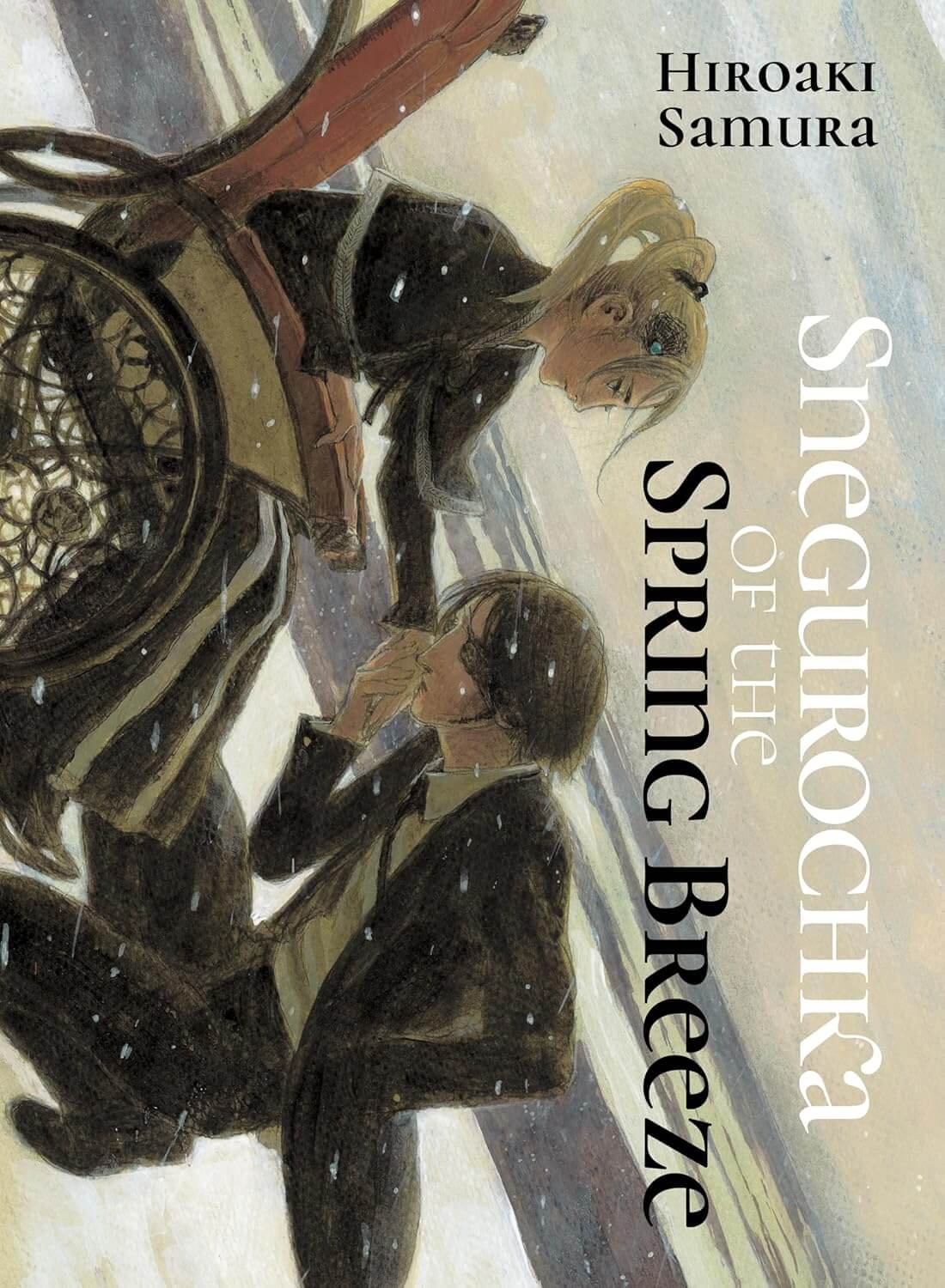
Type of Representation: Wheelchair User, Haemophiliac
Other Minority Representation: Gender Non-Conforming historical figure
Vibes: Mysticism, Post-Revolutionary Russia Sucked, Grim-dark Anastasia, Disabled Solidarity, Messy Relationships, Co-dependence, Thoughtful Wheelchair Design, The Sexual Tension Between Historical Accuracy and Committing to the Bit
Content Warning: Child Murder, Child Death, Mass Murder, Death by Firing Squad, Sexual Coercion, Ableism, Sexism, Transphobia, Xenophobia, Prison Camps, Forced Labor
The year is 1933, fifteen years after the deaths of the Romanovs and six years before World War Two. Bielka and Shchenok are two young people forced to grow up in interesting times—to the outside world, they look like a formerly-rich disabled woman and her servant out to explore what this brave new world has to offer. But there’s far more than meets the eye here. The duo are chasing the truth of their past, whilst trying to outrun it at the same time. This game of cat and mouse is sure to end in disaster. But just how large of a disaster will it be?
If you’re looking for historical accuracy, look elsewhere. While creator Samura has clearly done his research, that research was into the various myths around Rasputin and the Romanovs. That said, the way it presents post-revolutionary Russia is heartbreakingly realistic. The manga really dedicates itself to the relationship between Bielka and Shchenok. They’re co-dependence is at the heart of the series and is a great example of the solidarity between disabled people and the way we can help each other. I was really impressed by the thought that went into Bielka’s wheelchair. At this point in time, she ought to have a self-propelling metal wheelchair rather than a wooden one designed more as an armchair that must be pushed. However, this old-fashioned chair is all part of the world building, and her particular situation. I hesitate to say more because I don’t want to spoil anything, but rest assured, if you were annoyed by the old-fashioned design, there is a reason behind it all. Equally, it’s made very clear that Shchenok is the only other person who is allowed to touch her chair. If someone else pushes her it is seen as a form of assault—as it absolutely should be.
In the true style of a Russian novel, there is no happy ending to this story. But that doesn’t mean it isn’t worthwhile, nor that the representation is any worse off for it.
Story and Art: Hiroaki Samura
Translation: James Balzer
Lettering: Mercedes McGarry
You can buy Snegurochka of the Spring Breeze from Amazon, Barnes & Noble, and Bookshop.
Spacewalking With You
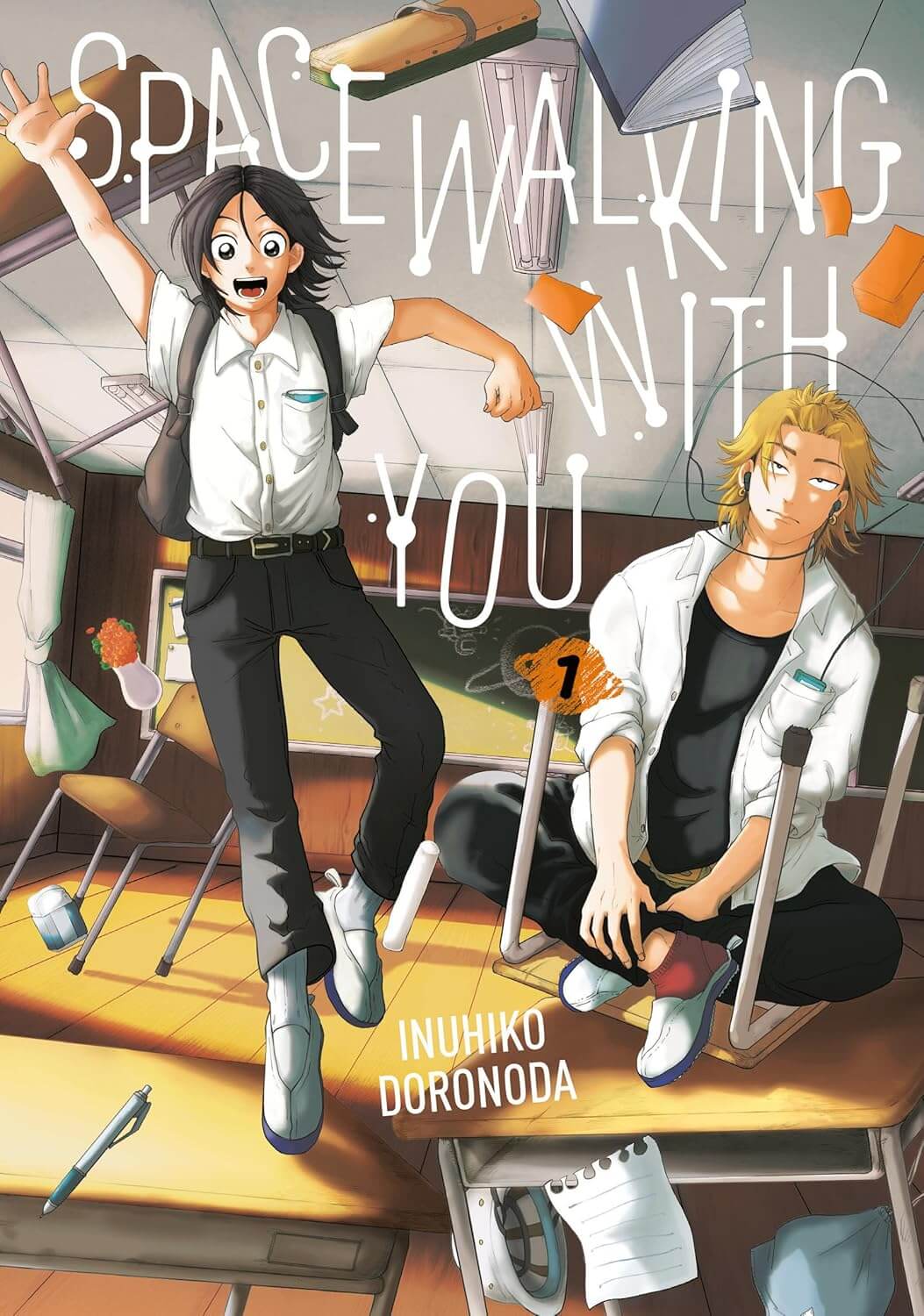
Vibes: High School Club Antics, ADHD+Autism Friendships, Trying to Fit In, Kitchen Sink Drama, The One Place Uncorrupted by Capitalism: SPACE!
Type of Representation: Neurodivergent characters
Content Warning: Bullying, Work place discrimination
Kobayashi has been written off as a lazy delinquent by family and friends. His inability to focus or retain information makes school an impossible trudge and work a nightmare. Everyone seems to be ten steps ahead of him whilst he’s still lost in the weeds. But a bright star is on the horizon in the form of energetic and eccentric transfer student Uno. Uno doesn’t have a volume control, and keeps a notebook with all the unspoken rules of society jotted down. His instruction booklet for life might be a source of humor for some, but for Kobayashi it’s a sudden awakening for a way to cope with his own issues! Uno’s passionate special interest in the vastness of space is rubbing off on Kobayashi too, as he learns the universe is far more vast than he ever thought it would be; and that it’s a better place when you have someone to explore it with.
It’s fair to say that Spacewalking With You is a Yatta-Tachi favorite. I’m not sure there’s much else I can say that hasn’t been said before! But Kobayashi’s struggles at school, and the way he feels overwhelmed at work and unable to cope was so relatable to me that I cried throughout his scenes. Whilst the manga doesn’t specify the exact flavor of neurodivergency these lads have, it’s not the kind of flimsy light coding you might get in other series. Uno’s autistic-like meltdowns are real and intense, and perfectly depicted. I also related to his inability to control his volume, and how folks criticize him for it. Whilst nothing is said outright, there’s no doubt on this earth that people with Autism and ADHD, as well as other neurodivergent tendencies, will find something to relate to here.
Story and Art: Inuhiko Doronoda
Translation: Joshua Hardy
Lettering: Evan Hayden
You can buy Spacewalking With You from Amazon, Barnes & Noble, and Bookshop.
My Brain is Different: Stories of ADHD and Other Developmental Disorders
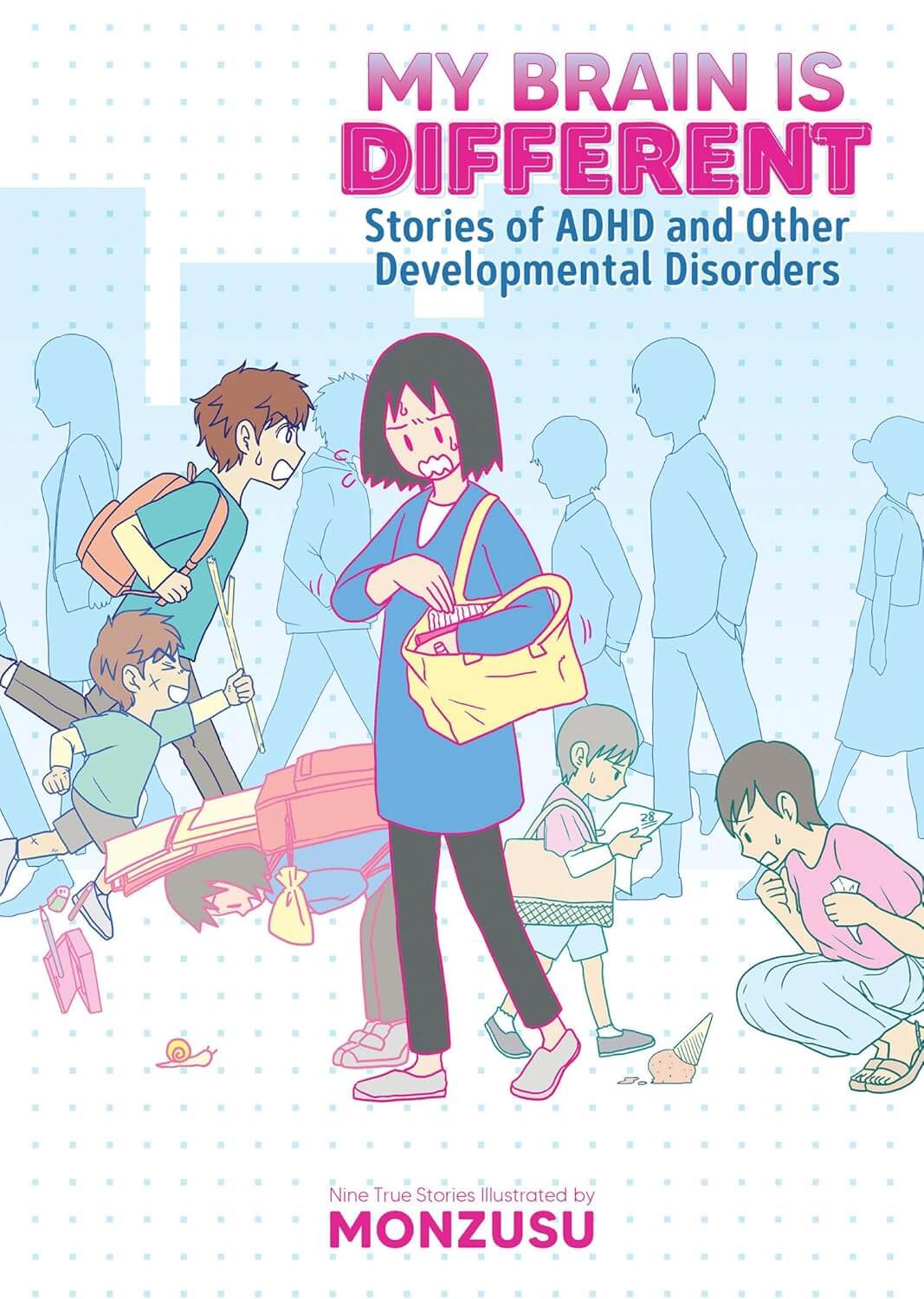
Vibes: Real Life Stories, Own Voices, Families
Type of Disabled Representation: Autism, ADHD, Depression, Anxiety
Content Warning: Child Abuse, Suicidal Ideation, Medical Trauma
After posting about her experience as an adult with ADHD, Monzusu got lots of comments from other neurodivergent adults. With their permission, she collected and curated people’s stories and put them together in one manga. These stories cover those who were diagnosed as kids, as well as those who get diagnosed as adults.
Whilst not all the stories are from the perspective of the person with the disability, their stories are still intimate and worth reading. These true stories aren’t always comfortable, but that doesn’t make them any less worthwhile. Artist Monzusu isn’t seeking to sugarcoat everything but to tell genuine stories of genuine human beings. It also feels important to read these stories that cover a foreign culture. Most people only ever see neurodiversity and diagnoses from within their own culture, and if we do look to a different country it’s usually only America.
Story and Art: MONZUSU
Translation: Ben Tretheway
Adaption: Shanti Whitesides
Lettering: Aila Nagamine
Sensitivity Readers: Dawn Davis, Leighanna DeRouen
You can buy My Brain is Different from Amazon and Barnes and Noble.
Hiraeth: The End of the Journey
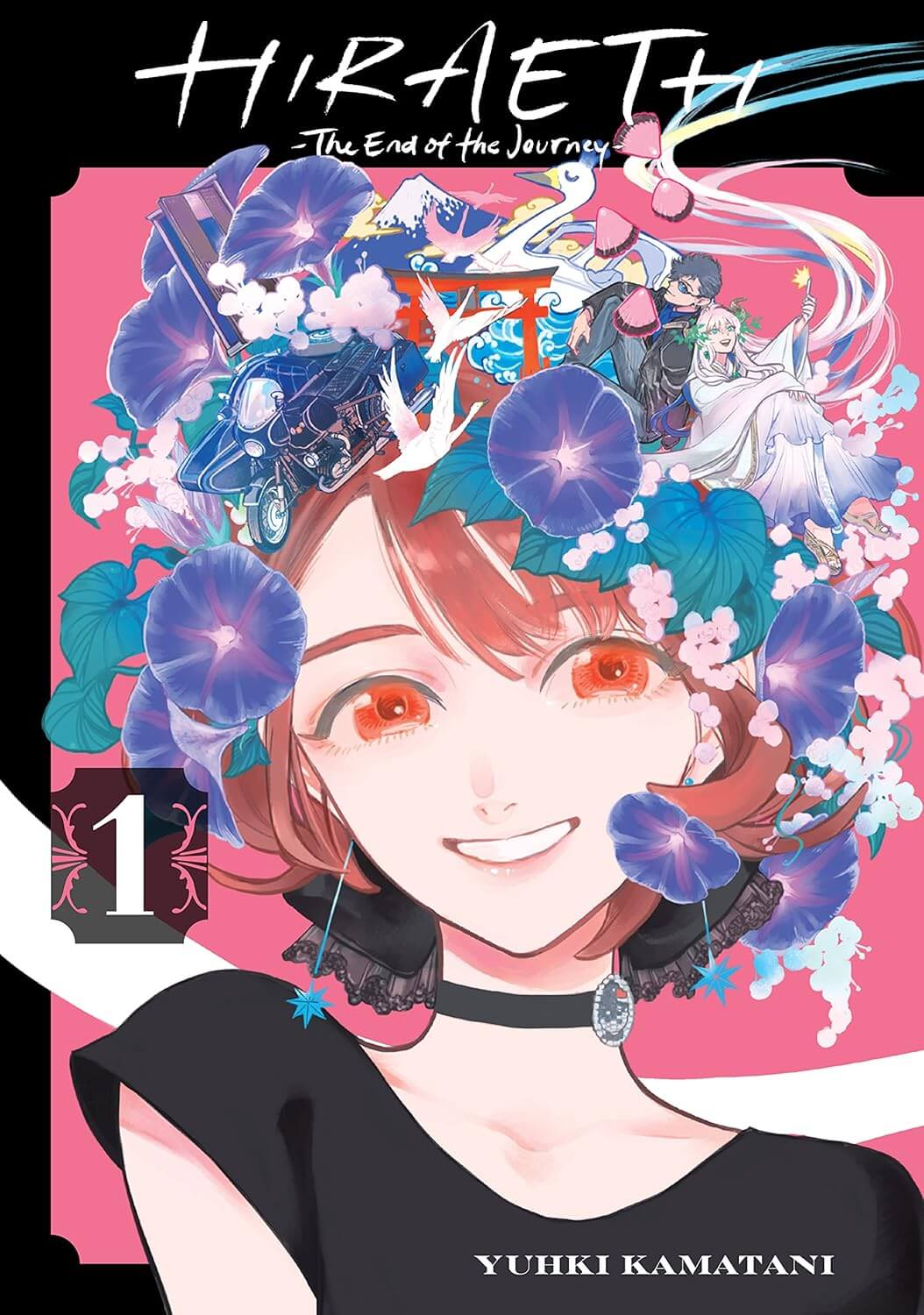
Vibes: Found Family, Gorgeous Artwork, Emotional Story Telling, Grief, Mourning, Life Affirming
Type of Disabled Representation: Depression, Anxiety, Terminal Illness
Other Minority Representation: Non-Binary MC, Queer MC
Content Warning: Attempted Suicide, Suicidal Ideation, Child Death
Note: Digital Only
Following the death of her best friend, high schooler Mika attempts to join her by stepping into traffic. But she’s saved at the last moment by a biker who is thousands of years old, and a god who is about to die. Before that can happen though, the pair of friends decide to take in all their favorite sites and make their farewells before the god enters into the afterlife. Worried that Mika might make another attempt on her life, the pair of supernatural buddies decide to take her under their wing in the hopes of showing her that life is worth holding on to.
From the creator of Our Dreams at Dusk, and Shonen Note, Yuhki Kamatani’s Hiraeth: The End of the Journey is a beautiful, emotional journey about death. It’s about finding the joy in life and actively seeking it. It’s about knowing that the end is coming and that it’s okay. It’s about not letting the precious gift you have been given slip through your fingers. In three short volumes, Kamatani shows the full human experience. It’s a joy to see Mika learn the art of wanting to live. Death is shown as something that we shouldn’t fear, but that shouldn’t be something we chase either. Despite its grim premise, it’s life affirming in all the best ways.
Story and Art: Yuhki Kamatani
Translation: Leah Surgent
Lettering: Salud Campos Blasco
Article edited by: Cynthia Caraturo
Big thank you to our supporters
From their continous support, we are able to pay our team for their time and hard work on the site.
We have a Thank-You page dedicated to those who help us continue the work that we’ve been doing.
See our thank you page