Manga’s greatest strength is its breadth. There is a series for every subject matter that you can imagine, and an artist for every taste. Despite this fact, only a narrow slice of the medium has broken through abroad. That’s where MINT (Manga International Network Team) comes in. Founded in 2024, this organization champions six artists (and five editors) that each offer something unique through their manga.
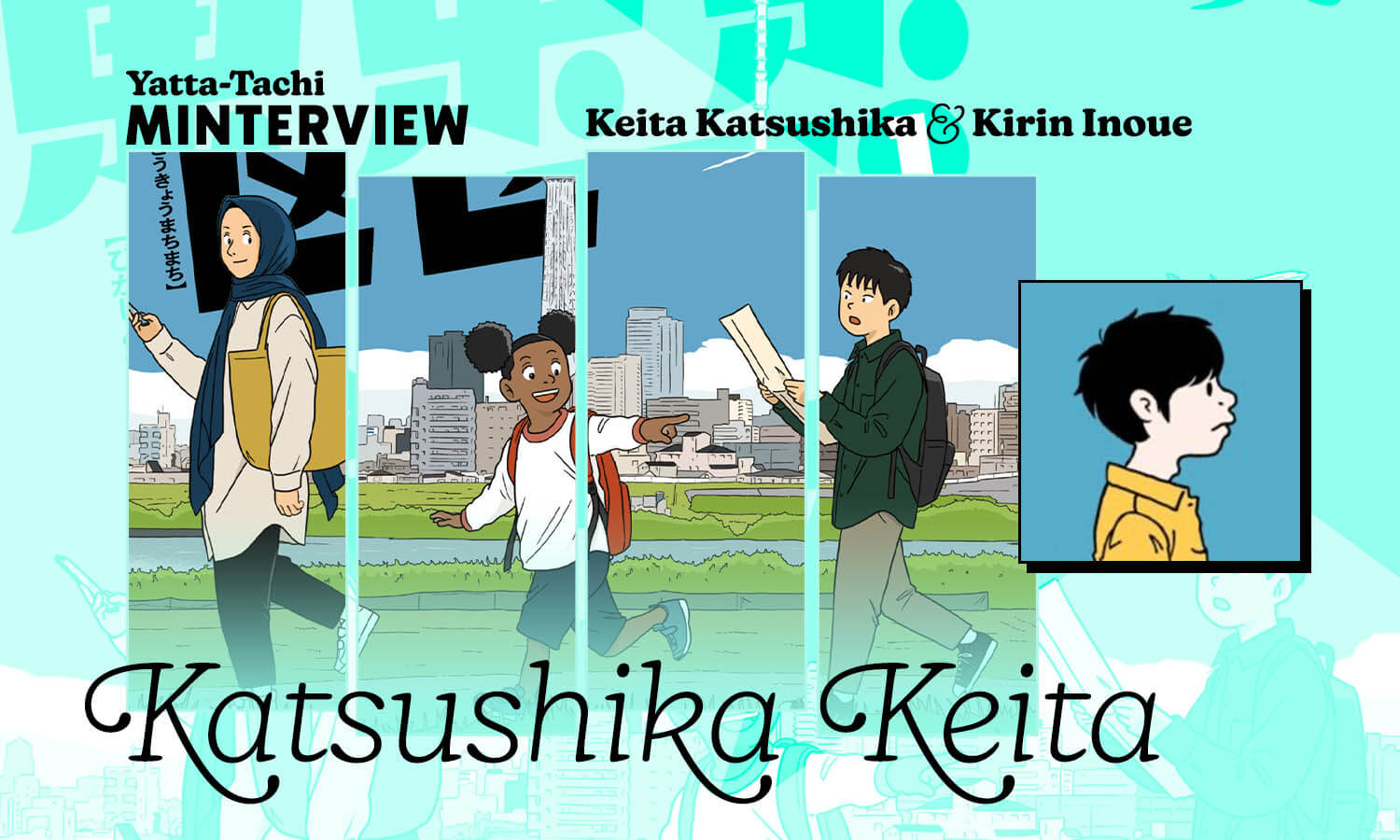
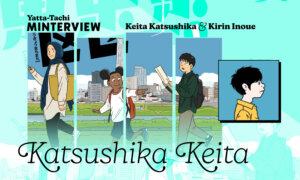
This is MINTERVIEW, a series of Yatta-Tachi interviews profiling manga artists and editors associated with MINT. This time we spoke with MINT affiliated artist Keita Katsushika and his affiliated editor Kirin Inoue. Katsushika debuted in 2010 as an independent manga artist. His representative work, Higashi Tokyo Machimachi, is a thoughtful Tokyo travelogue drawn in a style inspired by Franco-Belgian comics. His editor, Kirin Inoue, previously edited and published A DAY IN THE LIFE 7 Artists in 7 Cities Draw a Day During the Covid-19 Pandemic in 2021.
Keita Katsushika
I like works that use ligne claire
ADAM WESCOTT: When did you start reading manga, and when did you start drawing it?
KEITA KATSUSHIKA: I first started reading manga when I was in kindergarten, around 4 or 5 years old. I remember reading Shonen Jump and the GeGeGe no Kitaro manga which had an anime being shown on TV at that time. I was in elementary school when I first began drawing manga but I never finished them and I think I was drawing things like manga characters.
WESCOTT: Do you read comics from outside of Japan, as well? If so, what are your favorites?
KATSUSHIKA: When I was in high school, I was reading alternative comics from America and French bande dessinée. I really like the comics published by the North American publishers Fantagraphics and Drawn & Quarterly. I’m a big fan of comic artists like Adrian Tomine, Daniel Clowes, and Charles Burns. In French, I like The Adventures of Tintin and works that use ligne claire (clear line).
Turned on its head
WESCOTT: How did you make your debut as an artist? Did you work as an assistant, or did you start publishing your own comics right away?
KATSUSHIKA: When the web comic site Michikusa was launched, the editor for it reached out to me and asked if I would start a serialization. I had drawn manga for dojinshi and made illustrations for magazines for work, but it was my first time doing a serialized manga. I don’t have any experience working as an assistant but I did help my manga artist friend for a short time with their 1-volume work.
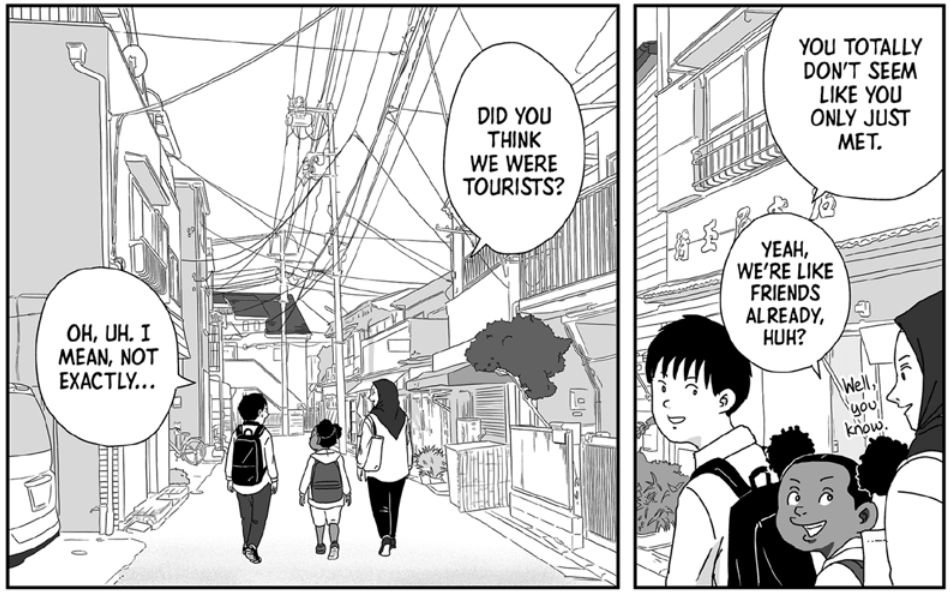
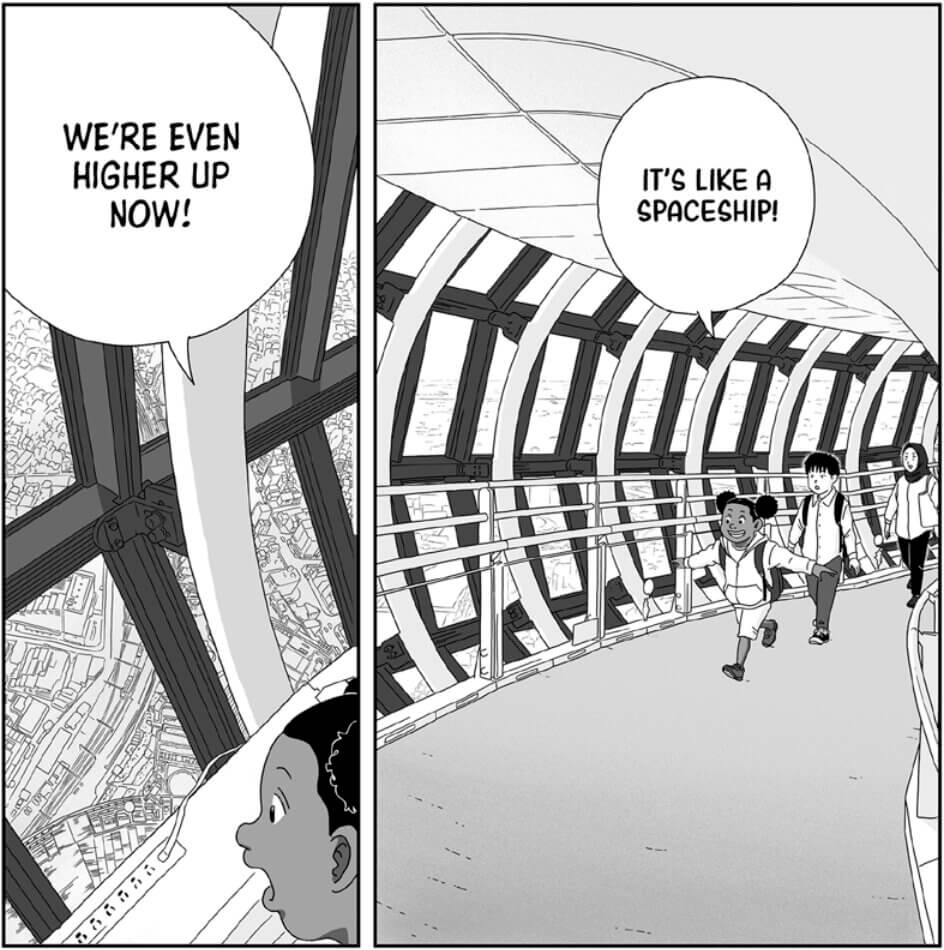
WESCOTT: Higashi Tokyo Machimachi is a manga series about exploring Tokyo on foot. What about walking through the city appeals to you?
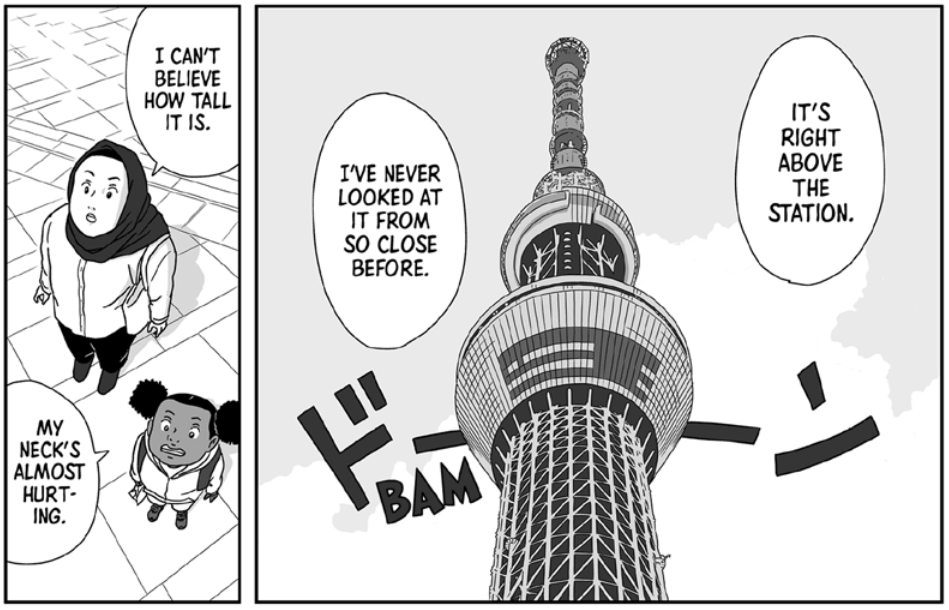
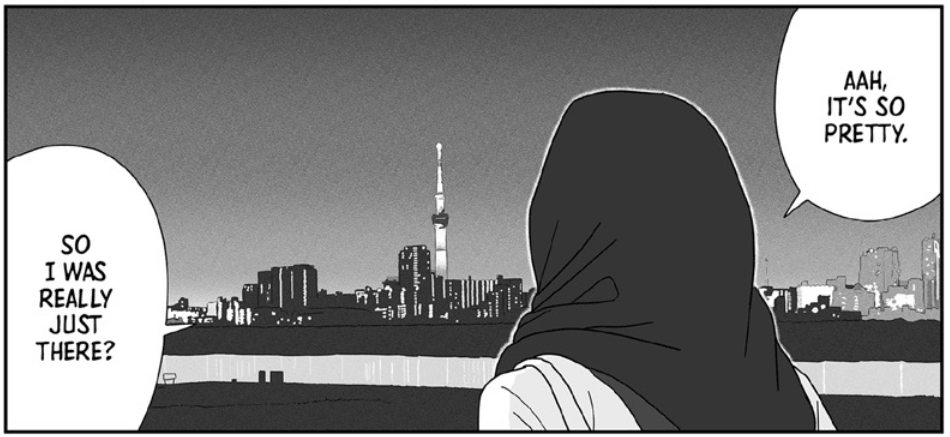
KATSUSHIKA: There are things in the current cityscape that remind you of past events and history. Even if you can’t tell at first, you can notice traces of them by looking at all kinds of documents and old maps. I also like it when the image I’ve formed of a city gets turned on its head.
I have to draw the people that live there
WESCOTT: Higashi Tokyo Machimachi also features characters from countries like Ethiopia, who rarely appear in manga. What made you choose to tell this story from their perspectives?
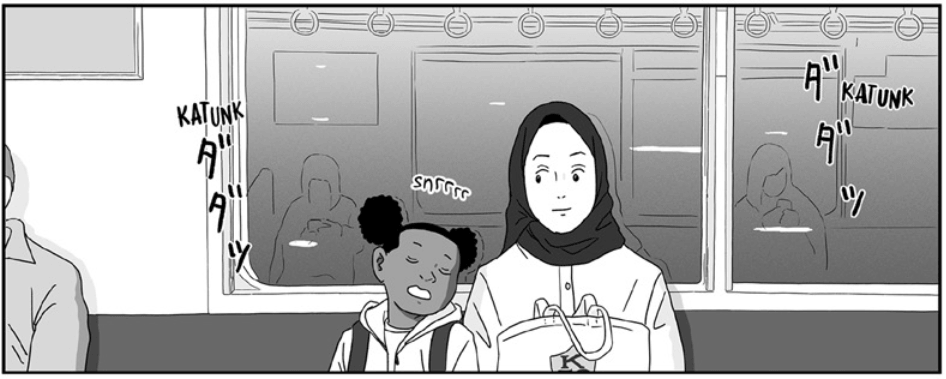
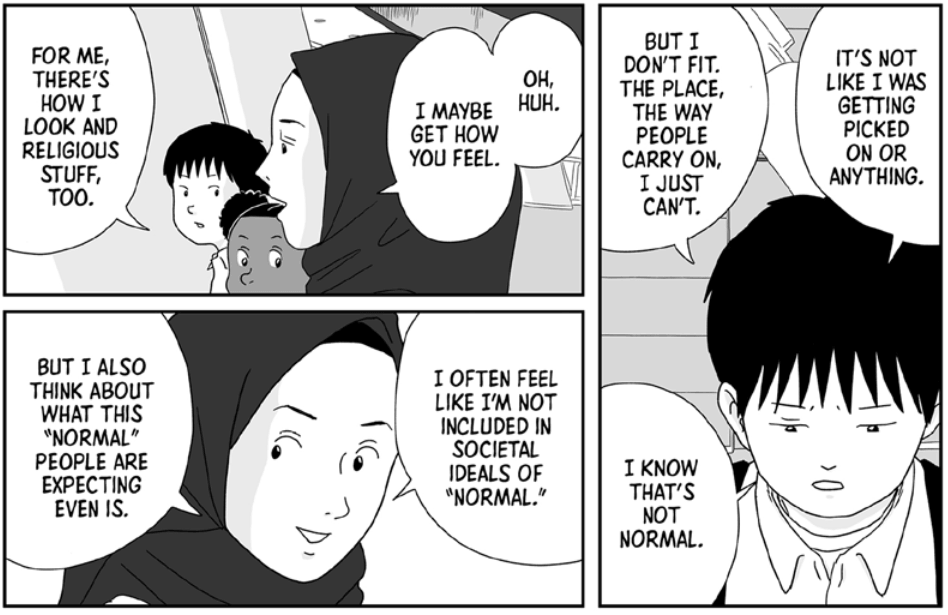
KATSUSHIKA: There’s actually an Ethiopian community in the town I live in. There’s a mosque, too, so there’s also quite a few Muslims. If I’m going to make my town the setting of my manga and draw it, I have to draw the people that live there.
WESCOTT: How did you do research for Higashi Tokyo Machimachi? Did you rely on specific texts? If so, which ones?
KATSUSHIKA: First, I visit the city and walk around. After that I read books about the area’s local history at the library. After reading up about the area, I go for a walk again and find places I hadn’t considered at first and add them to my story.
WESCOTT: What is your favorite ward in Tokyo to walk around in?
KATSUSHIKA: It’s not a specific ward but I love the city’s riverside scenery around the Sumida and Arakawa rivers.
People I may never meet will be able to read my manga
WESCOTT: What do you like most about drawing manga? What do you like least?
KATSUSHIKA: The nice part is that people I’ve not met and may never meet will be able to read my manga. The tough thing is drawing takes up so much time.
WESCOTT: Do you have any personal favorite tools or techniques that you use to draw manga?
KATSUSHIKA: I draw manga using Clipstudio on an iPad Pro and use an iPhone to take reference photos. Everything is digital. I can’t imagine drawing anything in analog.
WESCOTT: Do you have hobbies outside of drawing manga? If so, what are they?
KATSUSHIKA: I like listening to music, going for walks, reading, that sort of thing.
Kirin Inoue
I started looking for something new
WESCOTT: What can you tell us about the experience of editing and publishing A DAY IN THE LIFE 7 Artists in 7 Cities Draw a Day During the Covid-19 Pandemic?
KIRIN INOUE: Like many Japanese people, I grew up reading Japanese manga, but over the years, I began to feel that the grammar of Japanese manga was somewhat fixed in place. Around that time, I started looking for something new. I began reading American and European comics and visited comic art events and specialty bookstores around the world to encounter unfamiliar forms of expression.
In the midst of all this, the widespread social anxiety caused by Covid-19 presented a perfect opportunity to create something with creators from various countries, sharing the same perspective. Seeing the differences in each person’s approach to manga and their production styles was a very refreshing and enjoyable experience for me as an editor.
WESCOTT: How does Japan’s independent manga publishing scene differ from larger publishers like Shueisha and Shogakukan?
INOUE: In Japan, where events like Comic Market and COMITIA have a long history, the culture of individual artists selling their manga directly to customers is deeply rooted. Some publishers create works based on that culture. For major publishers, the editorial policy of creating works modeled after past bestsellers is without a doubt important. I believe that the fact that small publishers with less experience continue their manga publishing business itself contributes to guaranteeing the diversity of manga and its many forms in Japan, broadening the base of the manga industry as a whole.
His journalistic ability
WESCOTT: When and how did you start working with Keita Katsushika?
INOUE: Higashi Tokyo Machimachi was originally serialized on Two Virgins’ comic website Michikusa. I was involved as the chief editor at first, but later became the editor directly responsible for this title.
WESCOTT: What do you think is Keita Katsushika’s greatest strength as an artist?
INOUE: I think readers can see that his style wasn’t only influenced by Japanese expressions, but also American and European expressions. In Japan, his style is really original. But where he really shines is his journalistic ability to take a broad look at society, consider its many characteristics, and conduct a detailed survey of a place—his love for this really comes through in his works.
WESCOTT: Where does Higashi Tokyo Machimachi fit within Keita Katsushika’s larger body of work?
INOUE: At this point, it’s his debut work, but I think it will continue and become something like his life’s work. I think Katsushika will keep it going for a long time until he himself feels “there’s nothing left to draw.” In 10 or 20 years, I think it’ll become a work that people refer to when talking about East Tokyo.
Thank you to MINT for this opportunity! You can find out more about MINT, including a sample catalog of manga chapters drawn by the organization’s representative authors, at its official website.
Article edited by: Cynthia Caraturo
Big thank you to our supporters
From their continous support, we are able to pay our team for their time and hard work on the site.
We have a Thank-You page dedicated to those who help us continue the work that we’ve been doing.
See our thank you page