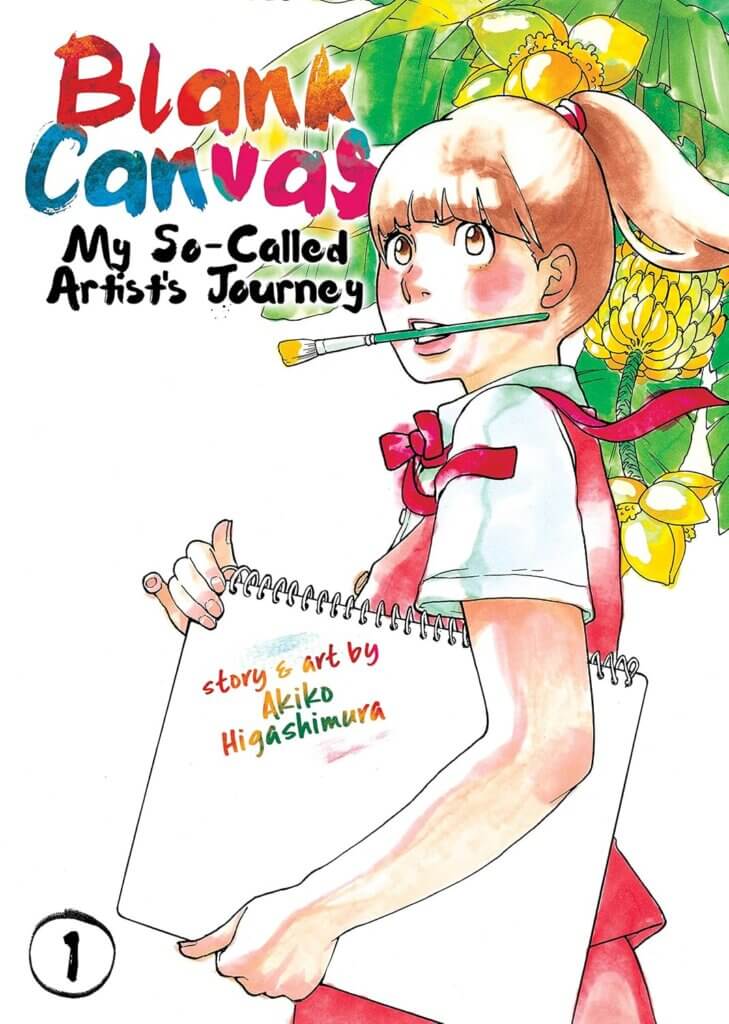
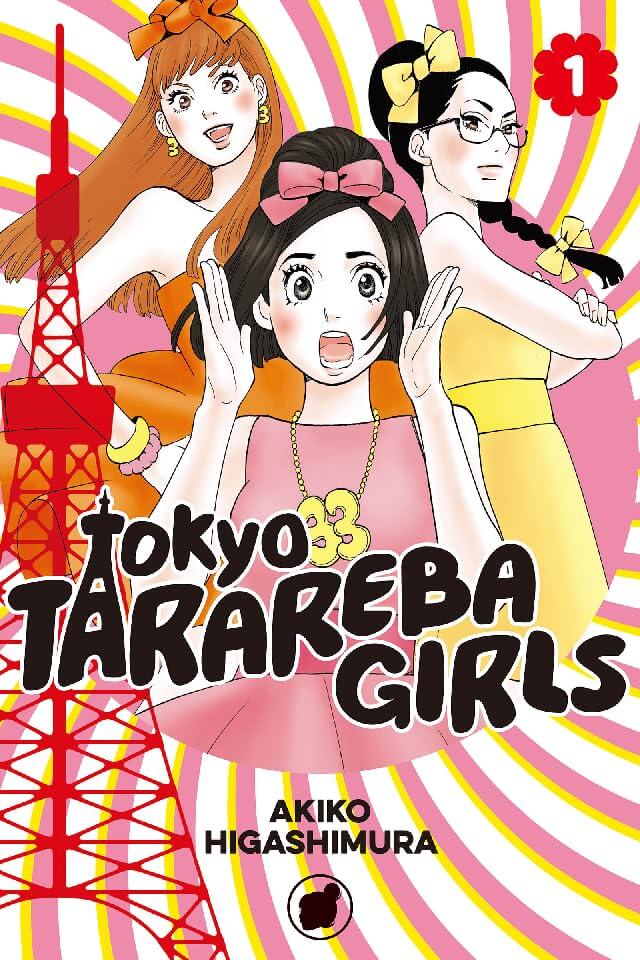
Akiko Higashimura made her first convention appearance in the United States this year in New York City at Anime NYC. This was hailed by devoted manga fans like myself as an event that would go down in history, because among that nerdy group, Higashimura is one of the most beloved artists working today. Her series Princess Jellyfish (which was adapted into a very good anime series in 2010) is a definitive work of otakudom. Her more recent Tokyo Tarareba Girls is an unapologetically brutal portrait of what it’s like to date in your 30s. And her memoir, Blank Canvas: My So-Called Artist’s Journey, is one of my personal favorites. So I was surprised to find upon meeting her that I didn’t actually know Higashimura at all.
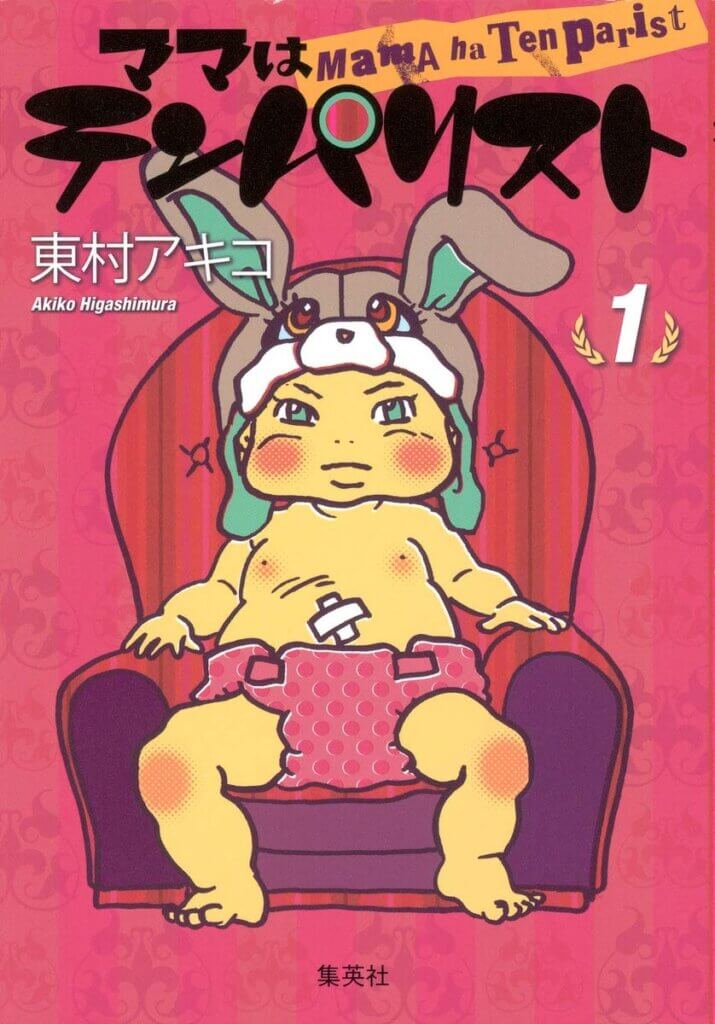
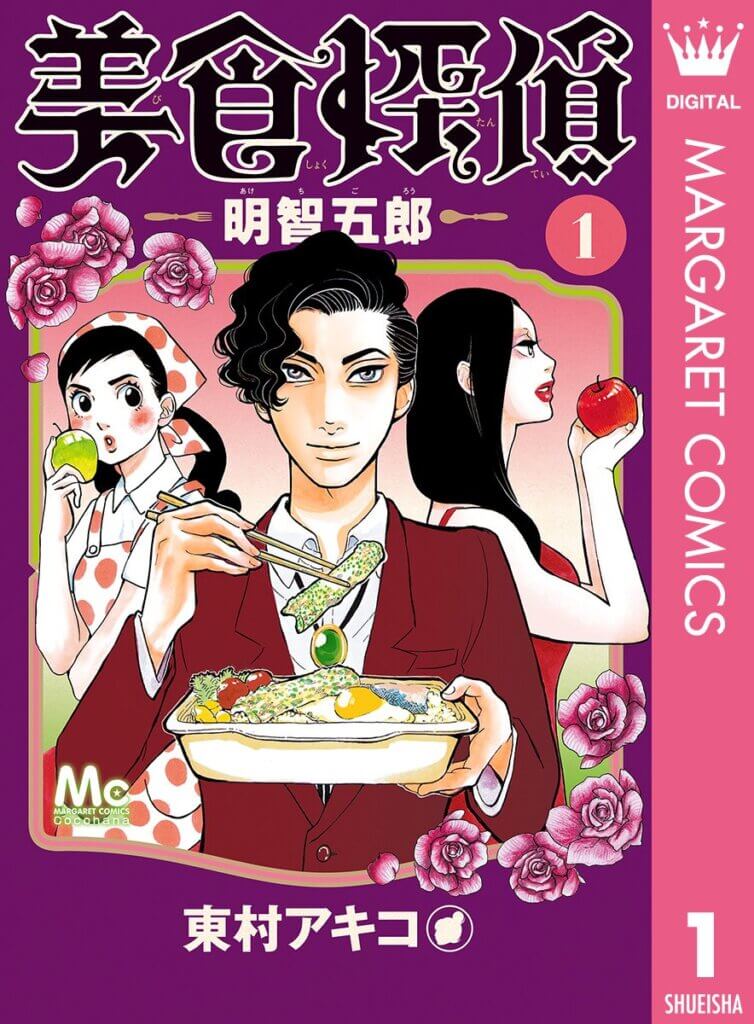
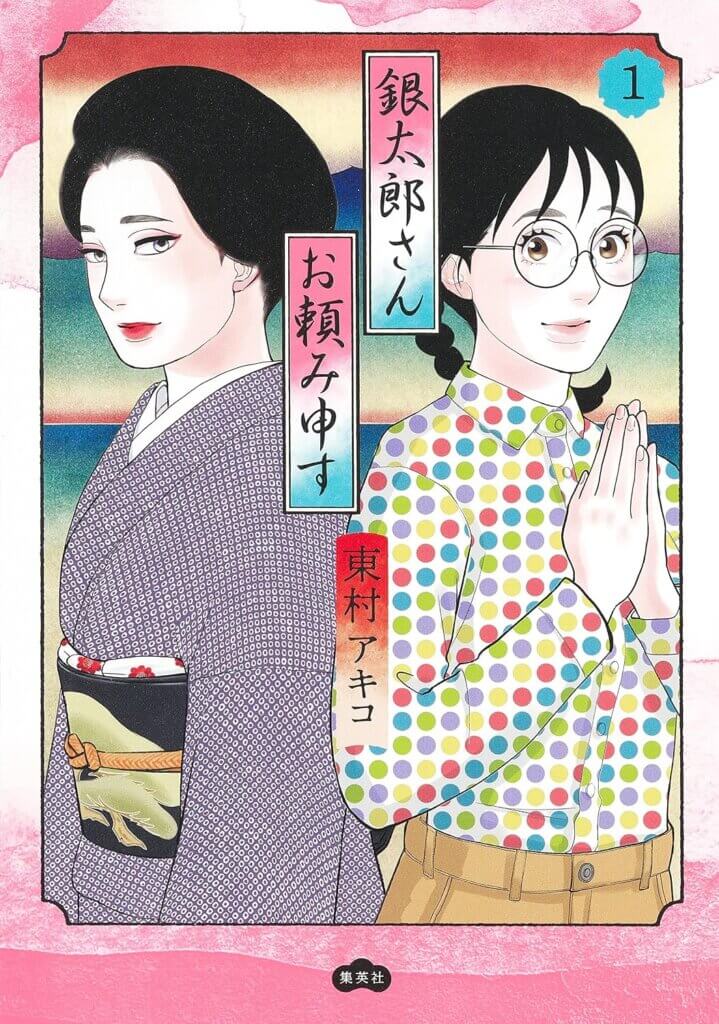
Sure, Higashimura is the artist behind Princess Jellyfish and Blank Canvas. But her career started years before. Her breakthrough was My Mom is Easily Flustered, a parenting memoir that wasn’t even available in English until its recent debut on Manga Million. Today, she draws manga spanning genres including gourmet murder mysteries, historical fiction, and even kimono (“Please make my kimono habit tax-deductible,” she said.) With the help of a carefully coordinated team of assistants, she creates up to 100 pages of manga a month. In between, she runs a comedy club in Tokyo while experimenting with directing and scriptwriting via the live-action streaming series The Vacation Principle. All this is to say that Higashimura is a prolific and popular storyteller in her home country, not just a cult favorite comics artist.
“If you have good characters, you can do anything”
Akiko Higashimura is also a firm believer in the importance of characters to a manga’s success, beyond plot, or even the drawings. While “everyone thinks the secret of good manga is story,” she said in her Anime NYC spotlight panel, “if you have good characters, you can do anything with them.” Higashimura populates her own comics with people she meets in reality—whether they be friends, passersby on the street, or even fans in convention autograph lines. A carefully observed and rendered character, she says, always dictates their own actions.
Yatta-Tachi had the opportunity to speak with Higashimura during the screening of Blank Canvas’s live-action film adaptation at the Japan Society. In this wide-ranging conversation, we discuss Higashimura’s favorite K-dramas, the minimum that a manga needs to be manga, and what advice she’d give to young manga artists starting today.
“You just need the lines”
ADAM WESCOTT: What do you think is the most important thing to keep in mind when drawing a character’s face, and why?
AKIKO HIGASHIMURA: The eyes. Also, their stance. Depending on the character, their backs might be a little arched, or their shoulders might be hunched back.
ADAM WESCOTT: In an episode of Naoki Urasawa’s NHK series Manben, you said that manga don’t need backgrounds. If manga don’t need backgrounds, what in your mind does manga need to be manga?
HIGASHIMURA: In shojo manga, the backgrounds are not important. What is important is the monologue, what the characters are saying.
WESCOTT: And the face, right?
HIGASHIMURA: To be honest, at bare minimum, you just need the lines. If you have lines and just a little sunlight, you can go many pages with just those two.
Even in my series Blank Canvas, there’s a lot of panels without backgrounds, just lines put down one by one. It’s also not the amount of lines, it’s how the lines are phrased.
“It made me feel like I myself worked at that company”
WESCOTT: Do you have a favorite K-drama series?
HIGASHIMURA: Misaeng: Incomplete Life is the most interesting one. I’ve heard that it’s also the most popular Korean drama.
WESCOTT: Yes! They don’t know about it in the United States, but in Korea, they love it.
HIGASHIMURA: The series seems dull, but it’s very entertaining. In the latter half it becomes very emotional. It made me feel like I myself worked at that company for almost a year.
WESCOTT: Do you watch J-dramas, as well?
HIGASHIMURA: I should watch them. I’ve been watching movies these days. Do you watch J-dramas?
WESCOTT: I’ve seen Fence, Unnatural, and High School Teacher. The last one’s very strange.
HIGASHIMURA: Yes. I used to watch a lot of J-dramas before, but I haven’t been able to recently. I’ve been watching more K-dramas. In terms of J-dramas, though, I like Kita no Kuni Kara, “From the Northern Country.” (Note: Kita no Kuni Kara is a classic 1980s J-drama about a father who moves from Tokyo to Hokkaido with his children after his divorce.)
“If my manga could save at least one person…”
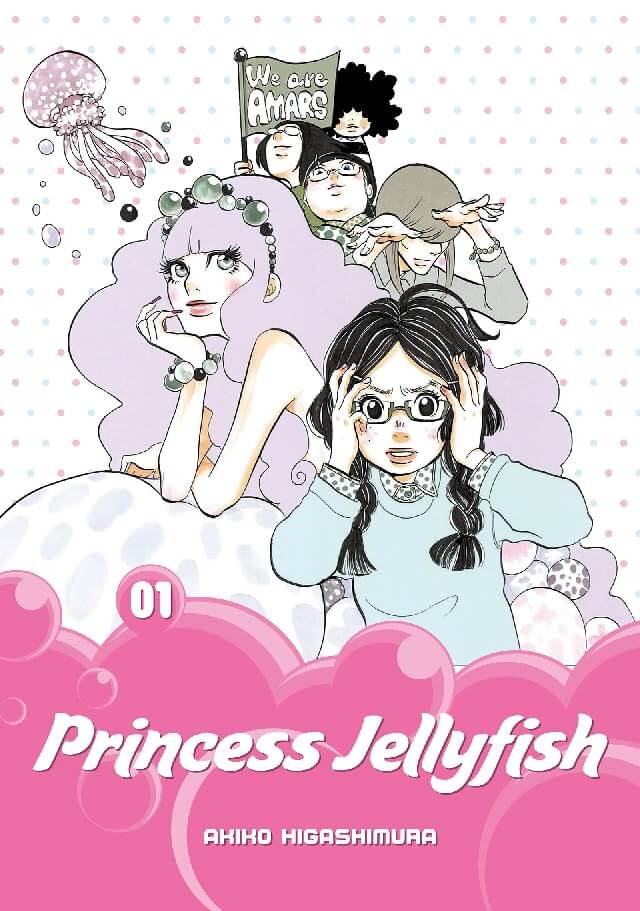
WESCOTT: One of my favorite moments in Princess Jellyfish is the scene where the main character sees the many clothes that will be burned, and realized that while she looked up to fashion, fashion is just like any other industry.
HIGASHIMURA: Ahhhhh! I also like that scene.
WESCOTT: Have you experienced a moment like this in your own life?
HIGASHIMURA: There was an editor from Shueisha at a party who told me to my face that “a manga that does not sell is worthless trash.” Back then, my manga wasn’t selling, so that statement made me so angry. “There’s no way!” I thought. “If my manga can save at least one person, it will have been worth something.” I wouldn’t say that I’d thank him for saying that now, but it was a moment in my life that motivated me.
WESCOTT: What advice would you give to a young manga artist today?
HIGASHIMURA: I think that we should have a little discussion with everyone about what to do when AI becomes the default. Putting that aside, I’d say that you shouldn’t put too much emphasis on the details when you are drawing manga. The more detail you draw, the higher the overall standard. It’s too much work to maintain, and work-life balance is very important.
Also, really good manga isn’t actually that detailed. The most important thing is being able to draw memorable characters with a few lines. Just like the Eizouken character on your T-shirt. [For context: I was wearing a Keep Your Hands Off Eizouken! T-shirt.]
WESCOTT: That sounds like something Yasuo Otsuka would say.
The Vacation Principle
HIGASHIMURA: I also want people to go on more vacations.
WESCOTT: But you’re doing so much!
HIGASHIMURA: I’m taking a lot of vacation trips, too. Obviously, during the filming of the drama series The Vacation Principle, I wasn’t able to play around too much. But right now, I’m having a lot of fun on weekends.
WESCOTT: What are you doing right now on weekends?
HIGASHIMURA: I have a beach house where I go with my assistants. We eat barbeque and play on the beach.
WESCOTT: How many assistants are you managing right now for your manga?
HIGASHIMURA: Six.
WESCOTT: How do you coordinate them?
HIGASHIMURA: Right now, they’re all working from home across the country. Since Covid, a lot of Japanese manga artists have gone remote. From Monday to Friday, I’m constantly working, from noon to 7 o’clock. During that time I don’t even go to the bathroom. I’m completely focused.
“If I want an expression, I can just draw a picture”
WESCOTT: What was the experience like scriptwriting for the Blank Canvas film versus drawing the manga?
HIGASHIMURA: Scriptwriting’s a lot of work. I really don’t like it. When I’m drawing manga, if I want an expression, I can just draw a picture. When I’m writing a script, I have to write it in sentences. Back then, I just had to do it, so I did it out of necessity.
WESCOTT: You know, for the film Mad Max: Fury Road, they didn’t have a script. They just used storyboards.
HIGASHIMURA: Oh, really? I also felt that I should probably write a storyboard with just pictures.
WESCOTT: One more question: what is your favorite manga series by Mitsuteru Yokoyama, and why? (Note: In the aforementioned episode of Manben, Urasawa spots a similarity to Yokoyama’s drawing style in Higashimura’s work.)
HIGASHIMURA: I like Genghis Khan. It’s very entertaining. Has it been translated into English?
WESCOTT: Unfortunately not.
HIGASHIMURA: Is there a translation for his Three Kingdoms at least?
WESCOTT: No…
HIGASHIMURA: What?! Oh my God. You know, in Japan they call it “The Mitsuteru Romance of the Three Kingdoms.”
WESCOTT: There are many fans of Three Kingdoms here, but not of the manga.
HIGASHIMURA: You’ll just have to use AI translation or something. (laughs)
Article edited by: Anne Estrada
Big thank you to our supporters
From their continous support, we are able to pay our team for their time and hard work on the site.
We have a Thank-You page dedicated to those who help us continue the work that we’ve been doing.
See our thank you page