
Synopsis
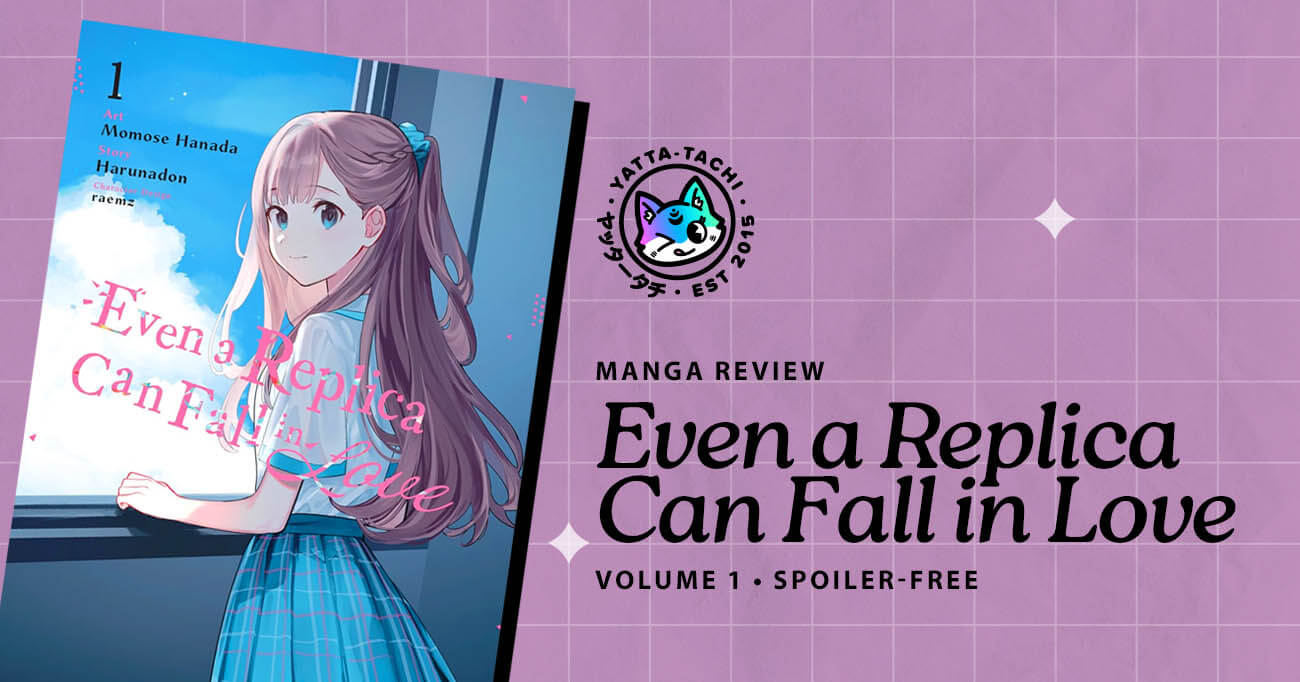
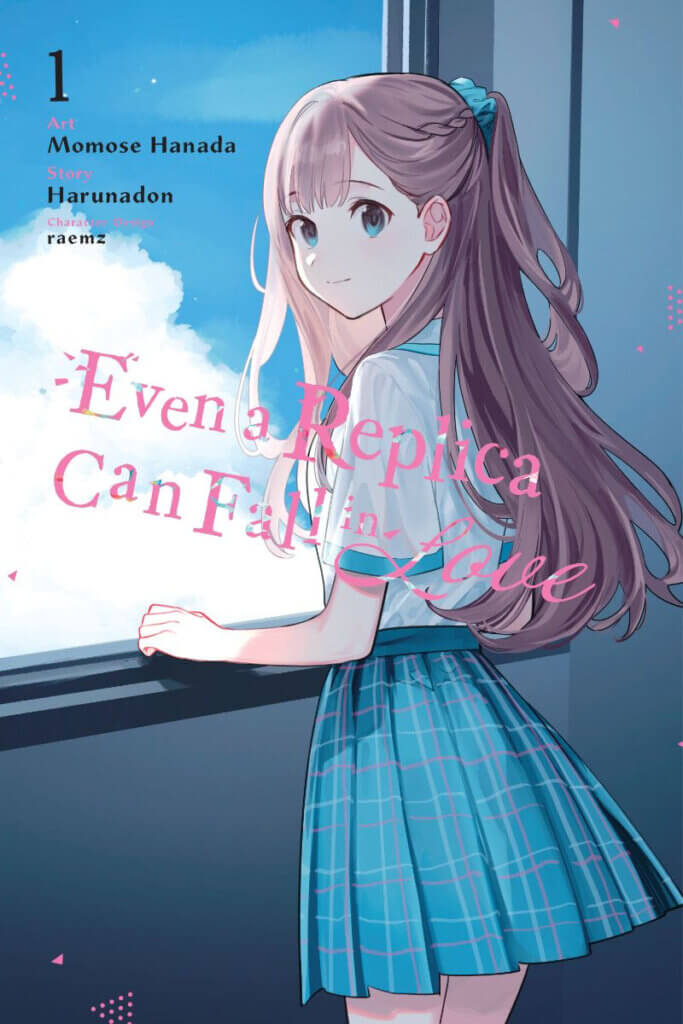
Ever since she was a child, Sunao has summoned her replica—a perfect copy of herself nicknamed “Nao”—to handle things she doesn’t feel like doing. Got period cramps and don’t want to get out of bed? Send the copy to school in your place. Fretting about flunking a test? Make the replica take it instead. Nao takes all this in stride and wants nothing more than to help Sunao. At least, that’s what she tells herself. But her growing feelings for a boy in the literature club make her wonder if maybe she wants some things of her own, too.
Great in theory…
You might be wondering how all of this works—how did Sunao create a copy of herself? Where does Nao go when Sunao dismisses her? We don’t get answers in this volume, and I hope it stays that way. While the concept of “replicas” brought images of clones or androids to my mind, this series skews more towards magical realism than sci-fi, with the supernatural element folded wordlessly into an otherwise ordinary world. The logistics of the premise are far less important than the emotional situation it creates and the philosophical questions it raises.
For example, if you make an exact copy of yourself with all your memories, are they “you”? Is personhood built by the things we experience and the relationships we form, or by something else more innate? If you don’t consider a copy of yourself to be their own person, or even a human at all, what are the ethics of keeping one around to do your bidding? All these quandaries are swirling around in the background of Even a Replica Can Fall In Love. These questions of autonomy and selfhood are front and center because the copy is our point of view character, and we spend enough time in her headspace to understand that she very much does have her own feelings and a disparate personality from the original Sunao’s.
Nao tells herself (and the reader) that she just wants to help Sunao, since it’s what she was made for. But it quickly becomes clear that her own desires are starting to peek through. Whether that’s as simple as reading books, or more complex and troublesome like her budding crush on classmate Sanada, Nao—to her surprise—wants to exist as her own individual. But that is not possible, since she’s beholden to an increasingly callous and volatile Sunao. All of this builds a nicely-crafted feeling of claustrophobia as we realise how fraught Nao’s relationship with Sunao actually is, and how this constricts her world and her agency.
…not so great in execution
All of this is wonderfully horrifying. But this is not a horror series, it’s a romance. That, unfortunately, is where it starts to lose me. Given the story’s themes, I can understand why it wants to explore Nao’s romantic feelings and potential relationships. Falling in love is seen as something uniquely human, so it confirms her humanity; and falling for someone that Sunao isn’t even interested in confirms that she and Nao think and feel differently despite their shared memories. It’s sweet to imagine a girl who was never supposed to be her own person finding her own happiness.
I found the concept of this series much more compelling than its execution, however. Maybe it’s personal taste (and we must always take that into account for something as subjective as fictional love stories), but Sanada simply didn’t make much of an impact as a love interest. The storytelling also didn’t convey much of a connection between him and Nao. While I believe that Nao, downtrodden as she is, would feel affection for a guy who was nice to her and encouraged her to do her own thing, I need more convincing that these two characters have actual chemistry and a lovelorn future together. There’s a reveal at the end of the volume that got me more on board (and I won’t spoil it here—maybe other readers will spot it coming a mile away, but I found it a pleasant surprise) but overall I found it difficult to get invested in the dynamic between these two.
The Verdict
Even a Replica Can Fall in Love plays with some intriguing concepts and raises questions about autonomy and selfhood. Depending on how you click with the central romance, though, you may find that the series is much stronger in theory than in execution. Maybe future volumes will flesh it out more. For now, the emotional core of the story failed to grab me—which is a real shame, because there’s potentially a lot to like here in this philosophical yet deeply personal story about a magical clone-girl trying to become her own person.
You can purchase Even a Replica Can Fall in Love Volume 1 from Amazon, Barnes and Noble, Bookshop, or your local comic store.
Credits
Story: Harunadon
Art: Momose Hanada
Character design: raemz
Translation: Andrew Cunningham
Lettering: Rebecca Sze
English edition by Yen Press
Thank you to Yen Press for providing an advanced review copy of this manga. Receiving an advanced copy had no impact on the reviewer’s opinions.
Article edited by: Adam Wescott
Big thank you to our supporters
From their continous support, we are able to pay our team for their time and hard work on the site.
We have a Thank-You page dedicated to those who help us continue the work that we’ve been doing.
See our thank you page