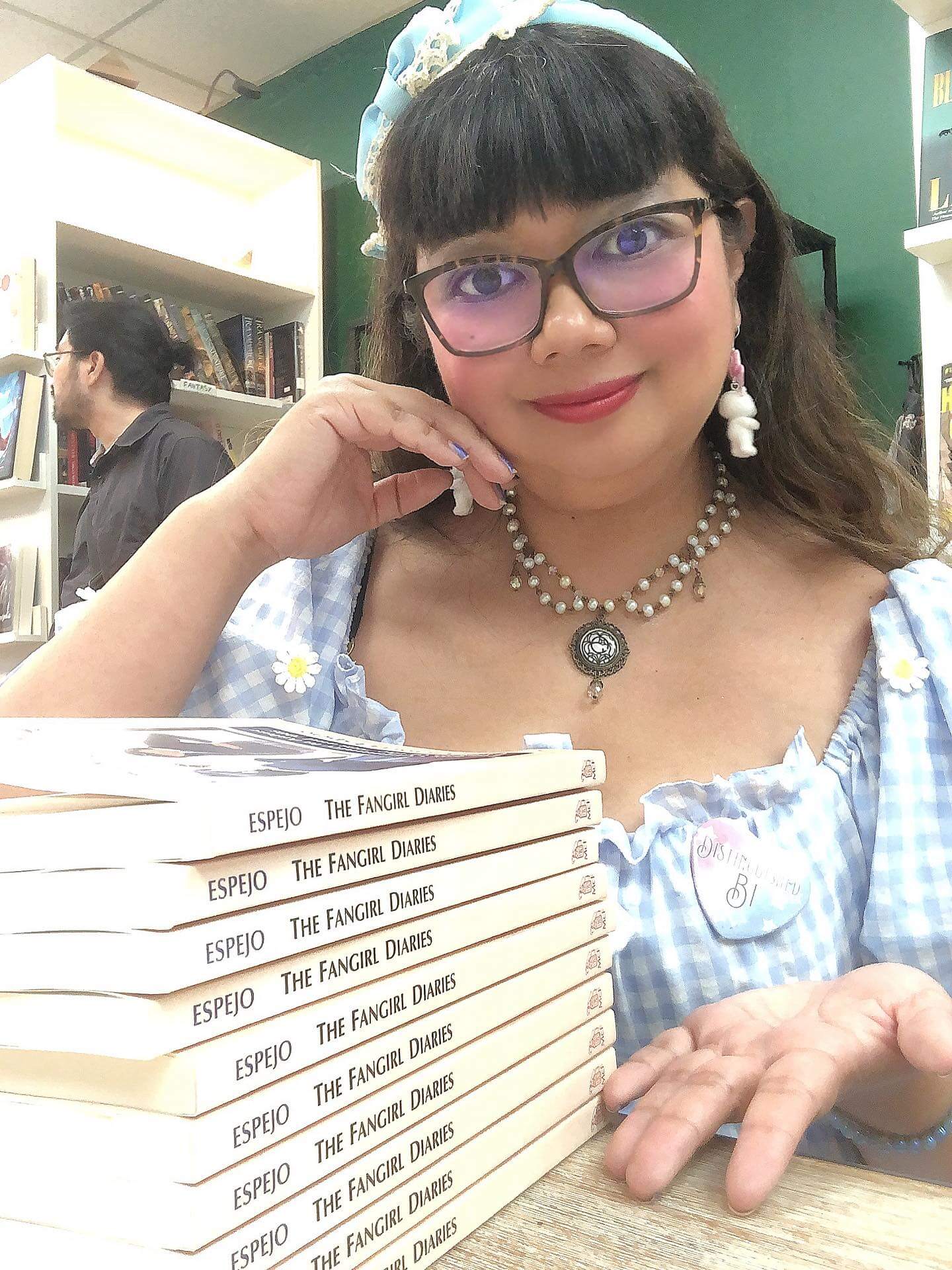
Erica Victoria Espejo has been cosplaying and going to cons longer than most. Long enough that she not only remembers a time before things like Arda Wigs and social media radically changed the cosplay landscape, but she also had a front row seat to watching this transformation in real time. We spoke with her about growing up in fandom, how she found a great love in cosplay and conventions, how she watched them grow and change (for better and for worse), and more from her latest book, The Fangirl Diaries. The following interview was edited for length and clarity.
Kennedy: Tell the readers about yourself.
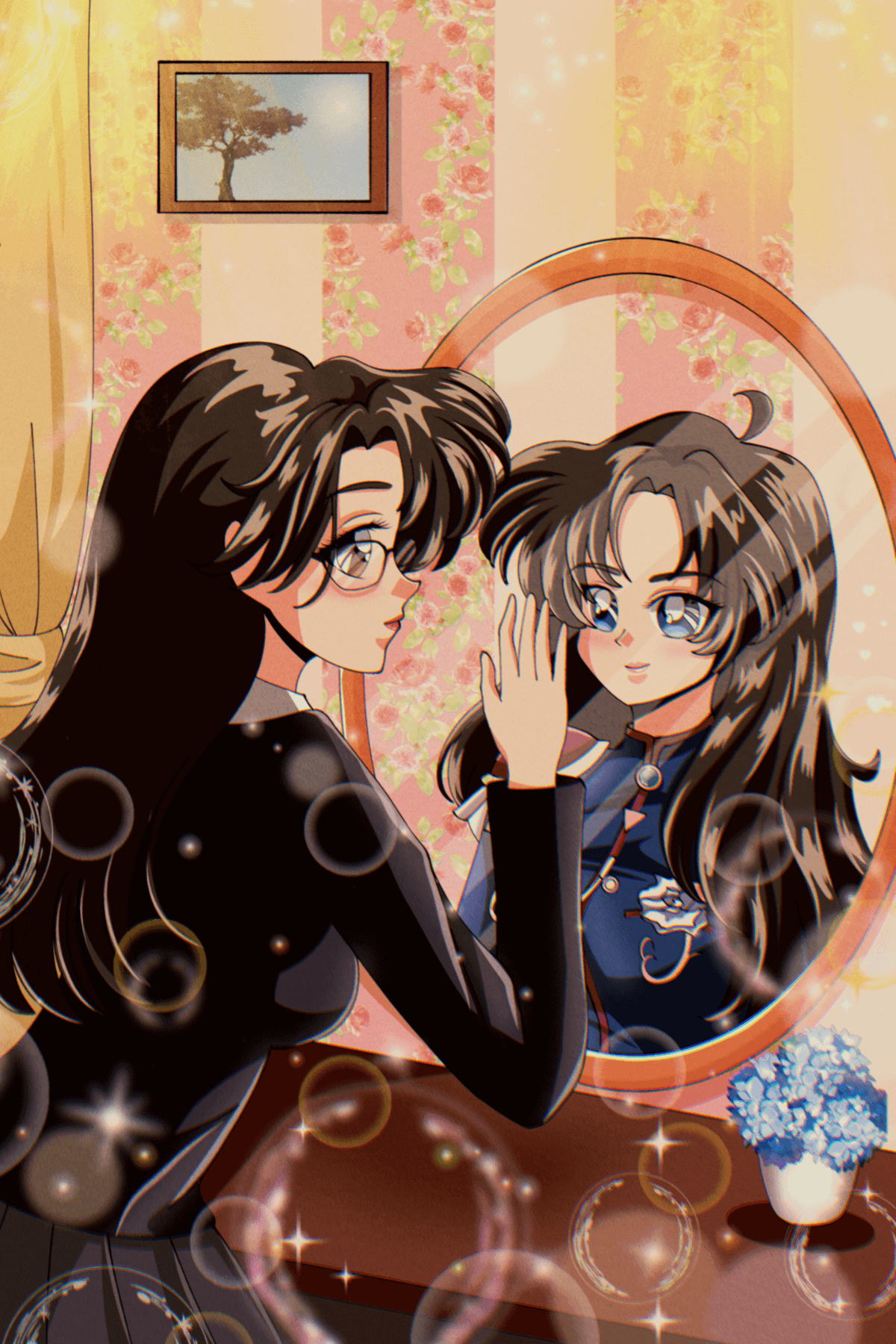
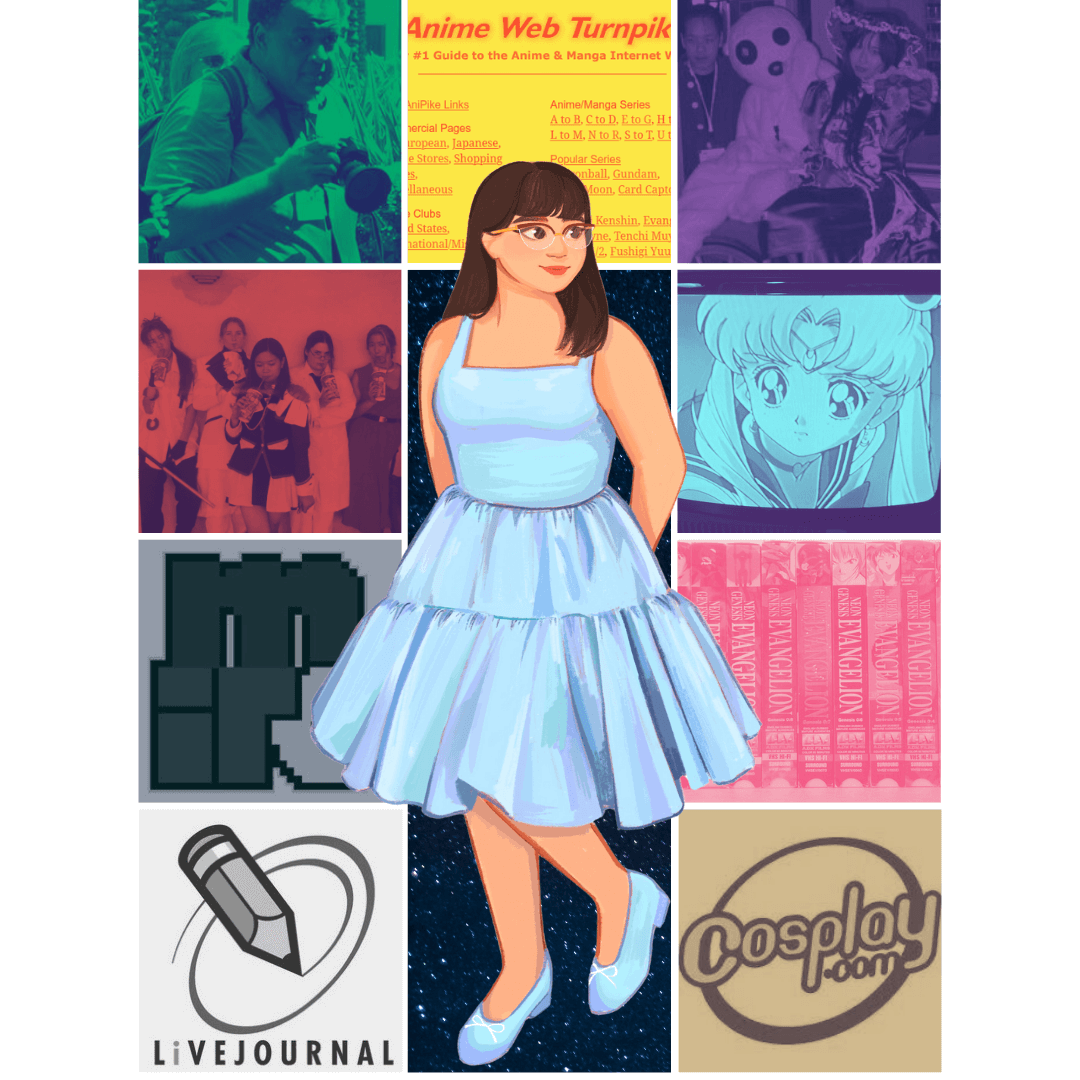
Eri Victoria: Hi, my name is Erica Victoria Espejo. I published my first book, my debut book, The Fangirl Diaries. It came out in March of this year. And basically what inspired me to write this book was I got into anime fandom in the mid 90s by way of Sailor Moon. And then I became an anime fangirl. And then from there, I started to go to conventions, started cosplaying in the early 2000s, and I created a website called Scarlet-Rhapsody.com where I would write con reports, I would post photos and tell all my stories about going to conventions. Since then, I’ve been very active being a convention blogger.
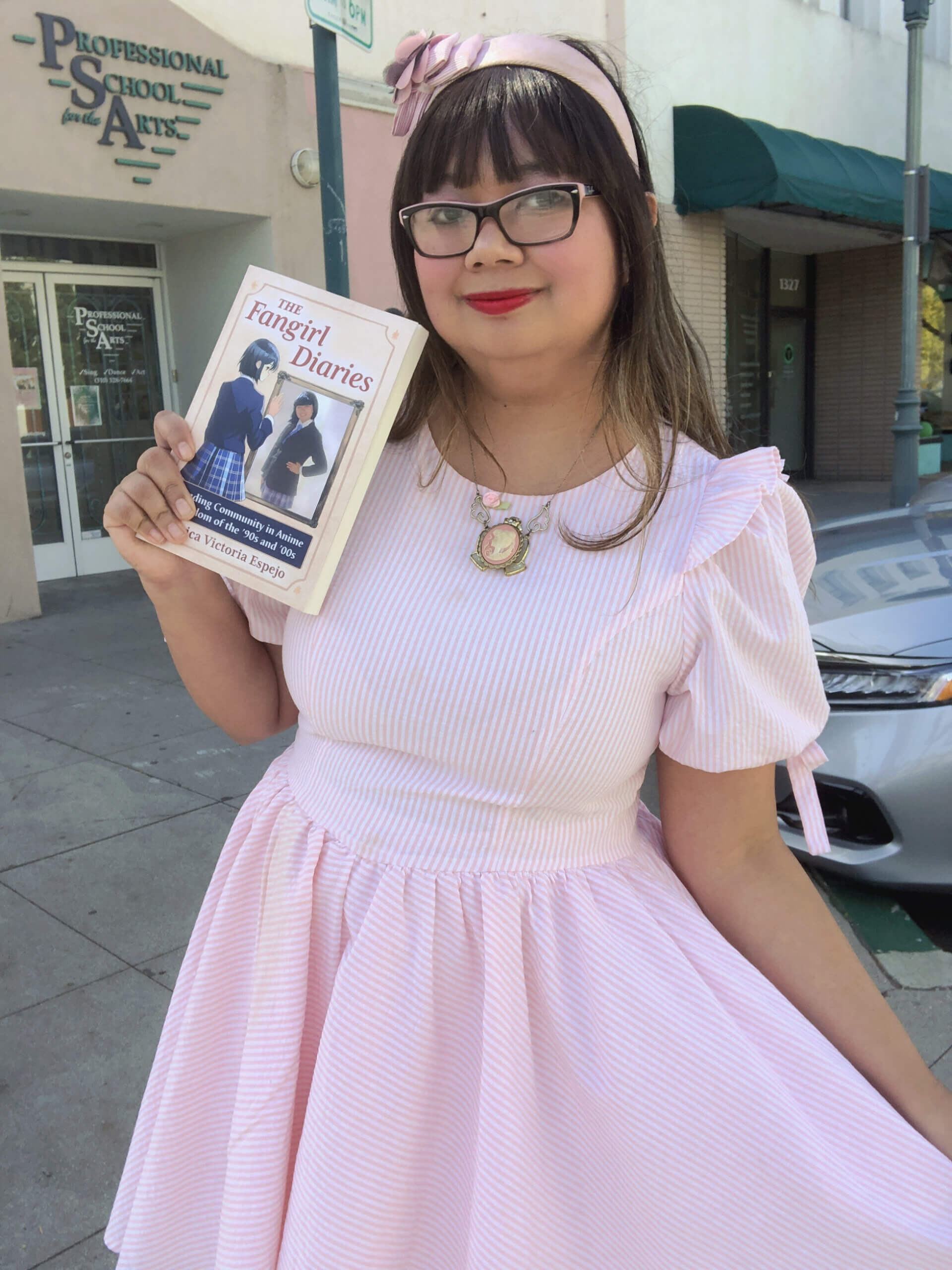
I work in academia. I’m very happy that I’ve achieved my dream to be a writer. I live with my two cats, Karma and Nico. Yeah, that’s just pretty much me in a nutshell.
Kennedy: In the book, you spend most of the time talking about a bunch of your favorite anime from the time like Sailor Moon, Gundam Wing, and so on. Do you have any favorites from the past, let’s say, 10 years?
Eri Victoria: Oh, absolutely. Because I do have a cat named Nico, I’ve always been fond of school idols and idol anime since watching Macross. So, Love Live! is definitely a top of that list. If I had to choose my favorite era of Love Live!, it would be Nijigasaki.
Of course, I am obsessed with Spy x Family. Yor Forger is one of my favorite femme fatales of all time. I’ve also been on a Demon Slayer kick. I cosplay Shinobu. Fun fact, I also cosplay Shinobu at children’s charity events, and it’s very interesting because I’m like the one anime character, and you have these Marvel and Disney characters, and Star Wars characters, and I’m like the representative of anime and all these kids just come up to me and tell me their favorite Demon Slayer character and I just think it’s one of the most wholesome things ever.
Kennedy: Who’s their favorite character?
Eri Victoria: Rengoku. So, one girl actually showed me her Rengoku sticker that she had, I think it was in her notebook or something, like, “Yeah, this is my favorite character! I like Rengoku!”
Kennedy: Have you ever run into any other people dressed up as anime characters at events like this, or has it always been just you?
Eri Victoria: I’ve also been trying to convince some other people who do have access to anime costumes to also join me in my anime-ness. So, I have a friend who does Misty from Pokémon. And I believe I also got like one of my other friends to go as Mitsuru [from Demon Slayer] at one of these events, but in a somewhat more safe for work kind of a version of the outfit if you catch my drift.
Cosplay as a Hobby and Business
Kennedy: Utena was the first character you cosplayed as, right?
Eri Victoria: Yes! Utena was my first cosplay I’ve ever done and ever worn to a convention. After attending Anime Expo 2000, I wanted to cosplay, but how do I go about this? I normally would ask my grandma to make me my Halloween costumes, but she was in the Philippines, and I was in the United States. So, I was recommended someone by the name of Setsuna Kou, and I would go on her website, Setsuna Kou’s Magical Closet or something to that effect, and I would commission her to make my Utena cosplay. And I paid about $100 to have her make me a customsized Utena costume.
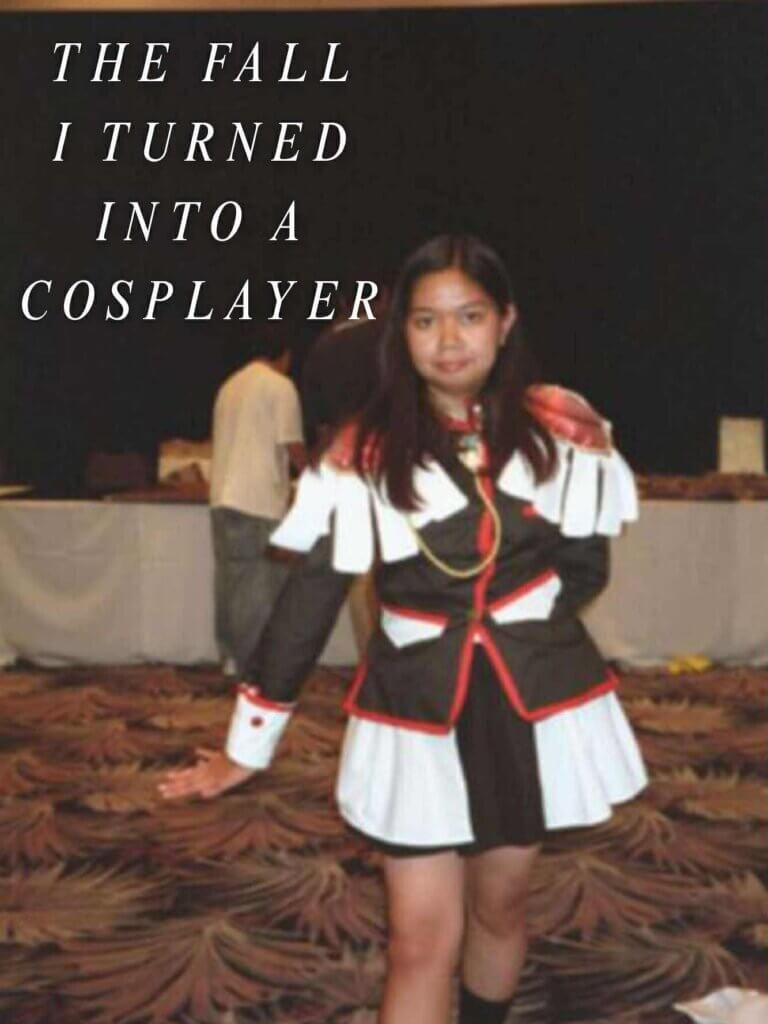
These weren’t pre-made or ready-made. Once you sent in the money, she would just get started on it once she had your measurements, and then she would ship that over to where I lived. And then I ended up wearing Utena to Ani-Magic 2000, and that took place in Lancaster, and it was so much fun just being my favorite character when I was a teenager, because Utena was the anime that spoke to me when I was in high school.
If Sailor Moon was for my middle school, Utena was definitely for high school. I mean, “adolescence” is in the title of the movie, after all. So, I just had a great time just being my favorite character because I always admired Utena’s nobility, and I also admired her vulnerability because at the beginning of the series, you see her like, “Yeah, I want to be a prince, save princesses. Yeah, let’s go! Anthy, I want to free you from your chains!” But you realize as you’re going through the series, this is not going to be the case the whole time.
Kennedy: Speaking of, one of the most—in my opinion—interesting parts of the book is, you talk a little bit about having seen the early days of cosplay as a business. Tell me about the evolution of cosplay as a business and the way that has exploded in the past 20 or so years, and what you think is the biggest part of that.
Eri Victoria: When I first started cosplaying, you kind of had to just know someone online first. So, in my case, knowing from my friends who do cosplay, who Setsuna Kou was, and that’s how I would just get my more elaborate things made. Again, this was a custom-made kind of world. And then I would go on Cosplay.com when I was first starting out because you can actually put a post on their message board saying like, “Hey, I need someone to make me this costume.”
So, it was very much more of a commission—knowing someone who could make you something. It was very much more of a trade-based situation. And when I saw that, like, “Oh, I can get better quality wigs than the Party City wigs that I was seeing at costume stores” because back then, when it came to multicolored hair in anime, you have a lot of characters with different hair colors. If you look at my early photos of Utena, I have my natural hair because none of the pink wigs would match my mocha skin tone. And when Cosworx came around—Cosworx was the mark of the store arm of Cosplay.com that sold wigs.
If you thought Cosworx had more variety of color, a store like Epic Cosplay Wigs, for example, had different shades of pink that I could choose from. And in addition to that, The Five Wits Wigs, they have custom anime wigs for specific characters. So, instead of styling a wig to look like, for example, Sailor Moon, getting her odango bun type things and doing that on your own, you can already get a pre-made one with The Five Wit Wigs. So, seeing all the wig options that we have available now is great.
And what’s crazy to me is Amazon also has a lot of the custom character wigs at a really cheap price. And it’s like, you’re telling me I can get a Shinobu wig for less than $30 on Amazon, and I could have that shipped to me with Prime shipping, and it comes to my house in less than a day? I have actually had to do that a couple of times.
If you told me back in 2000 that I can go into Amazon and get a full Demon Slayer cosplay or a full anime cosplay, the whole set including wig for like about $100 and have that shipped off to my place in like in a couple of days, I kind of would have laughed at that.
AliExpress and other sites do take a little bit more time. But the point being is, getting a cosplay is far more accessible than it was 20 years ago. I mean, I did notice when Vocaloid was getting really big, a lot of people were returning to eBay to just get a ready-made Miku cosplay, and the whole Vocaloid cosplay scene totally exploded because of that. Same thing happened with Genshin Impact and seeing all these Genshin cosplayers, I wish I had this kind of access like when I was younger.
I’m both envious, and also at the same time, this also leads us into the debate of fast fashion. And anytime I pick a character too costly—as I’m a little bit old school, I will pick my favorite character—I’ll wear this for as long as I can. But I’ve also noticed, especially in post-2020, cosplay has become part of fast fashion in the sense like, I have to wear a new costume at every convention. I have to have the latest things so I can keep up on the algorithm. And I always just never quite vibed that way. Sailor Mars has always been my favorite character since I started watching Sailor Moon. Utena has always been my favorite character. So, I just stick with my favorites. Again, I’m a little bit old school like that, but it’s just amazing to me to see how much cosplay has grown, how much accessible cosplay is nowadays, and also that cosplay is now part of the fast fashion debate.
Cosplay as an Industry
Kennedy: So between the outfits themselves, and the fast fashion of it all, and wigs, which do you think is the larger industry?
Eri Victoria: I definitely think the costumes themselves are the larger industry because—again, it’s not just Amazon. The other downside to say, I used to make Sailor Moon costumes as a way to like, “Hey, I have student loans! Let me see if I could just keep up with my student loans by commissioning costumes.” That was the worst idea I ever made for myself. I have my prices set the way they are because I am an award-winning costumer, and someone looks at my prices and they tell me, “Oh, I can get that cheaper on AliExpress. I can get that cheaper on Taobao.”
Kennedy: What do you think changed to cause this massive industry of cosplay fast fashion to pop up?
Eri Victoria: When there is a lot on the market, there is a demand for it. So, when you have so many people into a free game like Genshin Impact, or a free game like Love Live! School Idol Festival and you end up liking the characters, you create a demand to be a part of that fandom.
Fandom was super niche, whereas nowadays, you have younger people because fandom is much more accessible. And with more access, that lets more people in, especially when you have something that’s free to play like Love Live! School Idol Festival or Genshin Impact. And then, when you have that many people in fandom, they want to connect. They want to go to conventions, and who doesn’t like dressing up? And then you see this demand for cosplay—this demand to be a part of it.
2020 had a lot to do with it because you had people going on TikTok making all these videos of themselves in cosplay, doing all these cosplay skits that we would normally see at a cosplay contest, on TikTok. And when that goes viral, more people start doing it.
Then vs Now
Kennedy: Cosplay, broadly speaking, used to be a much messier affair, logistically. Tell me about things in cosplay you’re so thrilled have been streamlined, or just somehow made easier since the late 90s, early 2000s.
Eri Victoria: I’m glad that sewing machines are much more ubiquitous and affordable and accessible, because I remember a few of my friends—and all high school age—we were wondering, how do we get away with this without sewing machines? Because none of us ever taken a sewing class. One of my friends ended up making this Malice Mizer cosplay, and basically it’s, “Hot glue me in. Let’s just take pieces of fabric, and just hot glue me into this giant, red, visual kei outfit.” And then just getting out of that, like, “Yeah, I’m trying to recover my flesh at the end of the night.”
Also, just the variety of colorful wigs. Because I tried doing that Sharpie dye thing with wigs because someone told me, “Yeah, you know that hot pink Utena wig you have? You could probably fix that by giving it a Sharpie dye.” And I tried that. It didn’t quite work.
I do like the fact that I can also get cosplay jewelry and cosplay accessories now, because I have friends who are my age that still like the craft part of it. I remember back in the day, when I had to figure out Princess Mars’ necklace, I think I repurposed some old Pretty Pretty Princess jewelry accessories to make that happen, and these old craft gems I had to repurpose. Part of the fun is just trying to repurpose and figuring out yourself, but I also do appreciate that I have friends. I know people from back then who are really into cosplay, have now created businesses and helping others achieve their cosplay dreams.
Kennedy: You mentioned Sharpie Dye a moment ago. A classic! For our readers who don’t know, please tell the class what Sharpie dyeing is, and the first time you encountered that.
Eri Victoria: One day, I decided to go to my friend’s place, and I asked them, “Hey, I have this Utena wig.” This is for Fanime 03. I was asking them, “Okay, I’ve heard about this method called Sharpie dyeing. I’m not quite sure what it is.” And it would help subdue the brightness of this hot pink Utena wig. My friend handed me this orange Sharpie and I had to literally just color the entire wig with this orange Sharpie. When they said Sharpie dye, I thought we were going to take a few orange pens, put it in a bucket, and then we just kind of dip the Utena wig in there, and then we just wait for a few. I didn’t know I had to literally just color the wig a few sections at a time.
Kennedy: Do you remember how many Sharpies it took to get through the whole wig?
Eri Victoria: I don’t recall, but I remember it took me from lunch to dinner to just figure it out.
Kennedy: Did it work?
Eri Victoria: No. That’s why I was like, “Wait, am I doing this right? What’s going on?” I know some other people would dip the Sharpie tip in some manner of liquid or chemical and do something that I don’t know. But I also heard the just-color-it-in-with-a-Sharpie trick. And I’m like, “Wait, this is not dyeing. This is coloring.” And it didn’t even work.
Conventions and Social Media
Kennedy: Pivoting into conventions overall, what do you think are the biggest elements of conventions that have changed since you started going?
Eri Victoria: One of the biggest changes in conventions is the interaction between guests of honor and attendees. And this speaks to both small and big cons, because I felt like during the early days I can go to Mari Ijima, and we can just talk about piano, because I also play the piano, too. And one of my favorite convention stories is running into Kunihiko Ikuhara in the lobby when I was in Anime Expo 2001. I didn’t know he was, and I asked this Japanese gentleman who had blonde streaks in his hair to take a photo of me and a friend, and then one of my friends was like, “Do you even know who that is?” Like, “Oh my god, wait, that’s—no, I want a photo with you!” So, I feel like guests were just so much more accessible.
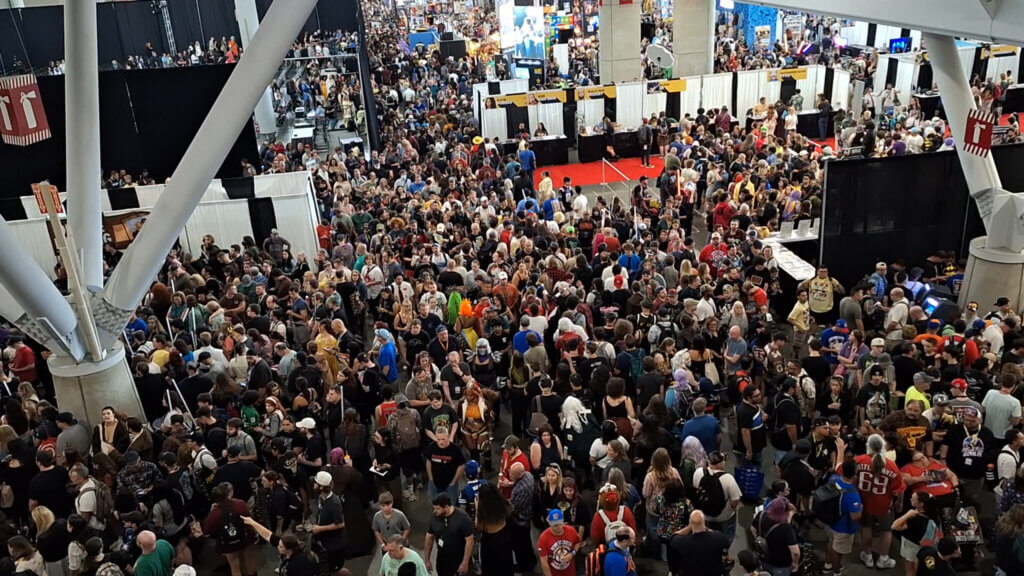
At least on the West coast, a lot of our conventions cater a lot to the English voice actors. They are usually sitting behind a booth, usually to sell selfies. They’re also selling like, if you want to record a voice message. And sometimes I just kind of feel that like the conversations there are just much more transactional than just saying hi, because I kind of feel bad. I don’t want to hold up the line because I just want to say hi, how are you doing? Because I just feel bad, you have all these people in line, just that want to talk, but it also feels like they’re also trying to sell something, too. I get we all have to make ends meet. Times are pretty hard right now monetarily. So I just kind of feel like that experience is less personalized.
A second one is the rise of social media and the perspective of how cosplay is seen and defined. I feel like I can write a whole book about it if I have an opportunity to write a sequel to The Fangirl Diaries. My perspective with cosplay has always been, it’s for fun. We’re all nerds dressed up. What’s the big deal? It’s such a niche hobby. And then 2010 comes around when you have people going on social media, and you have people creating all these cosplay pages on Facebook. At the time, the rationale was to separate your personal account on Facebook to having a cosplay account. Or like, “Hi, I want to curb creepers. I’m gonna create a public cosplay page.” That logic would never quite fall on me.
The way cosplayers connected after the convention was, we had LiveJournal. We had our own personal blogs where we follow each other on. And then once LiveJournal was bought out by Russians, we migrated to Facebook to keep up with each other. LiveJournal, for better or worse, was a great thing because I could catch up with all my friends, see what they were up to because that’s all I cared about. Now I felt, in the 2000s, early 2010s, getting to know people in the cosplay community was also becoming much more transactional. It was also being less personalized. I remember a conversation I was eavesdropping on, I just so happened to hear in passing one such photographer was like, “Yeah, you may start out with 100 followers on social media, but one day you’ll have 10,000 followers, 100,000 followers,” And like, wait, that’s not why I got into cosplay. I don’t know if I’m being the old lady here, but I just cosplay for fun.
I want to meet friends within the same fandom because if you have this much energy and time and investment to dress up as a character from your favorite thing, I also want to meet these people who are obsessed the same way I am. And just seeing people encourage this social media follow economy, it just took a lot of the personal interactions, the community-building aspect of it, from cosplay. When I started seeing cosplayers who didn’t even make their own costumes—and there’s nothing wrong with having a store-bought costume because I still do that, too—but part of being respected as a cosplayer in the early 2000s, to get a guest-type of status to judge a costume contest even, you had to make your own costumes. You had to win awards, and seeing people who are popular by social media numbers judge costume contests—that was the breaking point for me as to why I stopped entering a lot of cosplay contests. Because I want to be able to talk about the hard work I put into my Super Sailor Moon outfit.
And this all started affecting how cosplay contests were run, specifically in the comic con scene. Maybe some in the newer anime con scene, but I know like a lot of older, more established cons like Anime Expo, Anime Boston—they still have like a skit competition aspect to it, because I started noticing that a lot of costume contests, they were more like, “Hey, no skits.” You just walk on, answer a random question from the MC, and then you just get off on the stage. And I’ve never liked that format.
Upcoming Projects
Kennedy: You’re working on a second book. What can you tell us about that?
Eri Victoria: As I mentioned earlier before, I love school idols. So, my second book is very much different from my first book. My second book is all about school idols, and it’s taking that school idol genre to a Californian setting. I started volunteering for idol events two years ago with Northwest Idol Fest, and I started seeing all these talented folks from around the world. They create their own idol performance acts. They sing and dance on stage. And then I was like, “Hey, I really like this!”
Then, I joined Angel Hearts last year, and I decided to write a fiction book about taking the school idol model and putting that in a California setting. And because I really like writing about the early 2000s, and because that was my childhood—that was my high school years—let me write a high school romcom school idol book! I’m currently at the manuscript editing stage of it. I’m just happy I got the manuscript done. It’s all about these three girls who want to be the next best thing in pop music. Because why not?
Kennedy: Does it have a name yet?
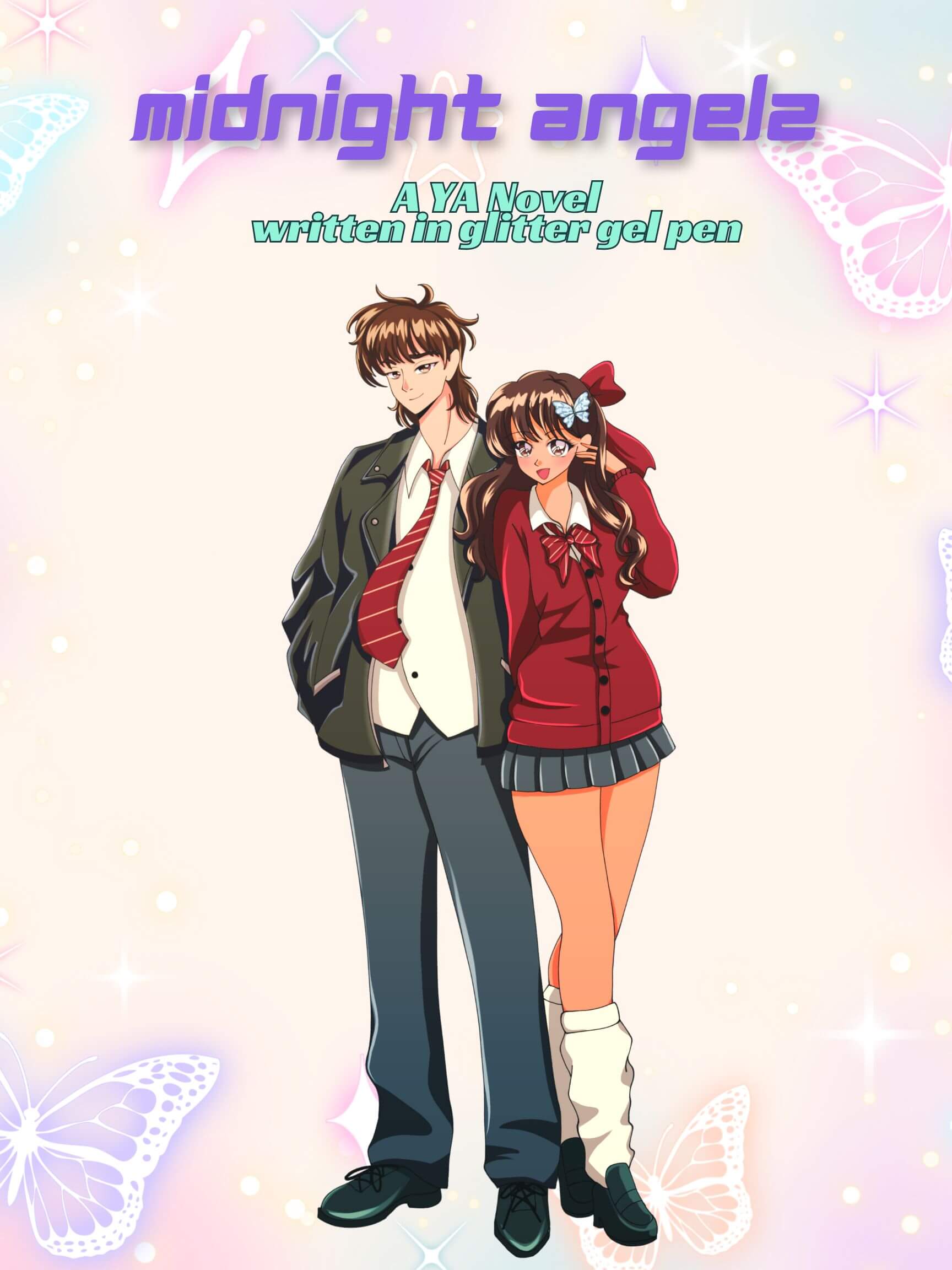
Eri Victoria: It does! The working title right now is Midnight Angelz—and that’s Angelz with a Z because you know it’s from the early 2000s if you spell if you replace an S with a Z.
Kennedy: Absolutely. It’s very Bratz. Can we have a little plot synopsis?
Eri Victoria: The plot of Midnight Angelz is Celine is a brand-new transfer student to St. Gertrude’s High School. Over the summer, she has an internship at the prestigious entertainment company Stella Studios, where she meets the heartthrob Stella—Stella is supposed to be a Disney kind of stand-in—Stella Vision teen idol Vince Falco. This was a chance meeting where she gets her first kiss, and then she transfers into her new high school, and Vince just happens to be a student at her brand new high school. However, she finds out that Vince is a playboy and breaks her heart in the first week of school. However, she makes two friends—also two outcasts at her school. Daisy May, the smart girl with lungs of steel, and Luna, who has a passion for fashion. Together they form Midnight Angelz: A school idol group. Celine writes the songs, Luna designs the clothes, May leads the group with her lungs of steel. It’s about high school romance and friendship.
Kennedy: And do you think anime fans—especially older anime fans—are going to like this one?
Eri Victoria: Absolutely. Especially if you’re a fan of idol anime, especially if you’re a fan of kaigai idols. I know a lot of folks in the Southern California community idol group, they are very excited about this book because it does embody the spirit of idols. I also have a lot of Easter eggs in the book. So, if you’re familiar with old school J-pop, old school K-pop, I drop in a lot of references to Ayumi Hamasaki, Namie Amuro, BoA. So, if you’re a fan of them, it’s all in there, too, because Luna—she is my J-pop and K-pop girly.
Kennedy: Before we end, do you have anything else you would like to say about your book, about cosplay, about conventions, about literally anything? The floor is yours.
Eri Victoria: When it comes to cosplay and when it comes to hobbies, it’s about the love, not the likes. And remember: Conventions, fandom—it’s all about fun. And to be cringe is to be free. You can also support my book. You can get signed copies at the Underdog Bookstore and at the Untold Story bookstore. And when you do support them—because they are indie bookstores—you get a free bookmark in addition to a signed copy. I hope you do get to enjoy it! If you have read The Fangirl Diaries, please leave a review on Goodreads. Leaving us a review on Goodreads helps you keep us relevant within the algorithm.
You can purchase The Fangirl Diaries on Bookshop, Barnes & Noble, and Amazon
Article edited by: Anne Estrada
Big thank you to our supporters
From their continous support, we are able to pay our team for their time and hard work on the site.
We have a Thank-You page dedicated to those who help us continue the work that we’ve been doing.
See our thank you page