Synopsis
A winged detective who prefers to travel by foot. A hapless comic artist. The formation of Japan’s railway system. Labor organizing. Spies and criminals. Religion. Tokyo. Los Angeles. The moon. All to answer the question: Who, or what, is Billy Bat?
Dreary night murders
At this point, you know what to expect from a Naoki Urasawa comic. There’s always an unlucky man who stumbles into a vast conspiracy. Symbols that could mean anything or nothing. An emphasis on nostalgia, played either sincerely or for the sake of horror. Plus, Urasawa’s artistic bona fides: rubbery faces, paneling that effortlessly controls the reader’s gaze, and ruthless end-of-chapter cliffhangers that leave you desperate to keep reading.
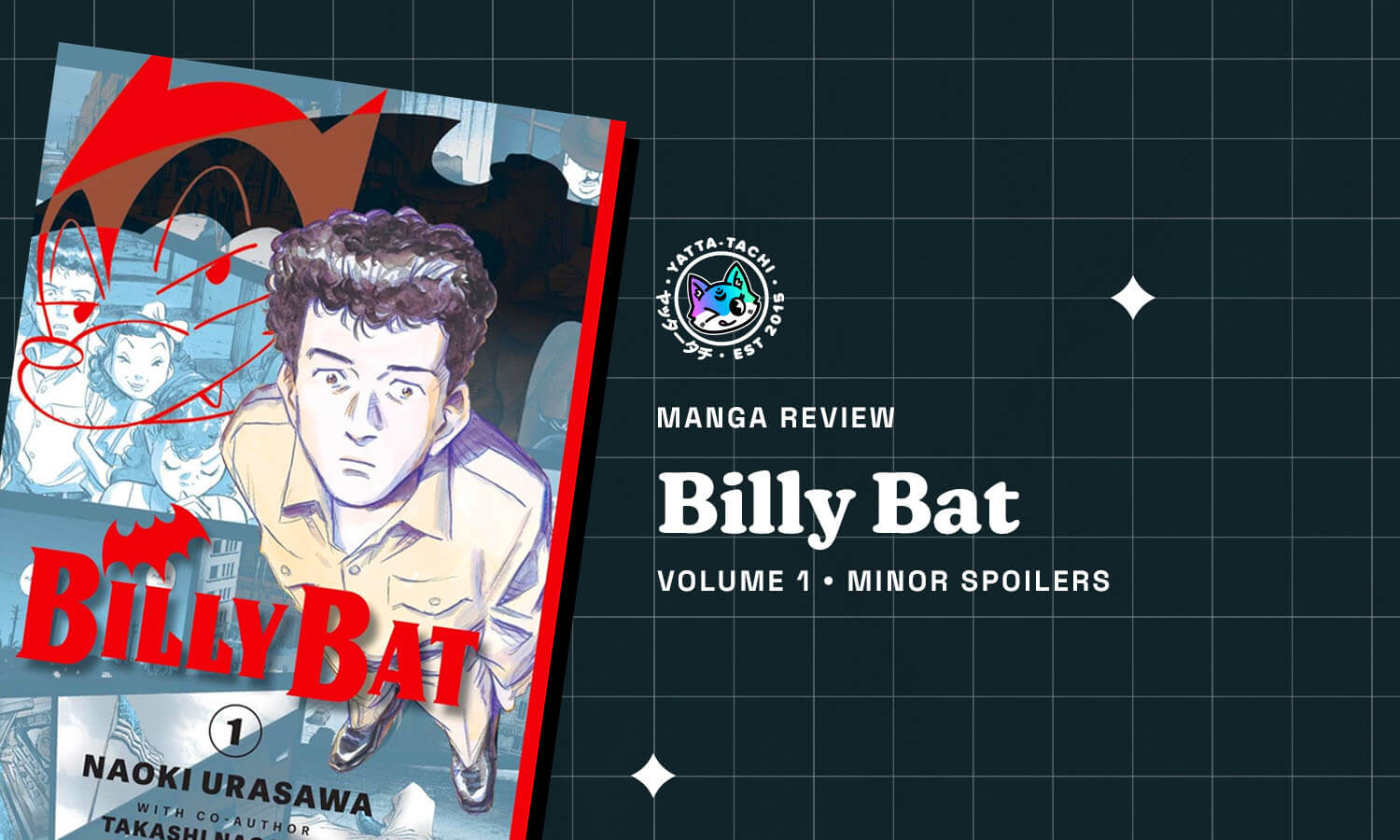
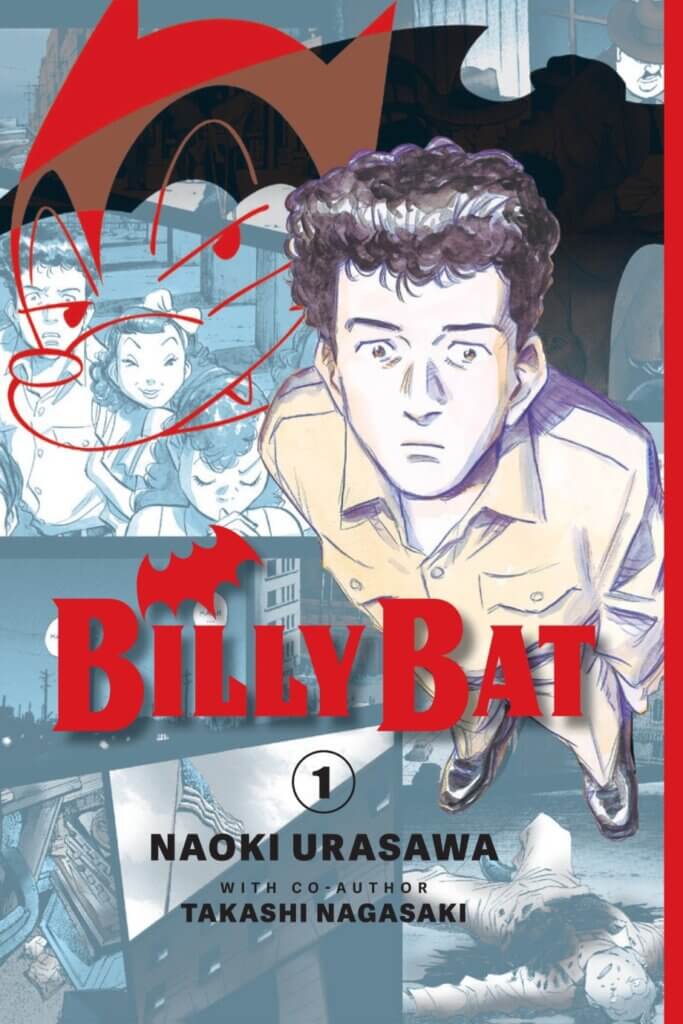
That’s why the beginning of Billy Bat is such a shock. Urasawa starts the series as a full-color noir comic about anthropomorphic animals, like Blacksad by way of Carl Barks. You’re left wondering, “Is this the natural evolution from Pluto? Will Urasawa’s next thriller really follow a talking bat?” Then a few chapters in, he pulls the rug out from under you, and you’re back in expected territory. Urasawa never abandons those cartoon flourishes completely, though. They become another device by which he keeps the reader on their toes, questioning whether what they see on the page is real.
Men don’t go flapping their wings over nothin’
Once you settle into Billy Bat, you can see how it remixes Urasawa’s past works. The protagonist isn’t a Japanese man working in Europe, like Monster’s Kenzo Tenma, but instead a Japanese-American man visiting Japan. Billy Bat lurks in his subconscious and yet is also hiding behind every corner, just like Friend’s symbol in 20th Century Boys. Pluto critiqued United States foreign policy, particularly its involvement in the Iraq War; now, Billy Bat critiques the involvement of the United States in Japan’s Red Purge following World War II.
There are also key elements that are missing, at least in this first volume. Urasawa typically baits his conspiracy hook with sentimentality, like Tenma’s trials as a doctor in Monster, or the sad tale of North No. 2 in Pluto. Billy Bat doesn’t do this. It’s all conspiracies, all the time, with very few scenes in which the characters talk to each other about anything except the metaplot.
The shadow of the bat
If I was to guess the reason for this shift in focus, I might name the editor Takashi Nagasaki. Nagasaki has been Urasawa’s artistic collaborator since 1988’s Master Keaton, and has steadily risen in public awareness to the point that Pluto listed him as a co-author. In an interview with Daily Yomiuri, Nagasaki said this about the future direction of this new series: “What if Billy Bat was like Jesus Christ, and it might have this sort of ancient mystery about it?” If that sounds wild, wait until you hear what I’ve heard about this comic on the grapevine. Billy Bat is Nagasaki unleashed.
This actually has me cautious about the future of the series. While Viz (and now Kana) sell Urasawa’s works as prestige titles, they are really more like Stephen King novels—effortlessly readable, unpretentious airport fiction. And like Stephen King, Urasawa is famous for dropping the ball with his endings. Now that Billy Bat is leaning even further into conspiracy theories, I’m nervous that Urasawa and Nagasaki might not be able to deliver on what they’re setting up in this first volume.
One small step for man
What has me the most curious about Billy Bat is the historical element. Compared to the far-fetched places I’ve heard this series goes later on, the first volume is grounded in real events. Urasawa says in the aforementioned Daily Yomiuri interview that “a lot of young Japanese don’t know who Japan fought against in World War II…we need to study the past so we can create our future.” If the series is interested not just in big swings (Is Billy Bat Jesus Christ?) but in granular details regarding topics like Japan’s labor movement, I’m definitely excited to see where it goes.
Also worth noting is the theme of authorship. Kevin is a successful American artist terrified that he’s stolen his one big idea from his home country. When he meets the Japanese artist he thinks came up with Billy Bat, he briefly works as his assistant to make up for his mistake. But then that artist tells him that he got the idea for Billy Bat from somewhere else, and that all art is a matter of copying anyway. Where do our ideas come from? What does it mean to sell them, or to own them?
The Verdict
Ultimately, it’s still too early to say anything meaningful about Billy Bat. If you like Urasawa and Nagasaki’s brand of confident conspiracy thriller, you’ll adore this comic. If you think that 20th Century Boys’s many twists and turns didn’t go anywhere, or that Pluto is actually less politically radical than Osamu Tezuka’s original Astro Boy comics, Billy Bat won’t change your mind. I’m inclined to give Urasawa the benefit of the doubt, though, if only as a favor for his wonderful ongoing manga artist profile series Manben. Go watch his interview with Chica Umino if you haven’t! Then read to the end of this first volume of Billy Bat just to experience that delirious final reveal. This rollercoaster has no brakes!
Billy Bat Vol. 1 is available in print and digitally from Bookshop, Amazon and Barnes & Noble.
If you like Billy Bat Vol. 1, you might also like…
- Asadora by Naoki Urasawa
- Blacksad by Juan Díaz Canales and Juanjo Guarnido
- Showa: A History of Japan by Shigeru Mizuki
Credits
Writers: Naoki Urasawa, Takashi Nagasaki
Artist: Naoki Urasawa
Translation: Kristi Iwashiro
Lettering: Aidan Clarke, Brendon Hull
Editor: Kristiina Korpus
Assistant Editor: Kai Obinata
Designer: Andrea Miller
Art Director: Shawn Dahl
Managing Editor: Nate Lee
Production Manager: Sarah Masterson Hally
Published in English by Kana
Thank you to Kana for providing a review copy. Receiving this copy did not affect the reviewer’s opinions as expressed here.
Article edited by: Anne Estrada
Big thank you to our supporters
From their continous support, we are able to pay our team for their time and hard work on the site.
We have a Thank-You page dedicated to those who help us continue the work that we’ve been doing.
See our thank you page