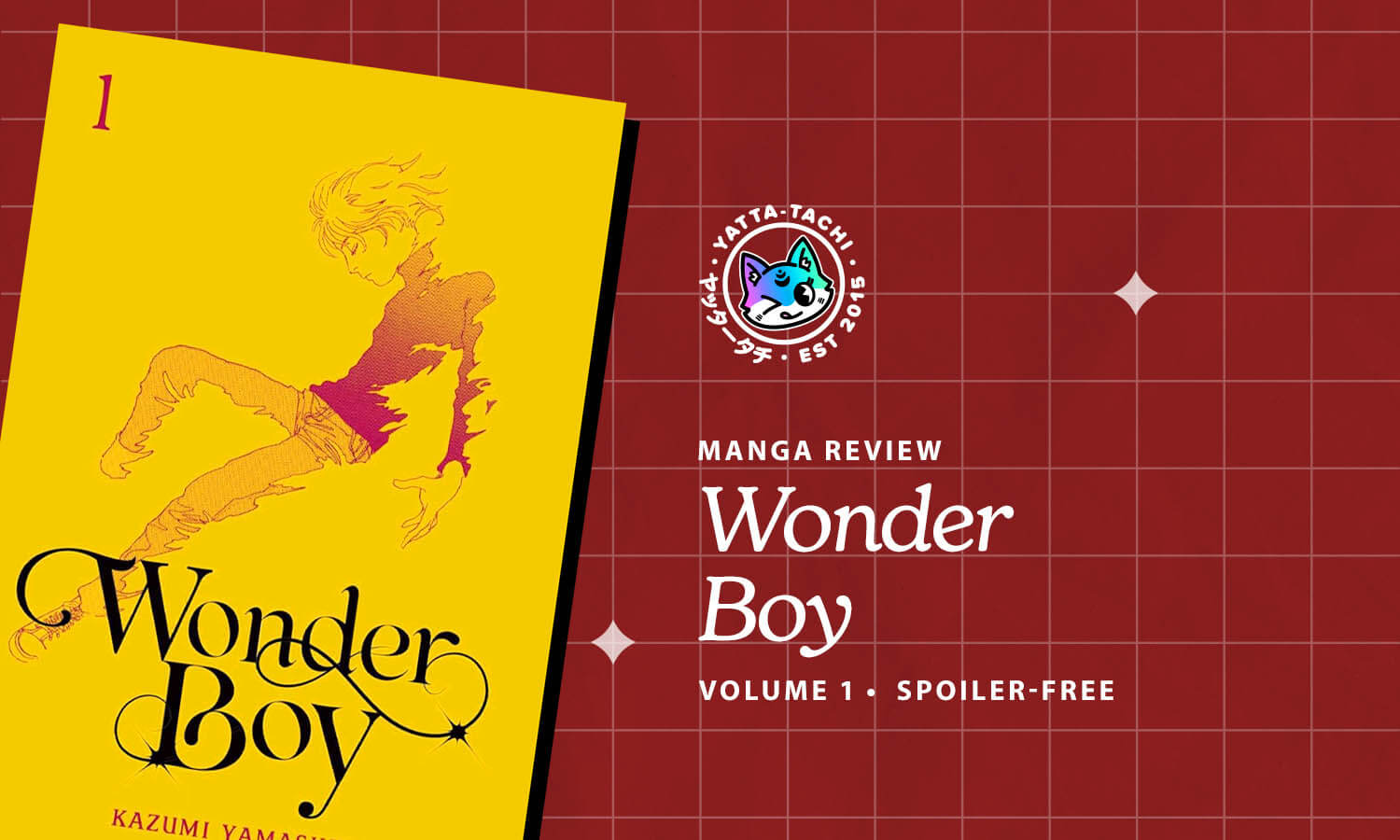
Synopsis
A strange boy wanders through history like a ghost. With his blonde hair and light step, he might as well be an angel. But his words are acid, and he knows more than he lets on. Nobody else can see him except those he chooses: a philosopher, a bandit, a poor orphan girl. Each stands at a turning point that will determine the rest of their lives. Will the boy bring them salvation, or ruin?
Cain and Abel
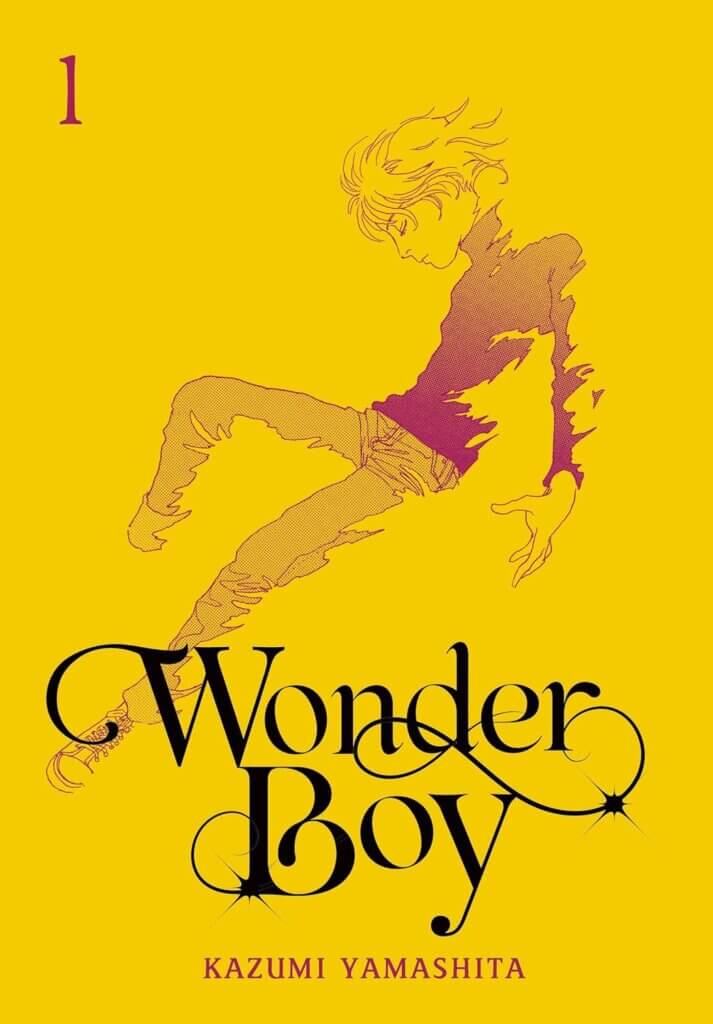
Wonder Boy is the latest work of manga artist Kazumi Yamashita to be translated into English. Her previous title, the dystopian epic Land, was so good that it made me want to check out everything that she’s ever drawn. Wonder Boy, though, is quite different. Unlike Land, which gave me characters to root for and a mystery to unravel, this is an anthology series without much continuity save for Wonder Boy himself.
The series hops back and forth across time and space, with pit stops in Britain, feudal Japan, and even Antarctica. Each locale presents a person in crisis. Sometimes Wonder Boy protects them, sometimes he tempts them, and sometimes he merely observes. It’s like if The Twilight Zone was constantly interrupted by the ghost of Gilbert from shojo manga classic Kaze to Ki no Uta.
Window to the heart
While Wonder Boy is published in Morning Two, a seinen magazine, its heart is in the world of shojo manga. Yamashita tells grand stories about the human condition with the same earnestness as peers such as Moto Hagio and Reiko Shimizu. Not every story connects; like Shimizu, Yamashita’s ambition sometimes leads her to overreach and fudge important details. Individual stories sometimes tip too far into cynicism or sentimentality. But even the worst stories are at least entertaining. The best are excellent.
Yamashita has an eye for memorable characters: Torakichi, the fox-eyed bandit who would do anything to protect the children he kidnaps; Tetsuo, who lives an ordinary life in Hokkaido despite having a singing voice worthy of an opera; Tamara, who longs to escape from her frightening older husband—or does she? Through their stories, Wonder Boy asks why people do what they do; why they accept or deny what is good or bad for them. The titular character speaks from an omniscient perspective but is not all-powerful or even right much of the time.
No matter the era
Some stories in the collection stand out to me for how they defy genre clichés. Emily and Charlotte’s chapter follows two young orphan girls as they find their respective ways in the world. At first I thought I knew where the story was going; Charlotte as the classic shojo heroine and Emily as the conniving villainess, set against each other by Wonder Boy in adulthood as archenemies. Instead, the pair realize that even after all this time, they are still friends! Wonder Boy has its share of grim twist endings, but that’s not universal. You never know if a story will end with joy or cruelty. That, of course, means the times that Yamashita does throw a sucker punch at the reader hit that much harder.
Other chapters are notable for their high concepts. One of the most memorable follows the Greek philosopher Socrates as he travels through time with Wonder Boy in the moments before his death. Yamashita does a great job capturing just how annoying Socrates can be in his constant questioning, and even lets him score a point against Wonder Boy himself. She also draws Socrates with big eyes and a bulging forehead so that every expression is clear on his face.
Rage, sadness and despair
Yamashita acquits herself well as an artist in this volume. She’s particularly good at drawing animals, from the horses in Torakichi’s chapter to the dogs in Tamara’s chapter. I also admire how willing she is to draw people as they age. Several stories in this collection follow characters from birth to adulthood, and even death. Yamashita’s dedication to drawing wrinkles, beards, and withered bodies grounds each story in physical reality despite the fantastical flourishes.
If I have a complaint, it’s that this release does Wonder Boy no favors. The series is published by Yen Press in omnibus format, just as Land was. This works for Land, a series with an overarching mystery to unravel, as well as chapter-ending cliffhangers. Wonder Boy, though, is just one big short story collection. Its formula is that much more transparent when you read 800 pages in one go. You’re better off reading a story each day to properly appreciate what the series is doing, rather than binging it all at once.
Verdict
While I didn’t find Wonder Boy to be revelatory in the same way that Land was, it’s otherwise a strong anthology series that mixes the heartfelt with the macabre. Its range of material and sheer bulk makes it an excellent pick for collectors and libraries. I’d also recommend Wonder Boy to anybody curious about 2000s era shojo and josei comics. While the series may have been published as a seinen manga, its style and tone have a lot in common with classics like Himitsu – Top Secret and 7seeds. Since neither of those series have been licensed in English, and likely never will be, Yamashita’s work is your next best bet.
Purchase Wonder Boy, Volume 1 on Barnes & Noble, Amazon, and Bookshop
If you liked Wonder Boy, Volume 1, you may also like…
- Land by Kazumi Yamashita
- Witches by Daisuke Igarashi
- Don’t Call it Mystery by Yumi Tamura
Credits
Writer/Artist: Kazumi Yamashita
Translation: Giuseppe di Martino
Lettering: Rachel J. Pierce
Published in English by Yen Press
Thank you to Yen Press for providing a review copy. Receiving this copy did not affect the reviewer’s opinions as expressed here.
Big thank you to our supporters
From their continous support, we are able to pay our team for their time and hard work on the site.
We have a Thank-You page dedicated to those who help us continue the work that we’ve been doing.
See our thank you page