
Content Warning: Gore, sexual assault, child abuse, child death, and physical abuse.
Synopsis
Part-time convenience store worker Azuma wins a week-long remote island getaway vacation via lottery. Although he’s initially disappointed that his tour includes just a handful of other men, he soon finds himself enjoying his time away from his average life as he meets new people.
Unfortunately, a few days into the trip, radio communication with the travel agency on the mainland fails, and the boat scheduled to replenish the island’s food stock never arrives. With no sign that anyone will be coming to their aid anytime soon, Azuma’s bonds with the island’s other visitors are tested as resources run scarce. What was once the perfect vacation is now an ongoing nightmare with no end in sight.
The Story
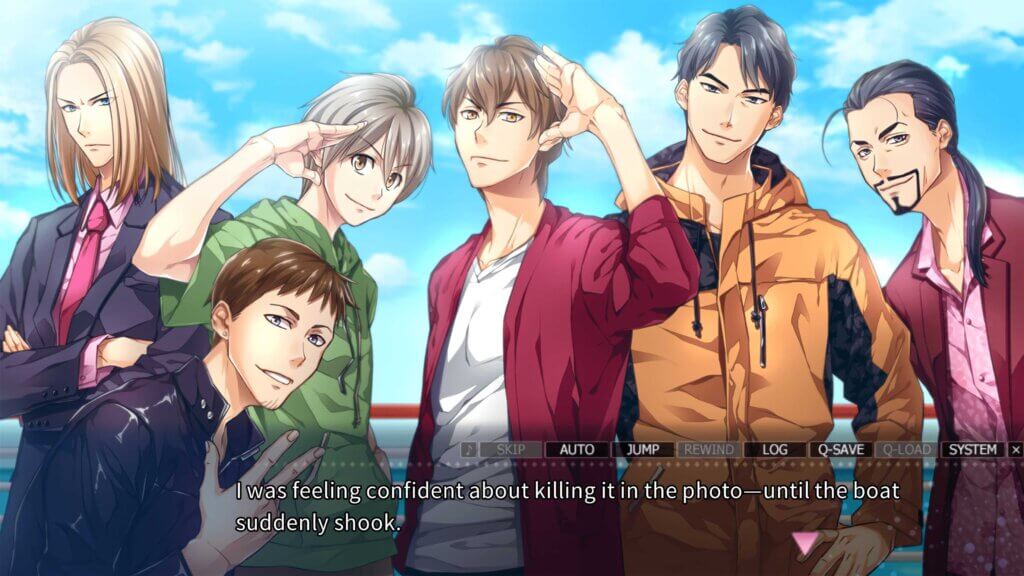
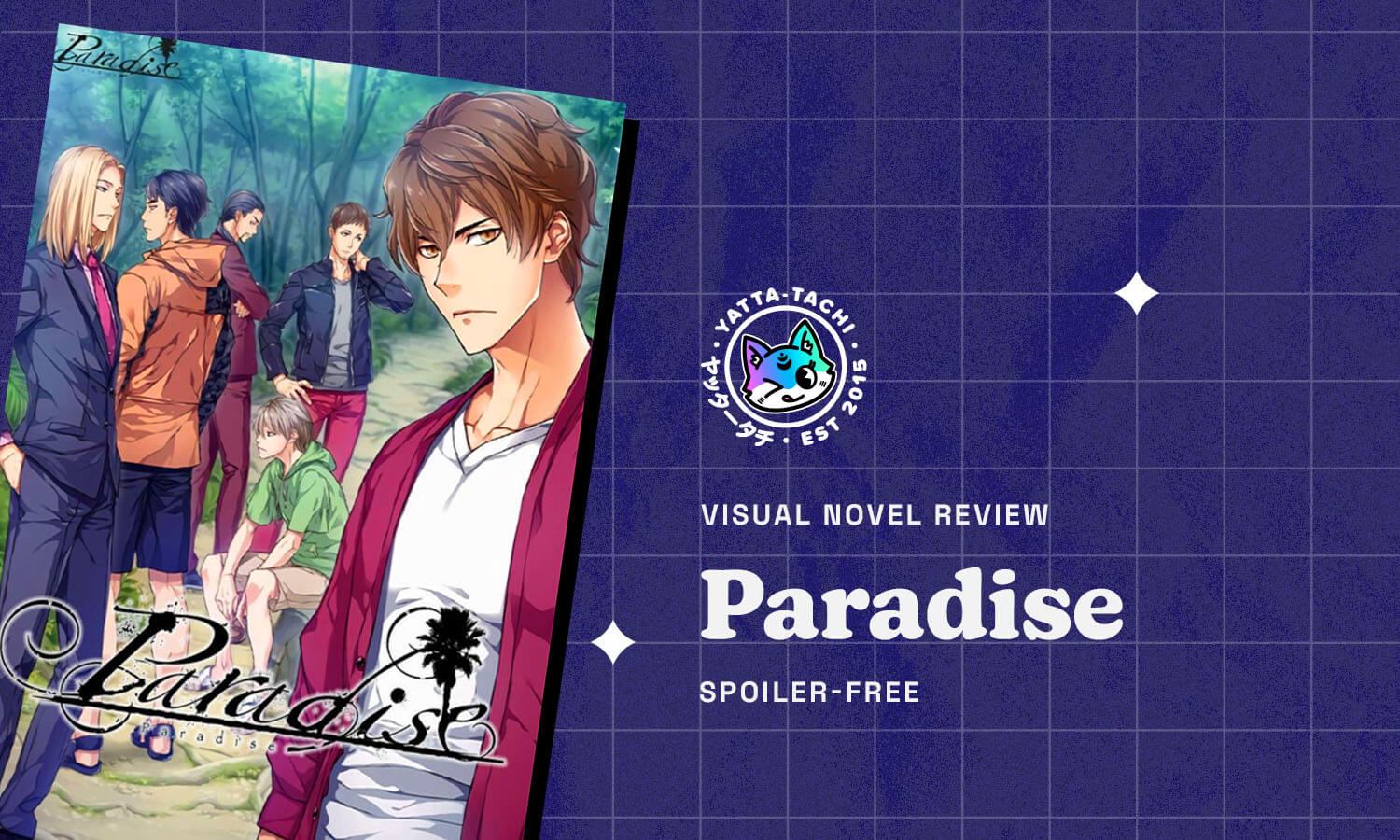
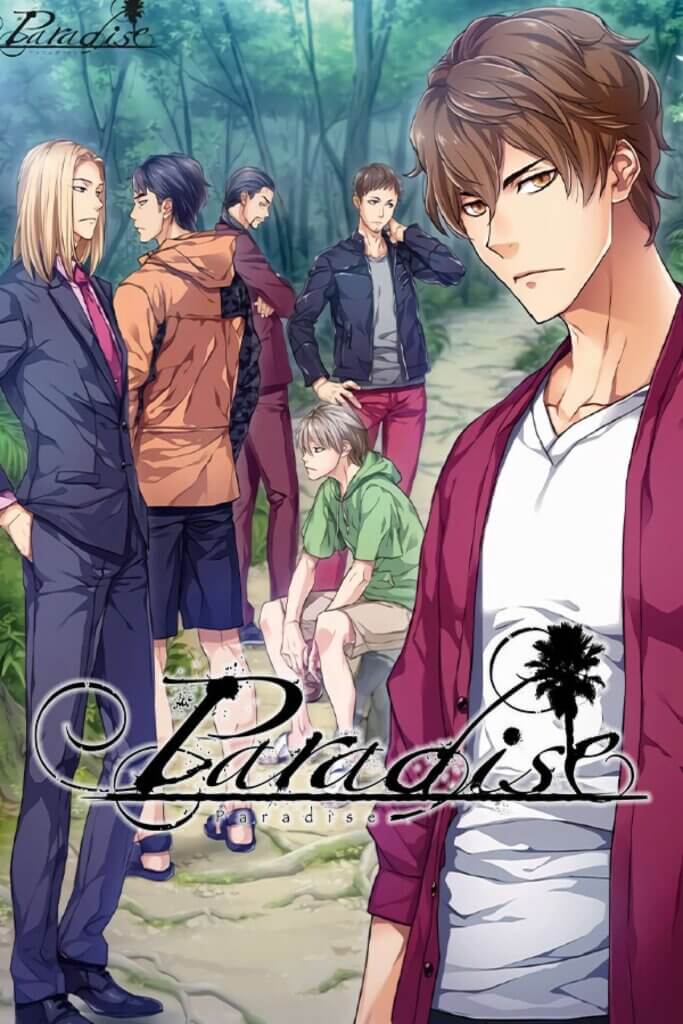
If you are interested in dark mystery stories, PIL/SLASH’s 2017 Boys’ Love visual novel Paradise does not disappoint. Written by scenario writers Kyuuyouzawa+Lychee, the game’s set-up is innocent enough. Your player character, Azuma, is placed on a tour boat alongside several other men. You meet Takara, a cute, youthful, and energetic young man with a heart set on adventure. Next is Mitsugi, a long blond-haired man in a business suit who seems exceptionally rude and off-putting with little care for anything or anyone but himself. Matsuda rounds out the cast as an older man who seems well put together and ready to tackle the great outdoors. They’re joined by a freelance photographer named Shimada, who seems eager to photograph everything he sees (Azuma in particular), and their tour guide Hongou, who appears nothing but friendly and polite to his customers. Four other characters are also along for the ride, but for a large chunk of the early story they mostly keep to themselves.
The tour boat drops the cast off on a lovely desert island. This place has anything a glamper could possibly want: log cabins for each individual traveler, food and amenities, pristine beaches, and even a cool and mysterious abandoned village to explore. As the player, Azuma may spend his early days however he wishes, exploring various parts of the island and even looking for buried treasure that is rumored to exist somewhere. During all this, he maybe even starts to have strange feelings for one of the other men on the island that he never expected to feel. After all, Azuma has never even been interested in men before!
But tensions rise once the visitors to the island realize that neither food nor a boat to return to the mainland will be coming for them. With that kind of a situation, how can any of these total strangers trust one another long enough to survive?
Route Structure
This is a very well-written story with a deep mystery. It’s not short by any means, either. While I didn’t keep track of my exact hours of play, it was a long, long trek to reach 100% completion. Visual Novel Database lists the game’s play time at over 34 hours, and while I don’t know if it took me that long, it sure did feel pretty beefy. Obviously, if you’re only aiming for good endings, your play time may end up being much shorter than that. But this game is written in such a way that you can’t solve every last piece of the mystery without trying for all the endings, including the bad ones. And boy, are there a lot of bad endings.
Each of the three main romantic interests has a single good ending route and multiple bad ending routes. But there’s no way to even see one particular character’s route unless you’ve already finished the other two characters’ good routes first. You do want to see that third guy’s story, because his ending is considered the true ending that contains almost all the answers to the island’s biggest mysteries. So, bare minimum, if you want the biggest questions answered, you will need to play the game at least three times.
The translation is decent. While there are a handful of moments where I would have made different decisions if I were in the position to do so, none of it is so egregious that it changes the overall plot or tone of the narrative. When listening to the Japanese audio against the English text, it’s apparent that the language has been pushed to be a little more aggressive than perhaps the Japanese language alone might have indicated (i.e., most instances of “shut up” in Japanese are instead translated to “fuck you”). In all honesty, though, it’s not a huge deviation in tone, given the distressing situation everyone is in.
The Dark Side
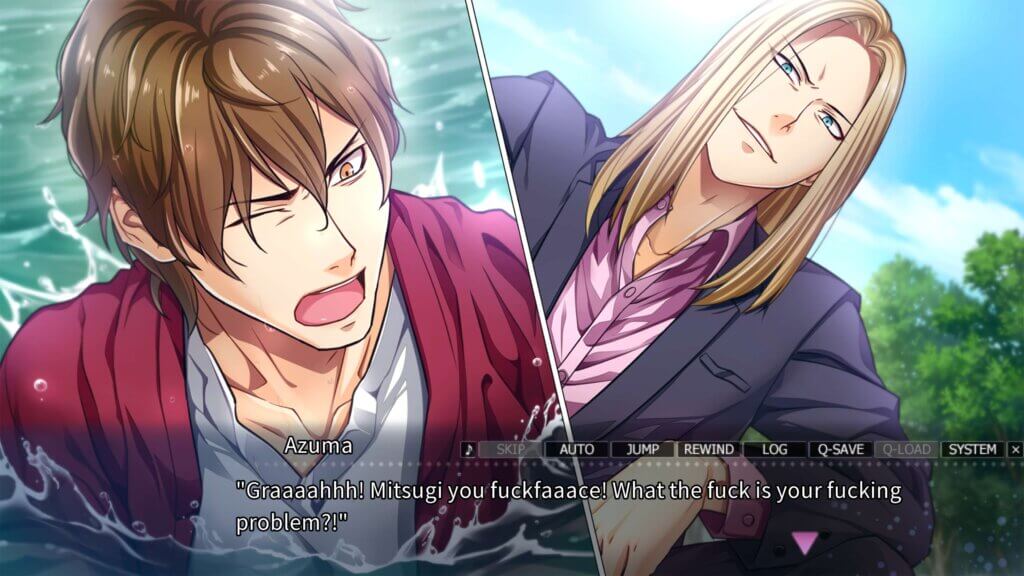
But it’s exactly those distressing situations that take me out of the experience. Paradise is by no means a game for young people, and I don’t just mean because it is an 18+ game with uncensored pornographic scenes. Nearly every sex scene portrays an act that is non-consensual, and at least one scene describes such acts so cruel and horrific that I can only imagine it triggering some audiences. While the art in these scenes looks sexier when viewed on its own, the text descriptions, sound effects, and pained voice acting paint a fuller and more gruesome picture. It was in those moments that I just wanted to mash my way through the scene as quickly as I could while reading the text as fast as my brain could possibly interpret the words. Even going down the routes of the good endings will not be enough to prevent you from seeing these scenes.
The game becomes violent once the mystery starts unfolding, and a lot of people die particularly gruesome deaths. The people who die change depending on what route you’re playing, and sometimes the ways they die will change. More often than not, though, the deaths aren’t at all peaceful. I’m mid-range squeamish when it comes to gore, and while some scenes weren’t too difficult to get through, others had me squinting my eyes and wincing in discomfort despite being depicted just via text and audio. I’ll give the sound design props, because their depictions gave me an absolutely visceral reaction.
I’d be willing to bet there is a good target audience for this sort of thing. Uncomfortable fiction deserves to exist, too. There’s a lot of good writing in this game. And when the sex is consensual it is very exciting. I just happen to have a limit, and this game was starting to cross my comfort limit. I also worry that the most intense scenes of violence and horrific assault are so descriptive that they might keep particularly sensitive audiences away.
Art and Music
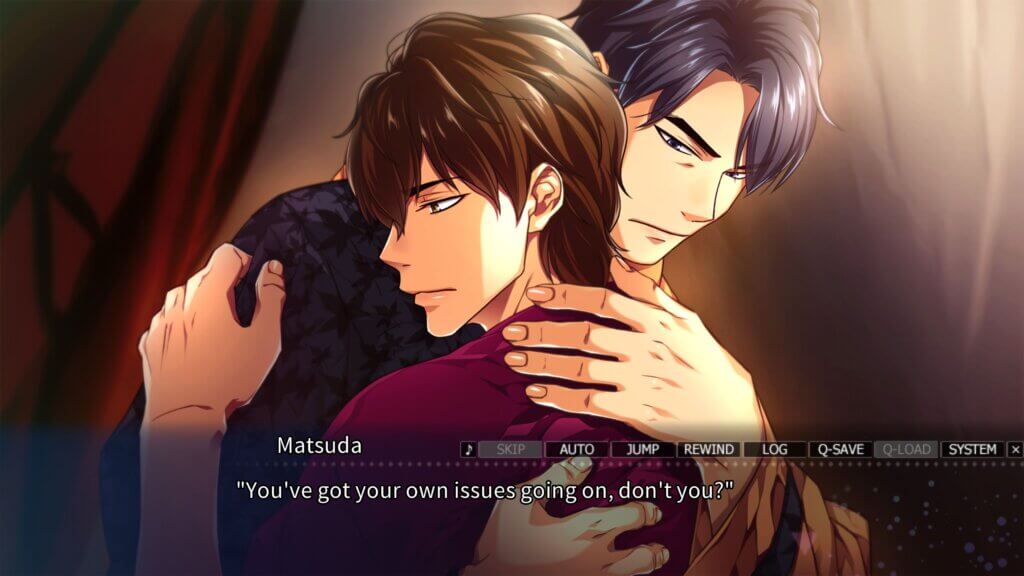
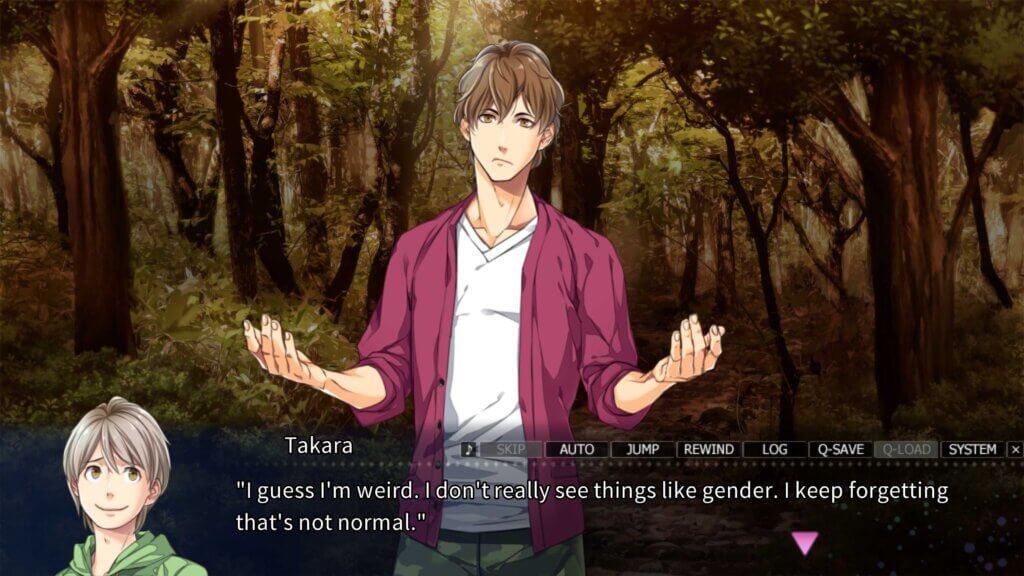
The 2D character art for Paradise was created by Kotomi Youji, who is known for otome game titles like Mashou Megane and Zettai Kaikyuu Gakuen ~Eden with Roses and Phantasm~. All the characters are well-drawn with great facial expressions during normal dialogue. Intimate scenes are drawn with particular care and detail, and if that’s what you’re playing this visual novel for, you will be very pleased with the eye candy on display. Nearly all the background art appears to be photographs of real world locations with a watercolor filter, which is sometimes amusing to look at but never distracts from the narrative.
Paradise’s soundtrack, which is composed by the team SENTIVE, depicts a broad range of emotions. Bright and cheerful music plays during friendly interactions, while unsettling echoing music plays during sad and mysterious situations. The opening theme, love-die, has lyrics sung by vocalist actuo, with a rock vibe that reminds me of when Japanese visual kei rock bands were king. Even without the context of the game, this is a song I would gladly put into a playlist and listen to again later.
Voice Acting
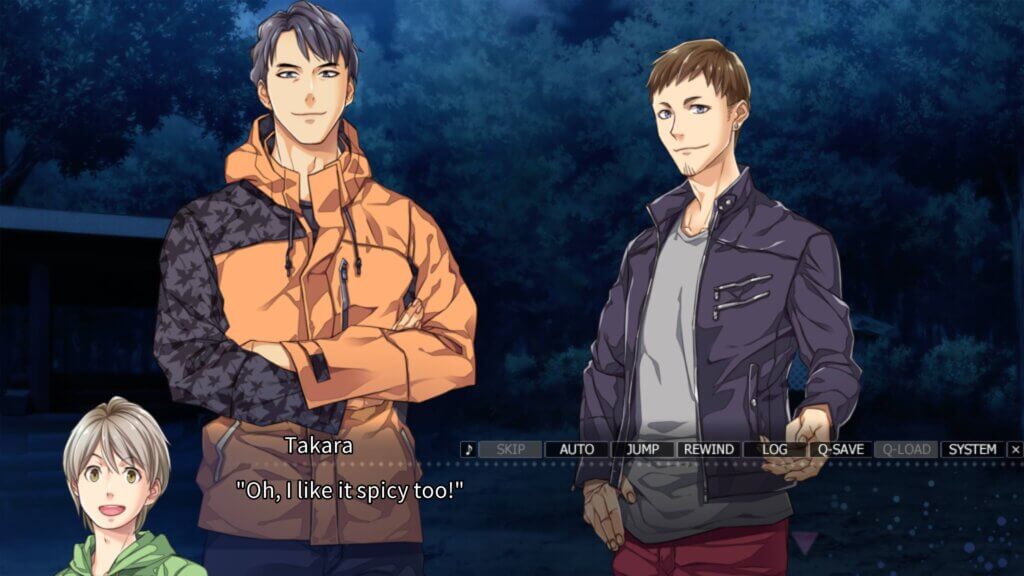
Azuma, voiced by Irakusa Netoru (stage name for Kyousuke Kitayama), does an incredible job going through every imaginable emotion. It is thanks to his capable voice acting that I found myself squirming through horrific moments of assault and violence. He’s fun to listen to when he’s in a cheerful mood, and he makes you want to take his hand and comfort him when he’s feeling sad and vulnerable. When he’s enduring pain and distress, though, he does his job entirely too well. I had to skip several moments of recorded dialogue to get past long stretches of agonizing pained screaming.
The other leading actors (Tetrapot Noboru as Matsuda, Ichijou Hikaru as Mitsuki, and Yumachi Kakeru as Takara), do their jobs equally well. Takara’s voice is especially of note because he’s so vocally different from the rest of the cast. He’s bright and youthful, and he gives you the impression that if you just stick with him then maybe, just maybe, everything will turn out okay in the end. The supporting cast play their parts very well also, and I’d say that none of them in any way bring down the quality of the game’s voice acting. Even when the content is rough to consume, the voice acting is always consistent.
Extras and Accessibility
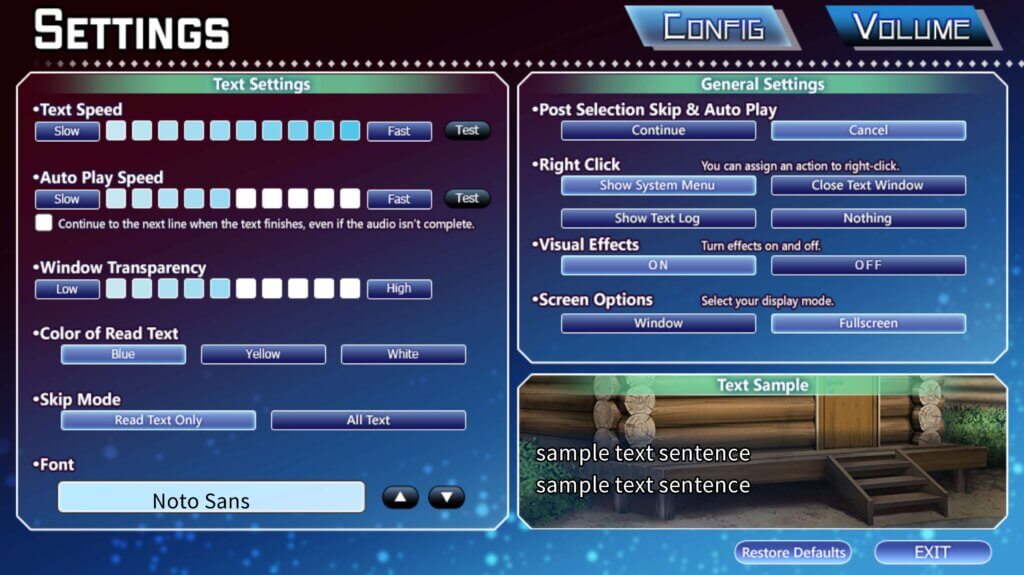
There’s a lot to appreciate about the accessibility features in Paradise. By turning on Easy Mode, the game highlights appropriate dialogue options that will lead you towards a good ending, if you’re looking for a no-nonsense way to reach just that goal. The game will also remember whether you’ve read a particular section of dialogue before, highlighting the text in blue if it’s something you’ve seen before, even if you didn’t save the game before closing it the last time you played. That, on top of the ability to fast forward through dialogue you’ve already read, was a godsend of a feature. It kept me from having to mash my way through early dialogue to get to new dialogue options I hadn’t previously chosen, let me skip straight past uncomfortable scenes I didn’t want to see a second time, and was especially helpful given that my game suffered from numerous crashes that forced me to relaunch the game and fast forward through big chunks. If not for this feature, my play time would have been exponentially longer.
If you happen to miss or skip past a given line of dialogue, it is also possible to go backwards to read and listen to the line again. Additionally, the settings menu lets you change numerous options to best suit your needs, including text speed, text color, and the choice between a small selection of various fonts.
Your extras can be found in the menu, which include the ability to replay specific scenes and look at particular event CGs of your choosing. You’ll definitely want to reach 100% to get that congratulations screen. You can also save individual lines of dialogue from any character at any point in time, so you can go back and listen to any of your favorite lines whenever you like. The entire soundtrack is also playable from the extras menu right from the start. The game does a good job of spoiling you with rewards.
Verdict
There is definitely value to be found in Paradise’s mystery narrative, art, music, and other extras. Unfortunately, there are large chunks where you must mentally prepare yourself for the agony the game wants you to feel for many of these characters—particularly the protagonist Azuma, who goes through more than his fair share of trauma. If you beat every other ending before you get to the final, true ending of the game, you will feel like you, too, are going crazy, wondering who the heck is really keeping the group trapped on this deserted island, left all alone to die, and why. Your brain will run through every possible answer before you learn the full scope of the situation.
If you are easily triggered by graphic sexual violence, if you are made uncomfortable by gruesome violent acts, or if you’re just here to see attractive men in sexy scenarios, it is difficult to recommend Paradise. But if that is not a concern for you, I think you will get a lot of enjoyment out of solving the mysteries of the island and who is pulling strings to keep the men stranded there.
You can purchase Paradise on JAST Store and Steam.
Credits
Scenario: Kyuuyouzawa+Lychee
Artist: Kotomi Youji
Composer: SENTIVE
Developer: PIL/SLASH
Localization: JAST BLUE
Thank you to JAST for providing the game key & sponsoring this review. Receiving this key & compensation had no effect on the reviewer’s opinions as expressed here.
Article edited by: Adam Wescott
Big thank you to our supporters
From their continous support, we are able to pay our team for their time and hard work on the site.
We have a Thank-You page dedicated to those who help us continue the work that we’ve been doing.
See our thank you page