
Content Warning: Stereotypes and prejudiced statements made about certain ethnicities
Synopsis
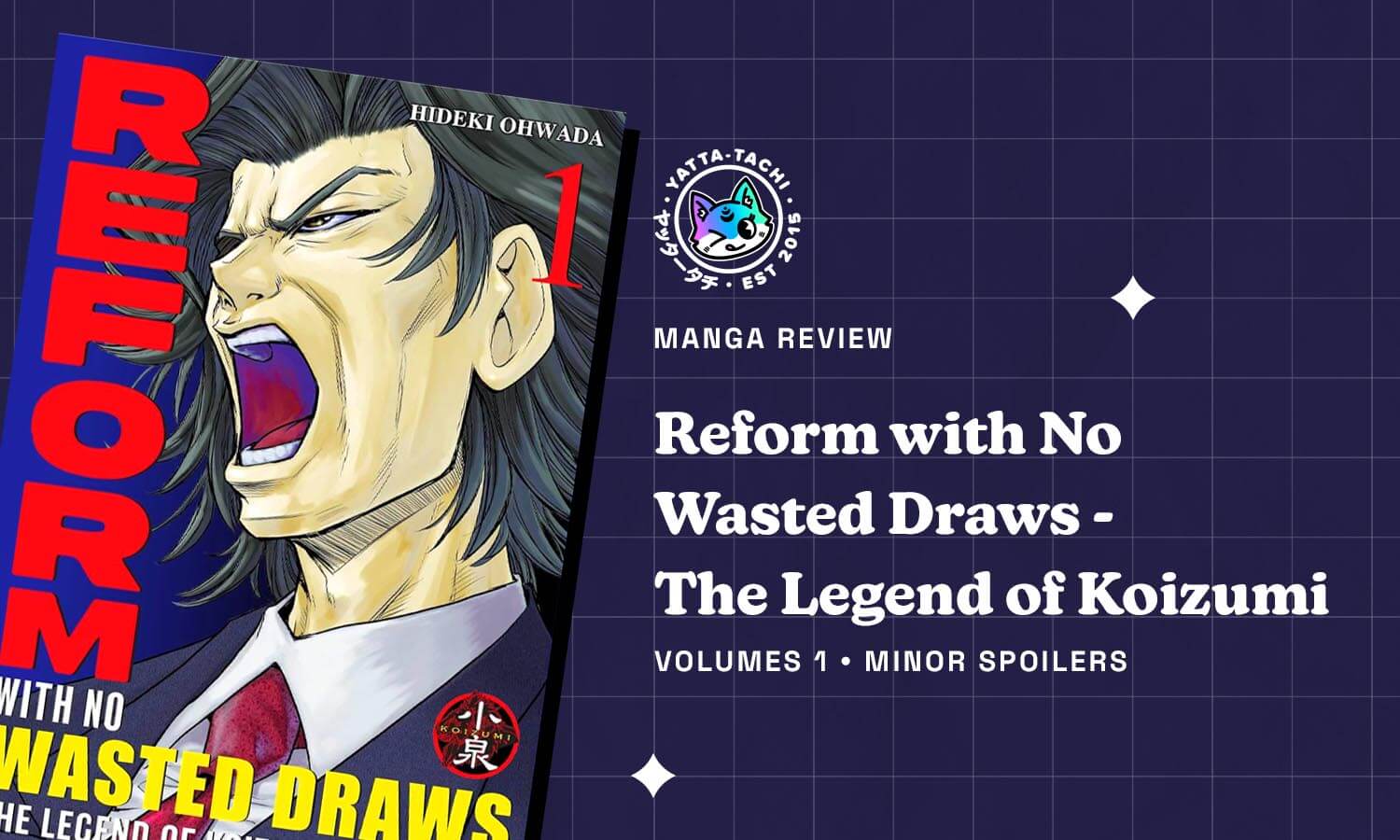
When diplomacy becomes war by other means, Japan’s reformist Prime Minister Junichiro Koizumi takes the fight to the mahjong table where world leaders wager pride, politics, and national honor. Armed with nothing but guts, luck, and a perfect hand, Koizumi fights to reshape history one tile at a time.
The Good
The Legend of Koizumi is a manga that I never thought would be localized in English. In the overseas riichi mahjong scene, the manga has been used for memes from community users due to its outrageous imagery. After reading the first chapter, I can see why that’s the case. The first chapter has a very fictionalized Koizumi take on the 43rd President of the United States, George W. Bush, in a game of riichi mahjong to save his attendant, Taizo Sugimura (who, in real life, is a current member of Japan’s House of Representatives). And it only gets crazier from there in the first volume as Koizumi takes on other recognizable world leaders for the sake of justice.
What I like about The Legend of Koizumi is it clearly demonstrates the appeal of mahjong to those who take the time to get into it. It’s a game that combines skill, resilience, and a lot of luck. The game is rewarding when it all goes well and can get pretty awful when it doesn’t. In the manga, Koizumi touts statements about what it means to be strong and how important it is to be able to fight back against those who have more resources than you. Even though there’s a lot of absurdity, the story is told with a very serious tone.
The main theme I got out of The Legend of Koizumi is that it’s telling readers that they can’t always run away from every hard obstacle that life throws at you. You can say that the manga is a jab at politicians who notably do these things on a consistent basis to the detriment of those around them. By using the game of riichi mahjong, The Legend of Koizumi showcases that those who believe they should win all the time need to accept losses when they happen. The real winners are those who still try their best for the benefit of others even if it might mean defeat. Riichi mahjong is a game where even the very best players will not win all the time and The Legend of Koizumi showcases this to a huge degree.
With a manga like this, you would expect translator notes to be quite extensive. Mahjong Pros provides a good amount of notes filled with historical anecdotes. I’ll admit that I learned a few things after going through them. I respect Ohwada for researching geopolitical history to make The Legend of Koizumi a one of a kind mahjong manga. Mahjong Pros also provides a decent amount of information regarding mahjong terminology, list of yaku, and scoring tiers.
Somewhere In-Between
It’s difficult to discuss The Legend of Koizumi without going into all the political references to world leaders and historical events. There’s a lot of them and I have heard that it gets wilder after the first volume. We get to see politicians discuss topics behind the scenes that may hit close to home to some readers. Stereotypical portrayals of certain characters and prejudiced statements are featured in the manga and Mahjong Pros has put statements at the beginning of Volume 1 to warn readers. This is greatly appreciated as The Legend of Koizumi’s political satire may not be for everyone.
Another thing to note is that the manga will not teach anyone how to play mahjong. It also remains to be seen if The Legend of Koizumi will convince readers unfamiliar with mahjong to pick the game up. But it may not matter much as The Legend of Koizumi is about getting high-scoring hands in insane ways. Any mahjong fan will tell you that the fun part of the game is about getting high-scoring hands (especially the rare ones) that shift momentum in favor of those who get them.
The Verdict
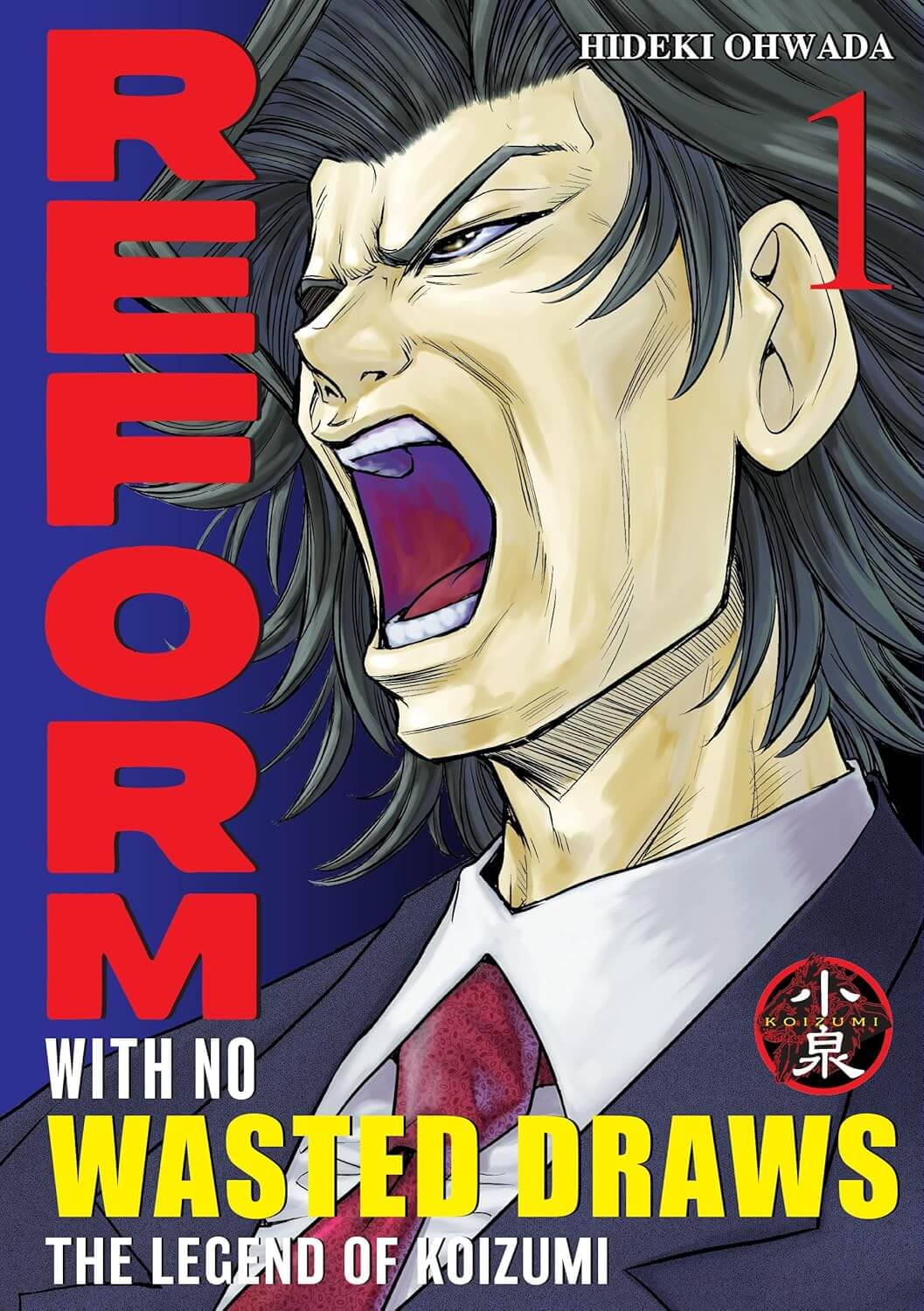
I still find it wild that The Legend of Koizumi managed to get published in North America during an era of high political tension. While I appreciate the story it’s trying to tell, the manga is far more enjoyable to read if you’re a riichi mahjong player. Manga readers who love the diversity of manga (especially political satire) will like The Legend of Koizumi as well, but this is a title for all the riichi mahjong enthusiasts who have been promoting the game and their communities over the last 3-5 years. We’re finally getting an assertive push for more English-localized riichi mahjong content and I can’t wait to see what comes next from Mahjong Pros in the manga publishing scene.
Where to Purchase: Reform with No Wasted Draws – The Legend of Koizumi Volume 1 is available in print and digitally from the publisher Mahjong Pros, Bookshop, Amazon, and Books-A-Million.
Credits
Story and Art: Hideki Ohwada
Translation: Harrison Doan
Design: Lynn Vuong
Editor: Dr. Hemathja “Theja” Lanka
Published in English by Mahjong Pros
Thank you to Mahjong Pros for providing a review copy. Receiving this copy did not affect the reviewer’s opinions as expressed here.
Article edited by: Cynthia Caraturo
Big thank you to our supporters
From their continous support, we are able to pay our team for their time and hard work on the site.
We have a Thank-You page dedicated to those who help us continue the work that we’ve been doing.
See our thank you page