Content Warning: sexual harassment, self-harm, stalking
This review contains spoilers.
Synopsis
Lee Daye moved to Seoul to study for art school. Unfortunately, art is currently the last thing on her mind. Every day, she worries about the director at her cram school bribing her with gifts, her classmates talking behind her back, and her apartment building’s thin walls that let her hear everything going on next door. All she wants is to be left alone. Then a handsome man moves in next door, and Daye is obsessed. Who is this tall boy, and what does he want? At first, it’s a simple crush. But when Daye finds herself picking his cigarettes out of trashbags in the freezing cold, she realizes that she might have a problem.
Washing your hands when they feel dirty
As the title suggests, Narrow Rooms is a claustrophobic read. Daye’s world encompasses the distance between cram school and her apartment. Whether or not she passes the exam for art school will determine the rest of her life. Daye rigorously tries to control her environment by washing her hands. But despite her best efforts, all she can see and feel is filth: the director’s mouth covered in crumbs, his dirty fingernails touching her shoulder, his semen dripping down her forehead.
Daye’s neighbor Ham Do-hyeon offers an escape from her oppressive life. Perhaps in another version of this story, the two meet by chance and experience a whirlwind romantic relationship. That’s not what happens here, though. Daye’s obsession with Do-hyeon just makes her worse. Even as she criticizes her cram school director’s lack of hygiene, she digs into Ham’s garbage and collects his discarded scraps. When she stalks him on social media, Daye’s reflected expression on her computer screen looks just like the director’s.
I can hear literally everything next door
Narrow Rooms isn’t just a character portrait of Daye, though. It has bigger fish to fry. The artist Choi Sungmin introduces us to various other characters like her classmate Inyeong and her former neighbor Daisy. Nobody has it easy; everyone is convinced that their peers are out to get them. Inyeong, for instance, resents Daye’s short height and how attractive she is to men. When the two briefly meet on social media under pseudonyms, they are best friends. In real life, however, they hate each other.
Later in the book, Daye says, “If someone was born in a tiny room like this and never formed a single relationship, and lived that way their whole life–would they still know loneliness?” Her fears perfectly describe the book’s reality. Everybody is locked into little boxes by arbitrary standards like beauty and grades. They desire what they cannot have and yet fear any reality outside their own. cannot bear to face their neighbor’s truth. Just in case you missed the metaphor here, Choi draws these apartments as little coffins.
Why do I hate her so much?
Not everyone in Narrow Rooms is condemned to living death. One woman attending Daye’s cram school, Jin Rose, wears loud makeup and piercings. She goes out with the director in exchange for lower tuition fees and everyone judges her for doing so. Despite this, she’s the only person to offer Daye solidarity without any strings attached. It’s proof that there is life outside for people with courage and self-confidence.
Daye herself eventually grows out of her attachment to Do-hyeon. When she looks back on her behavior before college, she can only ask herself: Why was I like this? This is where I expected Choi to shower the reader with delayed catharsis. Instead, she leaves Daye in that uneasy, questioning place. She might one day understand why she felt how she did at the time, but that day won’t come any time soon. In fact, Choi supposes that this is perfectly normal; that people always defer self-knowledge to preserve their own sanity.
There are days like that
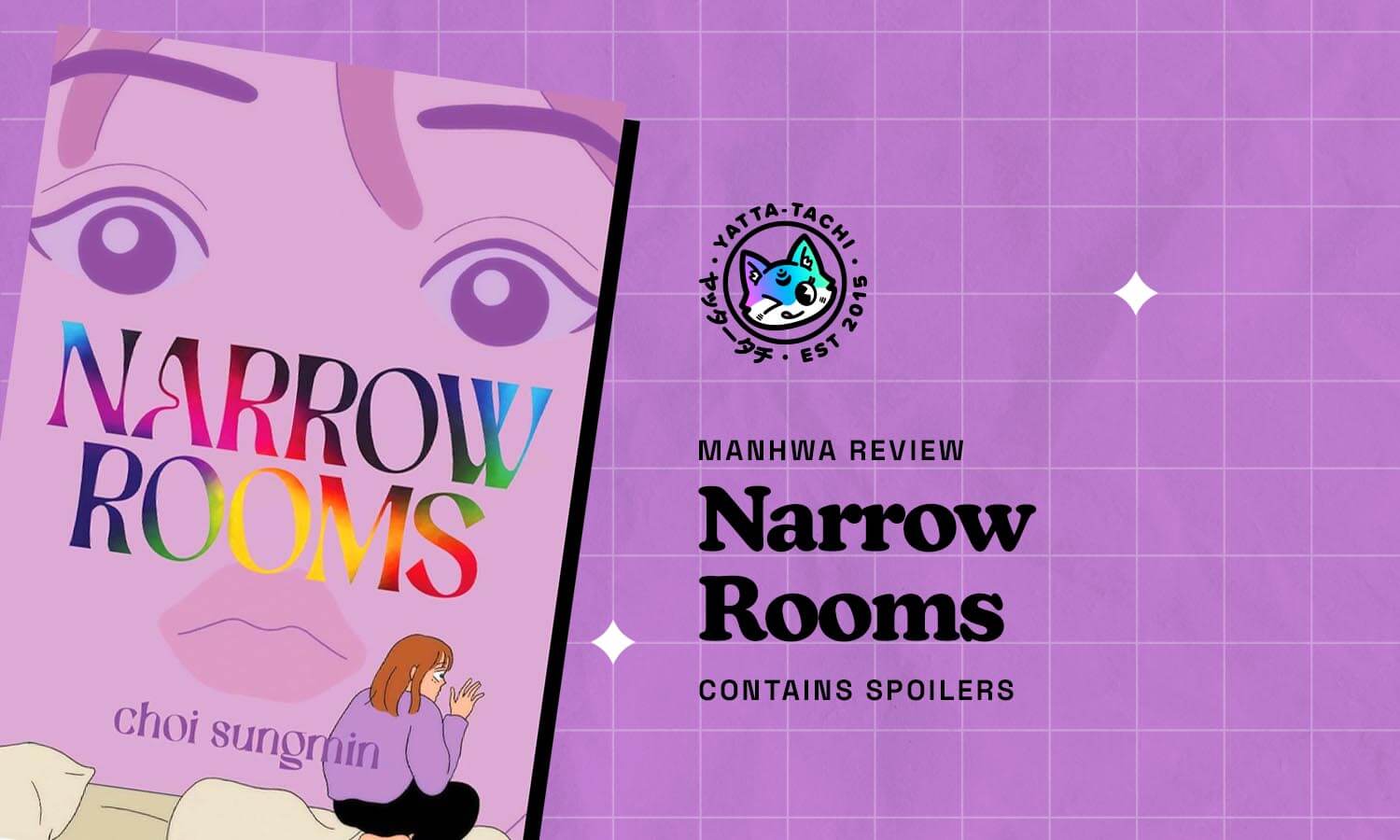
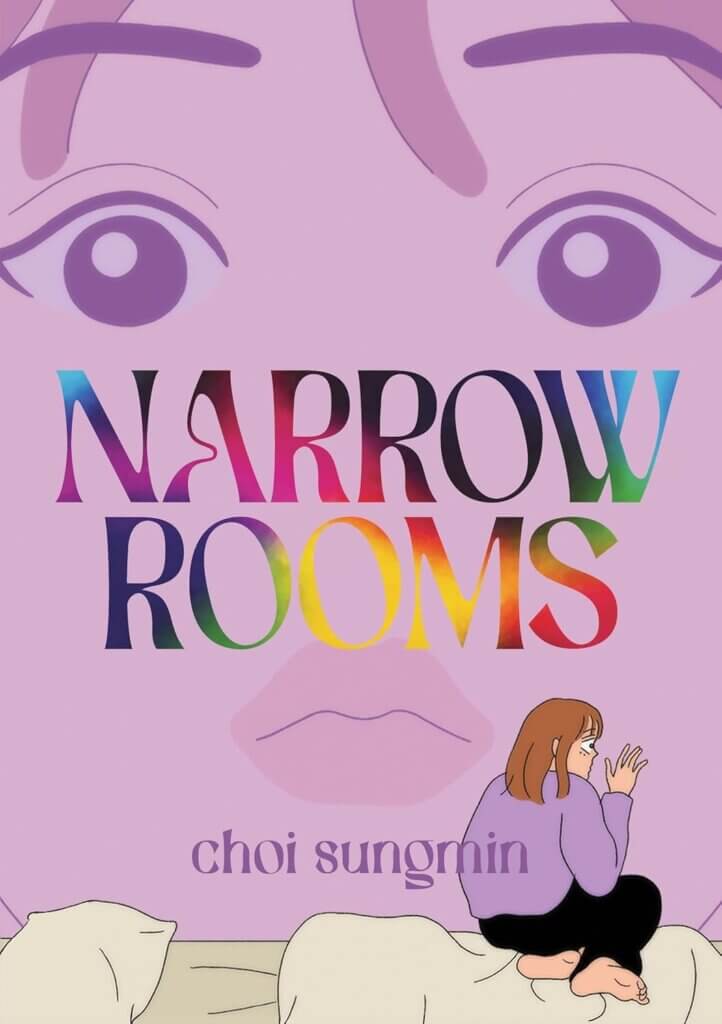
Narrow Rooms is a cynical tale that comes to conclusions some may find disagreeable. Yet their construction bears the mark of an artist who took the time to think through her conclusions and how best to translate them into cartooning. The narrow panels reinforce the themes of claustrophobia and surveillance. Simple character designs evoke manga with their large eyes and yet are too human-like in their features to cross into shojo abstraction. And Daye’s obsession with dirt and cleanliness leads to a fixation on isolated body parts: hands, eyes, feet, noses.
If I have a complaint, it would be that the book is quite long at 500 pages. Drawn & Quarterly’s description states it was originally serialized as a webtoon, which explains its scope. Subtracting parts of the story might have further sharpened its portrayal of Daye’s alienation. Even so, the fact that Choi finds time to delve into the lives of characters outside of Daye’s perspective is important to its thesis. I also thought it was interesting how Choi devoted so many pages to Daye’s life post-Do Hyeon and art school exams.
Verdict
Choi’s Seoul is hyper-capitalist and image-obsessed. Nobody is happy; everyone wants something they can’t have. Still, I think there’s something to be said for how Choi does not shy away from this weakness in the hearts of her characters. If all of us are obsessive or contradictory, there’s no reason to be afraid of being judged by our neighbors. Perhaps one day you or I might open the doors to our apartments; until then, opening your window when it’s warm out is the next best thing.
You can buy Narrow Rooms from Bookshop, Amazon or Barnes & Noble.
If you liked Narrow Rooms, you may also like…
- Danzi by Danzi
- Raging Clouds by Yudori
- Pink by Kyoko Okazaki
Credits
Story and Art: Choi Sungmin
Translation: Janet Hong
Font Design: Jillian Tamaki
Published in English by Drawn & Quarterly
Thank you to Drawn & Quarterly for providing a review copy. Receiving this copy had no effect on the reviewer’s opinions as expressed here.
Article edited by: Anne Estrada
Big thank you to our supporters
From their continous support, we are able to pay our team for their time and hard work on the site.
We have a Thank-You page dedicated to those who help us continue the work that we’ve been doing.
See our thank you page