Synopsis
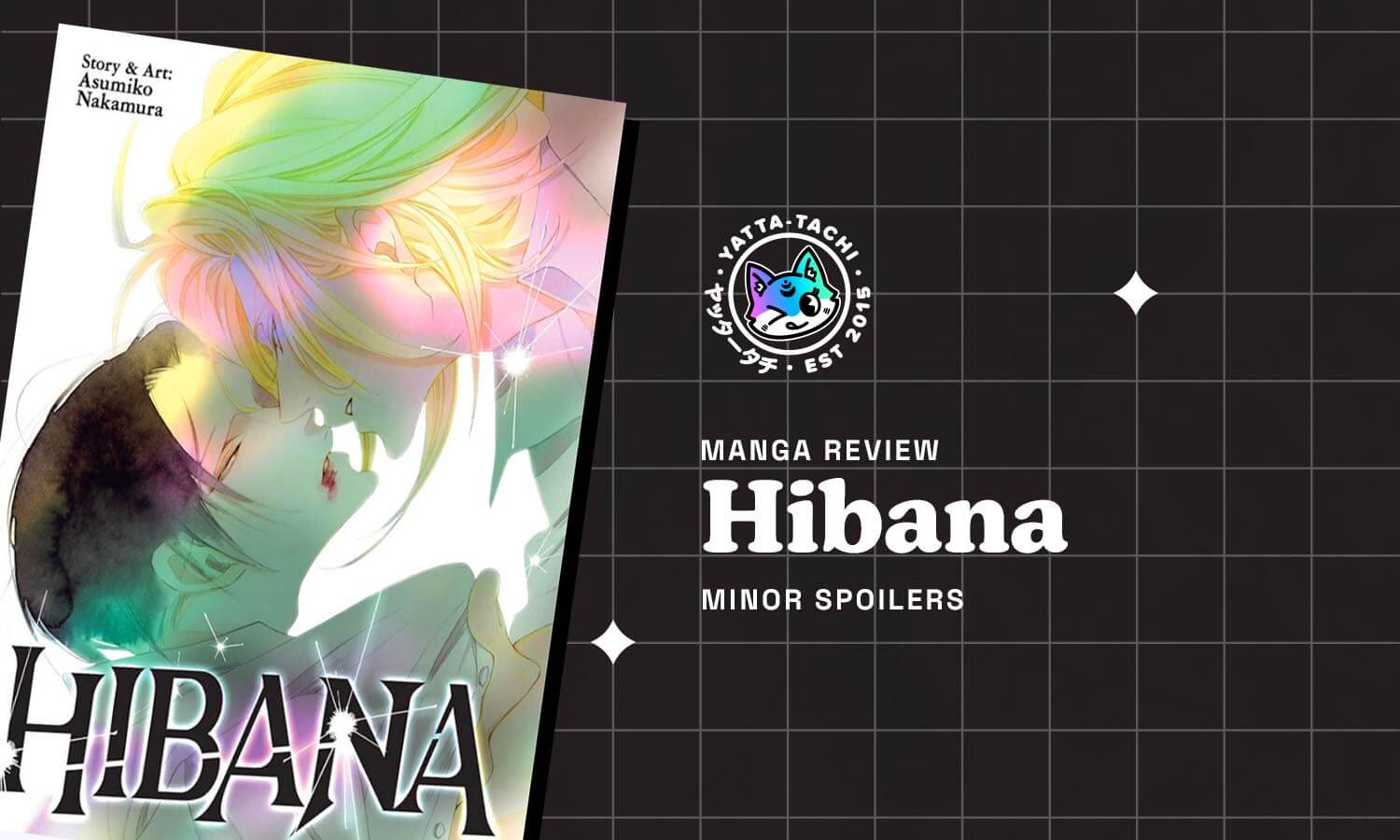
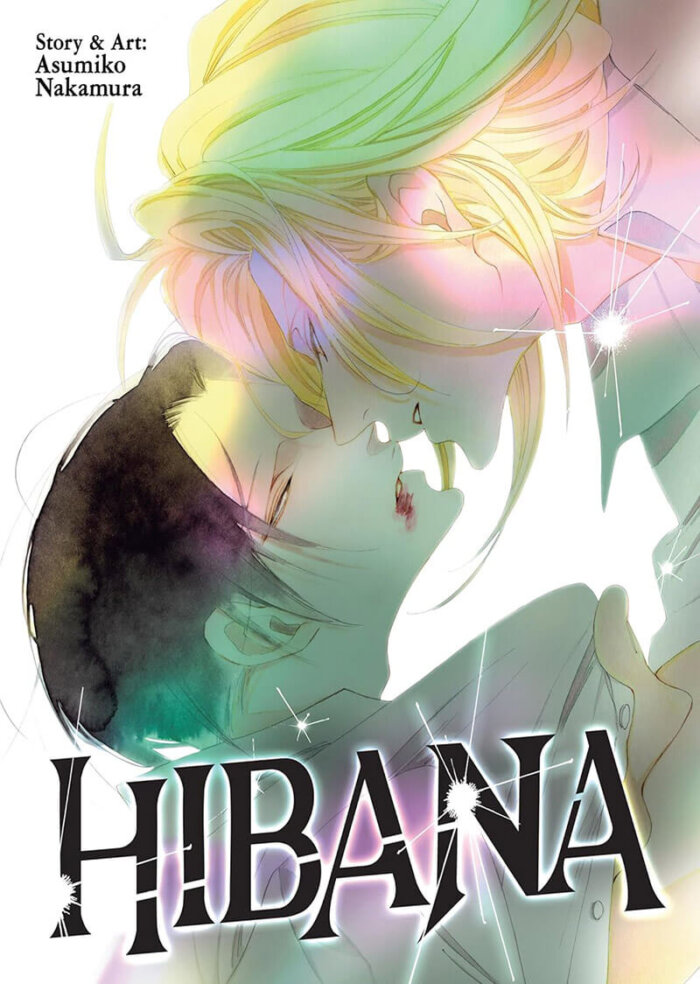
High school student Tomori is dating an unstable boy named Yoji Inukai, who has taken up beating on the new male transfer student, Misato Hiro. She notices that her boyfriend can’t take his eyes off Misato, even as Yoji bullies and torments Misato at school. Years after a major incident at the school leads to Misato transferring away and Yoji dropping out, the three meet again as adults. Hibana by Asumiko Nakamura is a BL manga about the sparks that fly between two boys and one girl and how those sparks follow them into adulthood, even when they try their best to pull themselves away.
The Good
The two boys, Yoji and Misato, are already fighting within the first few pages in Hibana, and from that moment, the tension between them just doesn’t let up. Nakamura brings her signature sparse line work and delicate touch to this romance about a violent boy and the two people that love him. To say they are fighting is probably inaccurate, as Misato doesn’t do anything to fight back. This is addressed in the climax and finale, which serves to bring the story full circle in a satisfactory way.
While this manga doesn’t deeply explore the cycles of violence and abuse, it does offer a story where imperfect people try to change their destinies. Tomori loves Yoji even when he’s violent towards Misato, and she continues to want him sexually even when she’s reunited with him three years after he dropped out of school. That love she has isn’t a hindrance; in fact, she seems to actively want to help Yoji and Misato break the cycle that the two men are in, even as she’s involved with Yoji herself. In the afterword from the manga artist, the intent was originally to make a booklet called “Women BL,” where women in the BL story are neither an obstacle or a spoiler. This was definitely achieved from the way that the manga is told mostly from Tomori’s perspective. Because of this limitation, some readers might be put off by how little romance there is in Hibana.
I was captivated from the beginning to the end of the manga. It’s clear from the start how intriguing Yoji and Misato are to each other. They’re hooked into each other and return time after time to each other even as Yoji appears to hate Misato at school. Even with their rocky start, it takes a long time and active changes on all their parts for them to get together. The experience of reading Hibana was like someone had reached into my chest, grabbed my heart, and started squeezing straight from the start and never let go. I couldn’t stop reading until I found out how this story could possibly come around to Yoji and Misato being together without having a complete implosion from being unable to escape the cycle of violence, but Nakamura found a way.
The imagery of sparks is used throughout, and it works really well next to the stark blacks of the artist’s work. I can’t say enough about the panelling and how much “less is more” applies to Nakamura’s art as it flows from page to page.
Somewhere In Between
If you have any kind of strong reaction to bullying, assault, self-harm, or blood, you might want to pass on this manga. Nakamura has a gift of taking something that is messed up and crafting it into something compelling that you can’t look away from. If you’re a fan of Classmates, then Hibana will show just how much range one creator can have. Hibana is full of sharp edges compared to Classmates’ portrayal of youthful love—hurt with only a little comfort. It’s not a romantic or happy BL, but it definitely makes up for it in the gripping portrayal of Yoji and Misato’s relationship.
There isn’t much exploration of what Yoji and Misato have in common aside from the violent animal attraction they have for one another, but by the end, they reach a point where they do have to try to actively change the dangerous cycle they’ve been in together since high school. With Tomori intervening and all three of them taking steps to change, that is enough evidence for me to know they’ll be okay as a couple now that they’re adults.
The Verdict
I couldn’t put Hibana down. There are several instances where Yoji and Misato were simply staring at each other without a thought as to anyone else as Tomori looks on, also unable to look away, and that was what it felt like to read Hibana. The burn of the flame seems to go away after Yoji and Misato separate after high school, but it just blazes stronger when they meet again. Part of me knows that this type of relationship might not last, but it was a mesmerizing watch from beginning to end. Reading Hibana is like staring at the end of a sparkler and being unable to look away, even as it nears the end. If you want to read a beautifully flawed, erotic, and electric manga that stays with you even after you’ve flipped the volume closed, then Hibana fits the bill.
Hibana is available in print and digitally from Amazon, Barnes & Noble, Walmart, and Indigo.
If you like Hibana, you might also like…
- Happy of the End by Ogeretsu Tanaka
- Run Away With Me, Girl by Battan
Credits
Story and Art: Asumiko Nakamura
Translation: Jocelyne Allen
Adaptation: Lora Gray
Lettering: Jaewon Ha
Original Design: Yoko Akuta
Cover Design: Mariel Dágá
Proofreader: Krista Grandy
Production Designer: Ria Linn Johnson
Senior Editor: Jenn Grunigen
Published in English by Seven Seas Entertainment
Thank you to Seven Seas Entertainment for providing a review copy. Receiving this copy did not affect the reviewer’s opinions as expressed here.
Article edited by: Cynthia Caraturo
Big thank you to our supporters
From their continous support, we are able to pay our team for their time and hard work on the site.
We have a Thank-You page dedicated to those who help us continue the work that we’ve been doing.
See our thank you page