Content Warning: Gore, Misogyny, Amputation, Sexual Assault, Child Abuse, Child Death, Racism, Incest
Synopsis
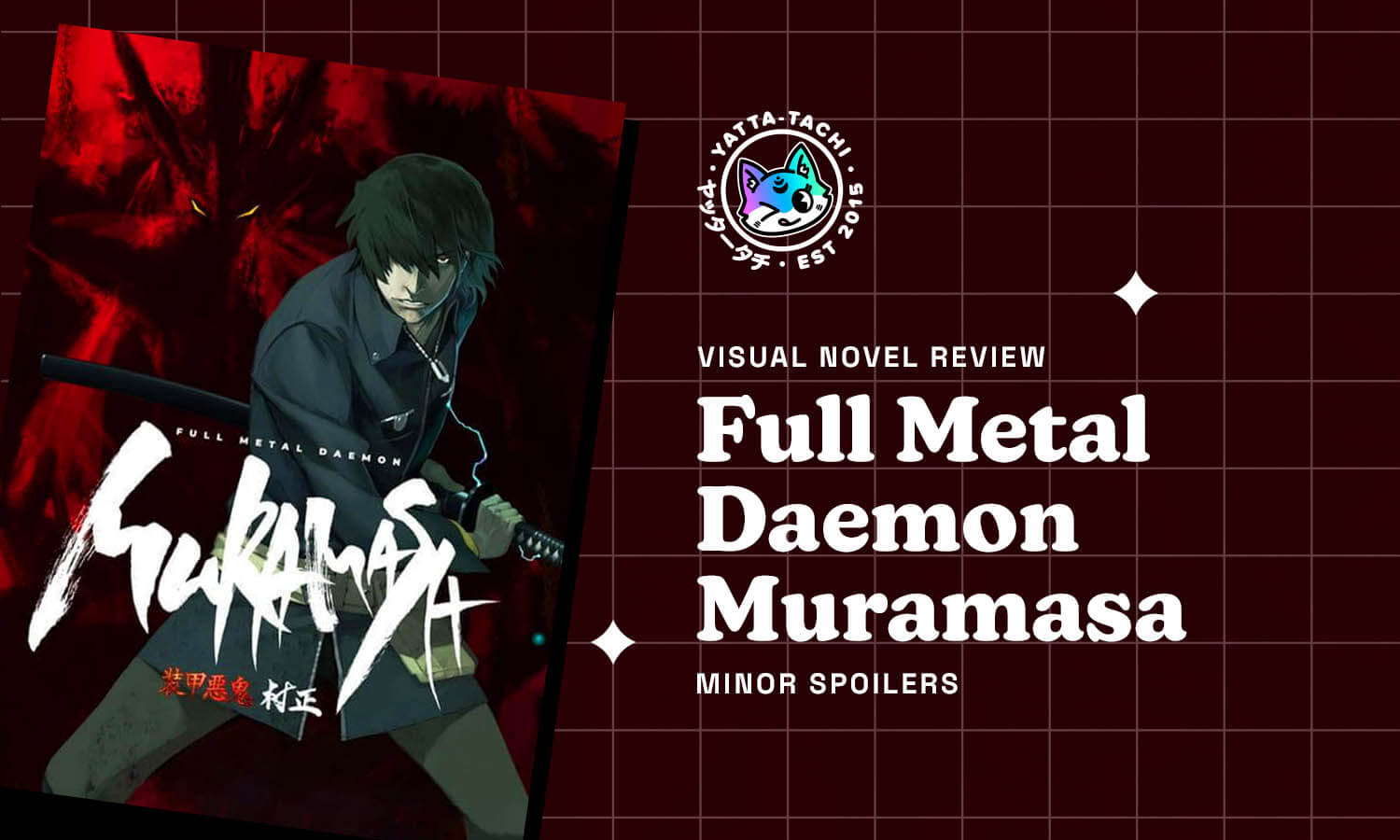
In another place and time, the corrupt Rokuhara Shogunate battles imperialist GHQ for control of the islands of Yamato. Their tools are swords, guns, and (most importantly) tsurugi, living suits of armor wielded by individuals known as musha. As fields burn and peasants die, a mysterious combatant spreads chaos across the countryside. She is the invincible Silver Star, herald of mass slaughter, Ginseigo.
Just one man stands between Ginseigo and the people of Yamato: Minato Kageaki, musha of the infamous tsurugi Muramasa. Kageaki is a humble and conscientious man; a rarity in these terrifying times. Yet Muramasa’s strength carries a terrible cost: for every villain Kageaki slays, he must sacrifice an innocent life.
Where there are demons, I slay them

Full Metal Daemon Muramasa is an alternate history philosophical epic written by Ittetsu Narahara, a kendo fanatic with a reputation for being even crueler than fellow visual novel writer Gen Urobuchi. Muramasa was Narahara’s second and final game at Nitroplus. It was also a celebration of the studio’s 10th anniversary in 2009. Fans who played it in Japanese swore that it was one of the greatest visual novels of all time–a masterpiece that anybody who called themselves a fan of the genre had to play.
Over a decade after its original release, JAST USA published an excellent English translation so that international fans could experience it themselves. As excited as I was to finally play the game, I was also nervous. Visual novel fandom is full of people claiming obscure titles are transcendent works of literature that will change your perspective on life and the universe. Then the games come out and they’re just games. Would Muramasa suffer the same fate?
Where there are saints, I slay them
Full Metal Daemon Muramasa is a story about violence. The characters fight for their values-–justice, revenge, love-–in a world ravaged by war and prejudice. Most do so without complaint, except for the protagonist Minato Kageaki, who is bound by his tsurugi to the Law of Balance. His deep self-loathing makes him more aware of the cost of his actions than other characters in the game—on the surface, at least. Is he really the one moral actor in a dog-eat-dog world? Or is the Law of Balance just another form of madness?
It’s a lot of fun to watch the characters clash over their ideals regardless of human suffering. It reminds me of the Shin Megami Tensei series in its prime. Even so, despite Muramasa’s alternate history gloss, I found it too detached from reality to say anything specific about violence. Conflict in this game derives from insanity more often than it does material reality. The final route, in particular, completely ignores that reality in favor of interpersonal relationships and Getter Robo-style escalation.
Mine is the Way of the Sword
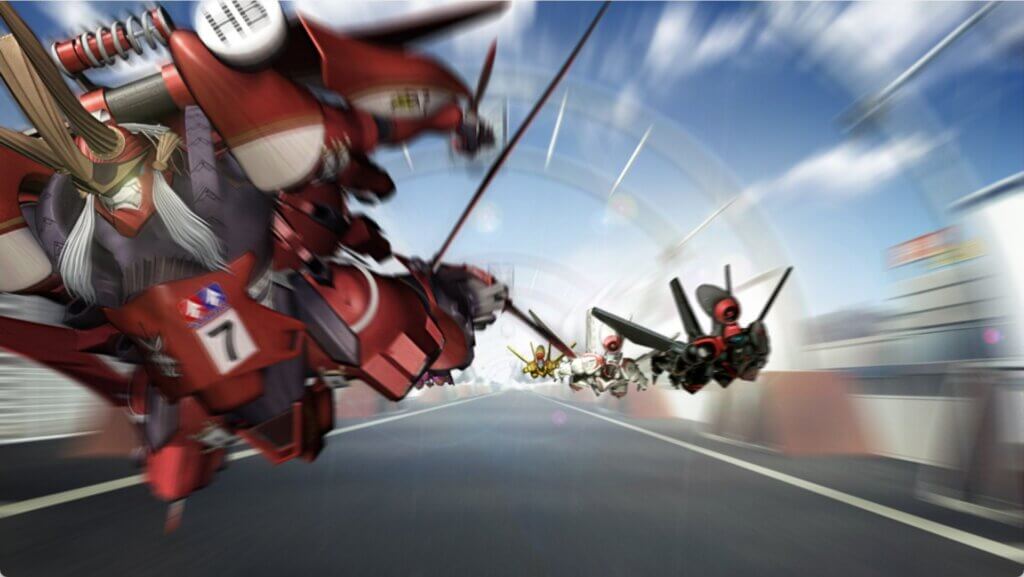
With that in mind, Full Metal Daemon Muramasa is at its best for me as a celebration of the team’s niche interests. It has Kamen Rider monster-of-the-week shenanigans. It has real and super robots. It even has an arc that’s all about Formula 1 racing. If you grew up with Japanese media from the 80s and 90s, I guarantee that at least one scene in this game will make you clap like a seal. If you didn’t, Muramasa’s enthusiasm is contagious enough that it might sweep you off your feet anyway. Or you might find it all a little indulgent.
That mix of passion and indulgence is most evident in the game’s emphasis on swordplay. While other films and games prioritize the aesthetic appeal of combat, Muramasa instead drills into the practicalities: how best to hold a sword, the importance of timing and momentum, knowing when a battle is lost before you swing your blade. Kageaki is a martial arts master and will monologue about these subjects without provocation. As a result, per the game’s liner notes, over a quarter of the game’s script consists of combat scenes.
I link the flows
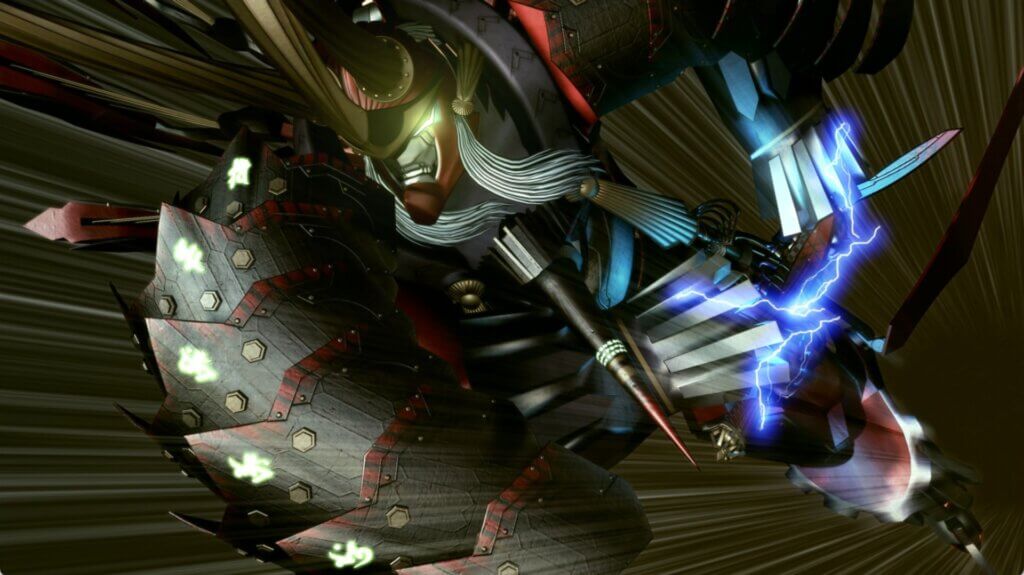
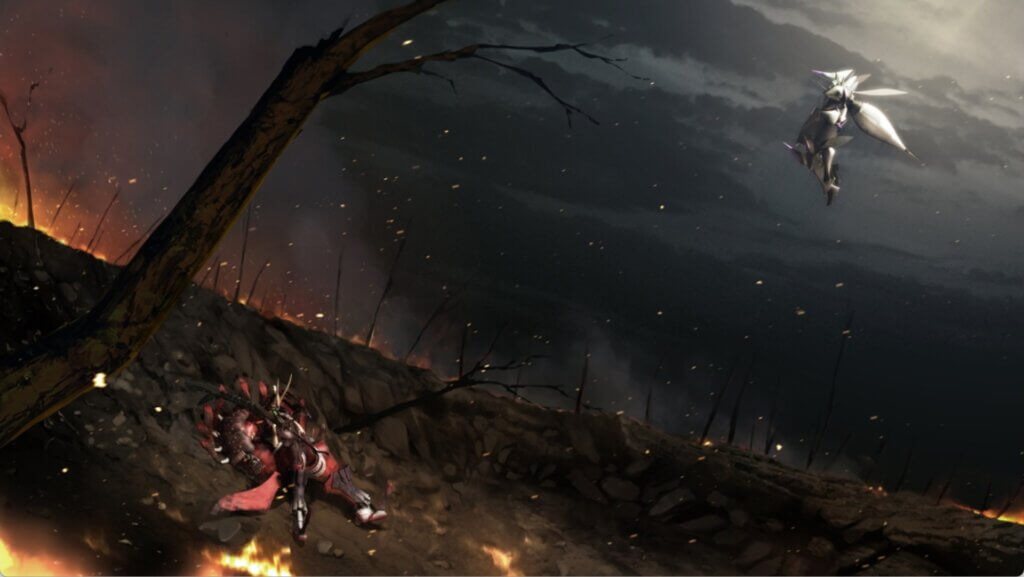
Muramasa’s claim to fame is its tsurugi duels. These are games of chicken where tsurugi and their musha dive from above (or rise from below) to defeat their opponents in one-on-one combat. They are so formalized that I found them repetitive at times. Still, that makes them believable. Giant robot battles are not improvised in this series like they are in other robot anime. They are taught as solved martial arts disciplines, so when a character does pull out an unexpected power, super robot style, it’s always terrifying.
Whenever Kageaki pilots his tsurugi, the game cuts to the view inside the armor, as if you were piloting it yourself. Displays flash on the sides of the screen as enemies fly in and out of frame. It isn’t quite a “playable anime,” as other visual novels like Witch on the Holy Night have attempted. But it does a great job leveraging the strengths of its chosen medium (first-person immersion, audio, Kageaki’s inner monologue, Muramasa’s commentary) to put you in the protagonist’s claustrophobic headspace.
There is no place for heroes here

I was equally impressed by Full Metal Daemon Muramasa’s sheer number of sprites. Nearly every member of this game’s cast of dozens has a full-body sprite, as well as multiple facesets. Some appear only once. The cast of giant robots is similarly extensive, and new ones are introduced up to the very end. Muramasa introduces new and outrageous concepts long past the point when other games would be running on fumes. Then again, some of its funniest jokes deploy previous assets in unexpected ways, like flipping Kageaki’s model upside down to represent him doing pull-ups on the ceiling.
Which is to say, despite the fact that (or perhaps because) it is a luxurious visual novel made by and for fans, Muramasa happily uses your expectations against you. Happy-go-lucky protagonists are introduced only to be unceremoniously slain, showing affection to one of the game’s female leads inevitably makes the other your enemy, and a late-game dream sequence transforms into a parody dating sim and then a storm of cameos from past Nitroplus productions. There are also timed adventure game sequences, choose-your-own-adventure battles, and even a math puzzle.
My final act of revenge
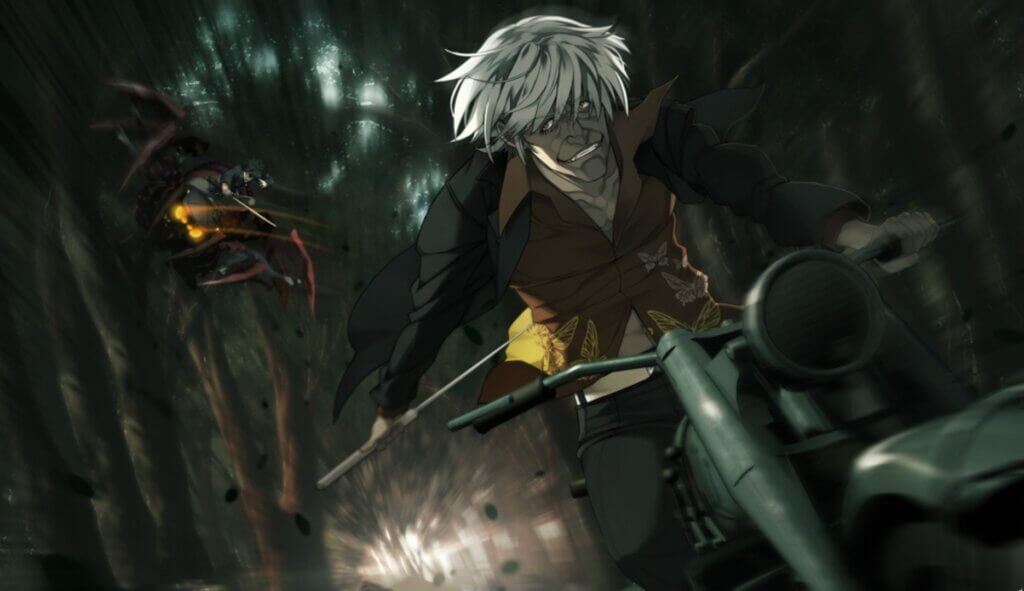
Keep in mind that when I say Muramasa was made by and for fans, I mean, “by and for fans of edgy, pornographic Nitroplus visual novels of the early 2000s.” So, just like Muramasa is “not a story of heroes,” it is also not a story for general audiences. The very first sex scene in the game features a young woman having her limbs cut off and then sexually assaulted by her classmate under somebody else’s orders. While the rest of the game is not necessarily that extreme, nearly every single one of its sex scenes is non-consensual in nature.
To be clear, I think there should be a place in the world for games that explore adult topics. Activist groups forcing payment processors to regulate sites like itch.io leads to more conservative art. We should respect people enough to let them be into what they’re into. That doesn’t mean that Muramasa is secretly woke, though. (Or even dark woke.) Despite its ambitions, the game makes some cowardly choices typical of visual novels for guys, like making the female love interests all virgins so that players don’t have to worry about their own presumed lack of sexual experience. Also, despite Kageaki’s supreme potential to be bullied, don’t expect him to be a switch; he’s a top or bust.
One moment of pure, unsullied truth

Even so, Minato Kageaki is what kept me going through Muramasa, despite its excess. When you first meet him, he’s a humble Kamen Rider type who would gladly humiliate himself to protect children. That makes him immediately likable—until he commits his first heinous crime. Once I saw his stoic face crumple, revealing fear and revulsion for his own actions, I was hooked.
While Full Metal Daemon Muramasa advertises itself as a story about violence, I think it’s really at its best as a story about repression. Kageaki’s original sin isn’t really murder. Understanding what he really did, whether or not he’s responsible, and what restitution might mean, requires reading carefully between the lines. That’s why it matters that Kageaki is the protagonist of a porn game. He inhabits a world designed to fulfill desires that he refuses to admit he has, and that refusal hurts a lot of people.
Verdict
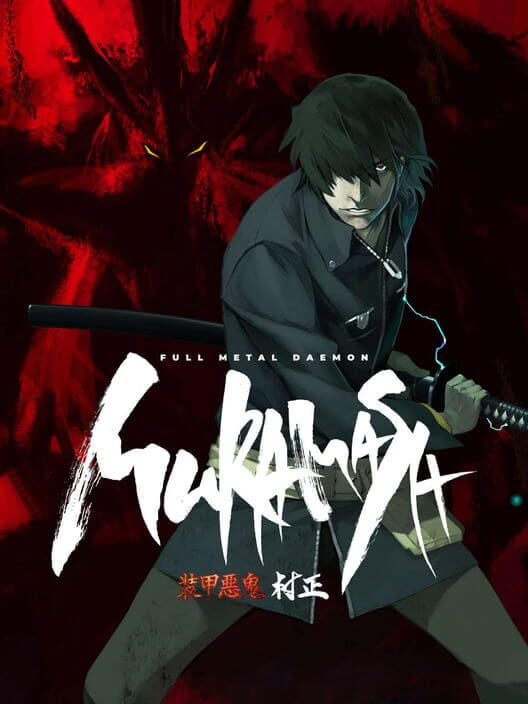
For better or worse, they don’t make games like Full Metal Daemon Muramasa anymore. There are games that are as dirty, games that are as complex, but nothing made at the same scale or with the same resources. Your average itch.io visual novel is at best a fiftieth of the length. Coquette Dragoon might get there one day, but it’s still in development for now.
I can’t help but see Muramasa itself as a tsurugi: old, ornate, wonderfully detailed. A relic of a more decadent world. That same quality also limits its audience. This is not a game that most people will enjoy. It’s too long, too unwieldy, too gross. What does it mean then that despite everything, I still have a soft spot for it? All I can say is, “I have faith in my evil.”
You can purchase Full Metal Daemon Muramasa via JAST Store.
Credits
Scenario: Narahara Ittetsu
Artist: NamanikuATK
Director: Doi Yoshinao
Composer: ZIZZ
Developer: Nitroplus
Thank you to JAST for providing the game key & sponsoring this review. Receiving this key & compensation had no effect on the reviewer’s opinions as expressed here.
Article edited by: Anne Estrada
Big thank you to our supporters
From their continous support, we are able to pay our team for their time and hard work on the site.
We have a Thank-You page dedicated to those who help us continue the work that we’ve been doing.
See our thank you page