Synopsis
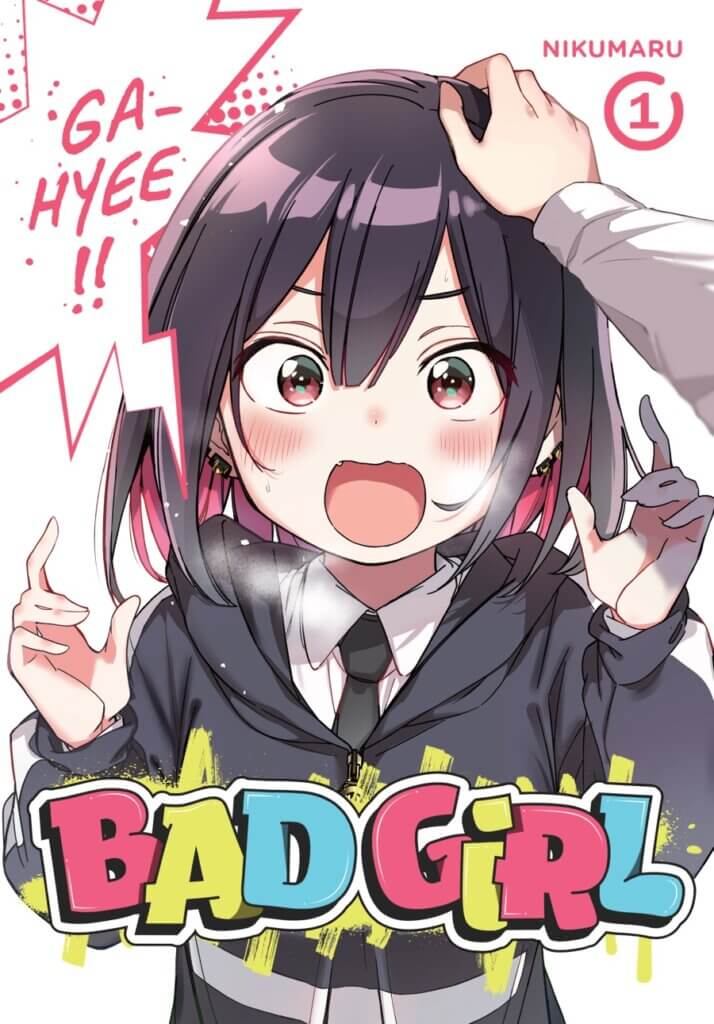
Yuu is a straight-laced high school student with a heart-fluttering, brain-melting crush on Atori, the head of the disciplinary committee. How can Yuu possibly get her senpai to notice her? Why, by becoming a delinquent, of course! There’s just one problem: Yuu is very bad at being, well, bad.
Junk Food Yuri
Bad Girl is very silly. I say this as a neutral statement, to signal its genre placement and its intent. To call this manga “silly” is not to disparage it or paint it as lesser than its contemporaries. I firmly believe we should have yuri from all genres and storytelling tones. Contemporary yuri alongside fantasy, sci-fi, and horror yuri. Yuri set in high school alongside yuri that explores adult relationships. Love stories so sweet that they give you a sugar rush alongside toxic, melodramatic romances that make you reach for the popcorn. Yuri with introspective character arcs and a strong sense of progression, and yuri that… er, don’t have that.
Yuri that is frothy and tropey and stupid—and peppered with eyebrow-raising, potentially problematic jokes—has its place in the ecosystem, and if you’re looking for that you might have a good time with Bad Girl. It strikes me as a snack food kind of manga, its four-panel format supplying bite-sized comedy canapes that don’t give you much to digest. The storytelling even seems like it expects you to not internalize any of it, with text boxes reminding the reader that the set-up for a certain joke or character trait first appeared on a certain page. Its chaotic flurry of (sometimes questionable) punchlines means you’re barely able to refocus before being hit by the next gag.
Which is, again, not a bad thing in and of itself. It’s just the way this genre and style works. But the manga’s comedy formula relies on it spinning its wheels in an endless ditch of over-the-top antics, which will leave you dissatisfied if you’re looking for a series that develops its characters or progresses its central romance in an interesting way. I tend to look for that, which meant I unfortunately had a Bad Time with Bad Girl.
Bad Girl, in Bad Taste
The premise—a categorically good student trying her best to play an archetypal delinquent—is fun, and I could see it unfolding into a cute exploration of cringey teen self-exploration and the importance of being yourself. Perhaps that will surface as a theme later in the story. Right now, though, Bad Girl is first and foremost a story of teen girls awkwardly and often accidentally engaging in kink. Yuu’s “I want senpai to notice me!” motivation dissolves to reveal the true longing underneath: she wants senpai to dominate and punish her. This attraction isn’t one-sided, either, as Yuu becomes the object of Atori’s experimentations with a form of pet-play. Not that she would use this phrasing, of course; it’s just that Yuu reminds Atori of a puppy, and she’d love to see her in a dog collar.
Bad Girl joins a large cohort of horny comedy set in high school and starring underage characters, and it swan-dives happily into many of this genre’s uncomfortable cliches. Mild yet cloying fan service peppers the panels, never overt but instead relying on short skirts, shiny thighs, and various “it’s not what it looks like!” entanglements of bodies or accidental innuendoes in the dialogue. The fine line between exploring teen sexuality and sexualizing teenagers, and how media “should” or “should not” walk it, is a bigger discourse than we have room for here. I will say, though, that it’s difficult to have a nuanced exploration—or even just a fun and flirty one—of kink and sexuality when your main characters are flabbergasted adolescents, and your premise relies on their unconventional desire as the punchline.
This is what I mean about the series spinning its wheels. The whole story would cease to be if Yuu and Atori could speak plainly and confess their sexual and/or romantic feelings for each other. Instead, their narrative is stuck in a formula, their miscommunications tangled up in bawdy humor. The characters can never be frank with one another about their desires, leaving the series suspended in tittering coy innuendo and endless imagery of girls frothing at the mouth and bleeding from the nose. There’s a sense of insincerity to the whole thing. Bad Girl is, like I said, fundamentally silly, which is not a bad thing on its own. But that means it doesn’t extend any respect or earnestness to its characters’ stories of sexual awakening. This becomes tiresome when the curtain falls back and reveals that’s what the whole manga is about.
Verdict
Bad Girl is a wacky high school comedy about a girl who just wants to be stepped on. While the premise has some fun elements, the manga combines horny humor, a teenage cast, and generally frenetic pacing in a way that left me faintly dizzy and with a bad taste in my mouth. I believe in a varied and diverse yuri ecosystem, but I also believe that you can do much better if you’re looking for a zany comedy about girls who like girls.
Purchase Bad Girl Volume 1 on Barnes & Noble, Amazon, and Bookshop
Credits
Story and Art: Nikumaru
Translation: Andrew Hodgson
Lettering: Abigail Blackman
Published in English by Yen Press
Thank you to Yen Press for providing an advanced review copy of this manga. Receiving an advanced copy had no impact on the reviewer’s opinions.
Article edited by: Adam Wescott
Big thank you to our supporters
From their continous support, we are able to pay our team for their time and hard work on the site.
We have a Thank-You page dedicated to those who help us continue the work that we’ve been doing.
See our thank you page