
Synopsis
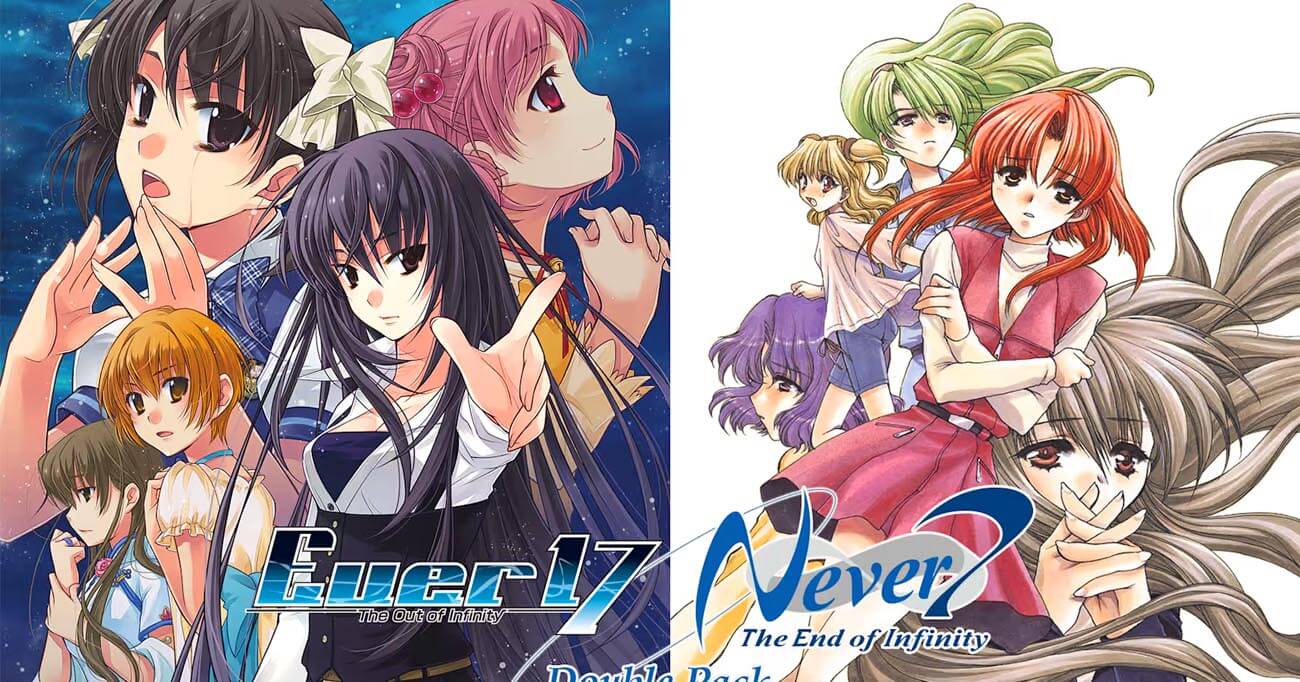
Years before Kotaro Uchikoshi helmed cult favorite works like Zero Escape, AI: The Somnium Files, and (with Kazutaka Kodaka) The Hundred Line -Last Defense Academy-, he created the main scenario and wrote key parts of Never 7 and Ever17. These early works (released in 2000 and 2002 respectively, although the release of Ever17 here is the 2011 rewrite) were the first two titles in the Infinity series.
The Good
If you’re a fan of Uchikoshi’s other works, it’s interesting to see early versions of some of the ideas and themes he’d build on later. Characters info-dumping about niche scientific concepts, pods, Schrodinger’s Cat—they’re all here, and more. Even if you’re unfamiliar with his work, there’s something charmingly retro about these visual novels—well, because they are “retro” but still. This is all to say nothing of their art style, which is that Y2K, quintessential “anime” look reminiscent of those How To Draw Manga books that you could reliably find at book fairs.
Never 7 was made first, and it shows. It follows a group of college students who are supposed to be enjoying a retreat together. But their good times keep being interrupted by odd, seemingly random bouts of the protagonist Makoto foreseeing fragments of the future. There’s an innate roughness to the writing, although that might be due to the translation (more on that later). Even so, the narrative still finds ways to keep you just invested enough to want to keep going through its relatively short routes, and to discover answers to its many mysteries.
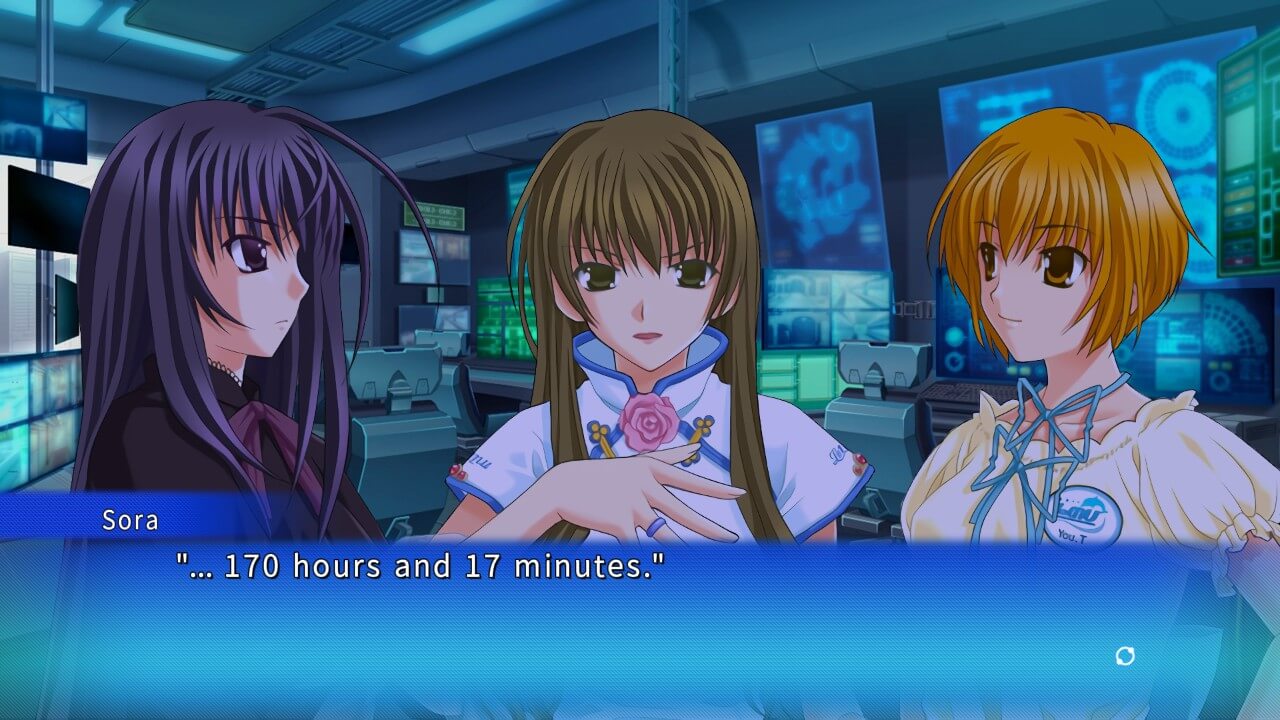
Ever17 is much more fleshed out. Not unlike 999, it follows a group trapped in an undersea aquarium-slash-park-thing due to a mysterious accident. They only have 170 hours and 17 minutes to figure out how to escape before intense water pressure destroys the facility. As the game progresses, you learn more about the strangers you’re trapped with, and eventually, what’s going on more broadly. It’s thrilling, atmospheric, mysterious, has a great cast of characters—it checks all the boxes, and is easy to recommend to visual novel fans, whether they’ve played 999 or not.
The Bad
Never 7 is tremendously repetitive. On one hand, that makes sense—it’s a game about a college student stuck in a time loop, so by definition, the player should expect repetition. On the other, it’s like, a lot of repetition. The game’s comparatively shorter length, therefore, ends up being just as much of a curse as a blessing. Even with the ability to skip text you’ve already seen, if only a pinch of the wording is different, then you technically haven’t seen it—so you can’t skip it after all. That kind of thing happens a lot.
As for Ever17, a lot of ink and pixels have been spilled describing how the presentation of these releases don’t meet the mark—especially for returning fans of the series who are familiar with what these games were like in their original forms. Specifically, I’m referring to issues with upscaling, and the version of Ever17 in this release not being the original (it’s the 2011 rewrite, which is credited to the otherwise unknown Yamada Shinichirou; not the original writer, suffice to say). Bigger fans of the Infinity series than I—such as the reviewers on Kiri Kiri Basara—can (and have) discuss this in great detail. Still, learning about these shortcomings—especially the fact that this isn’t the original release of Ever17—is disappointing and disheartening to say the least. Doubly so if your reason for wanting to play Ever17 lies in better understanding the evolution of Uchikoshi’s writing.
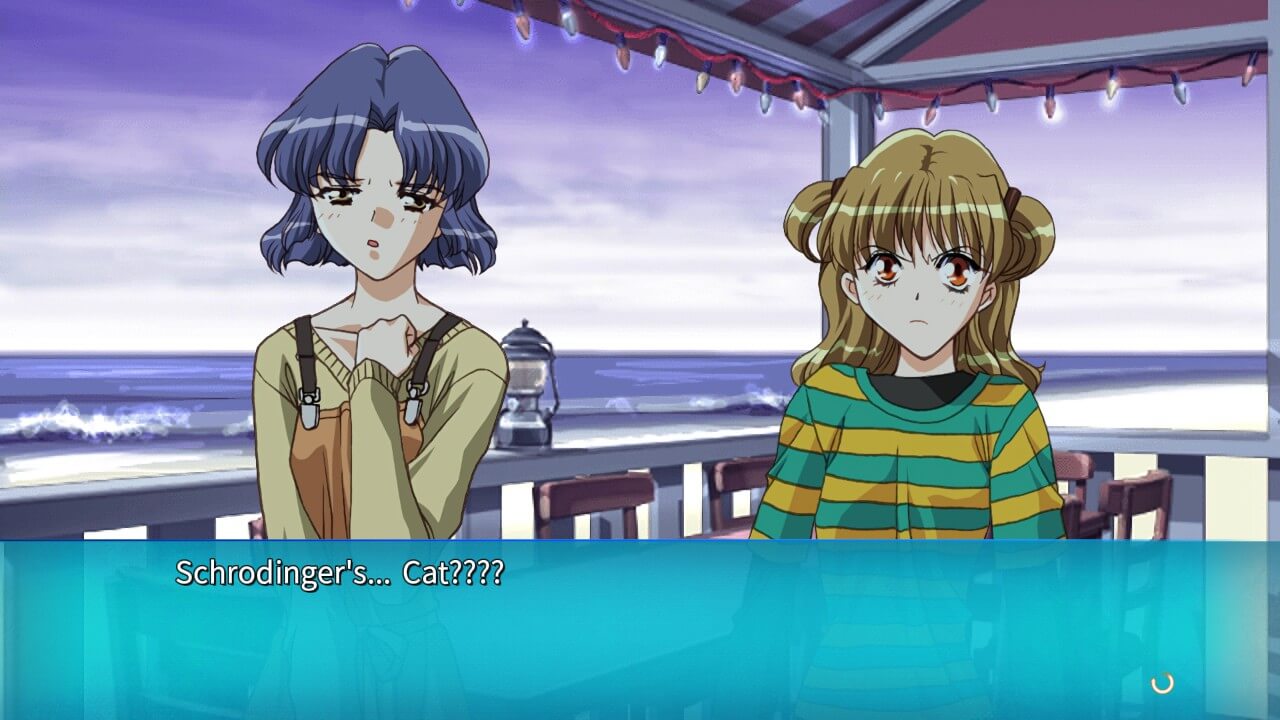
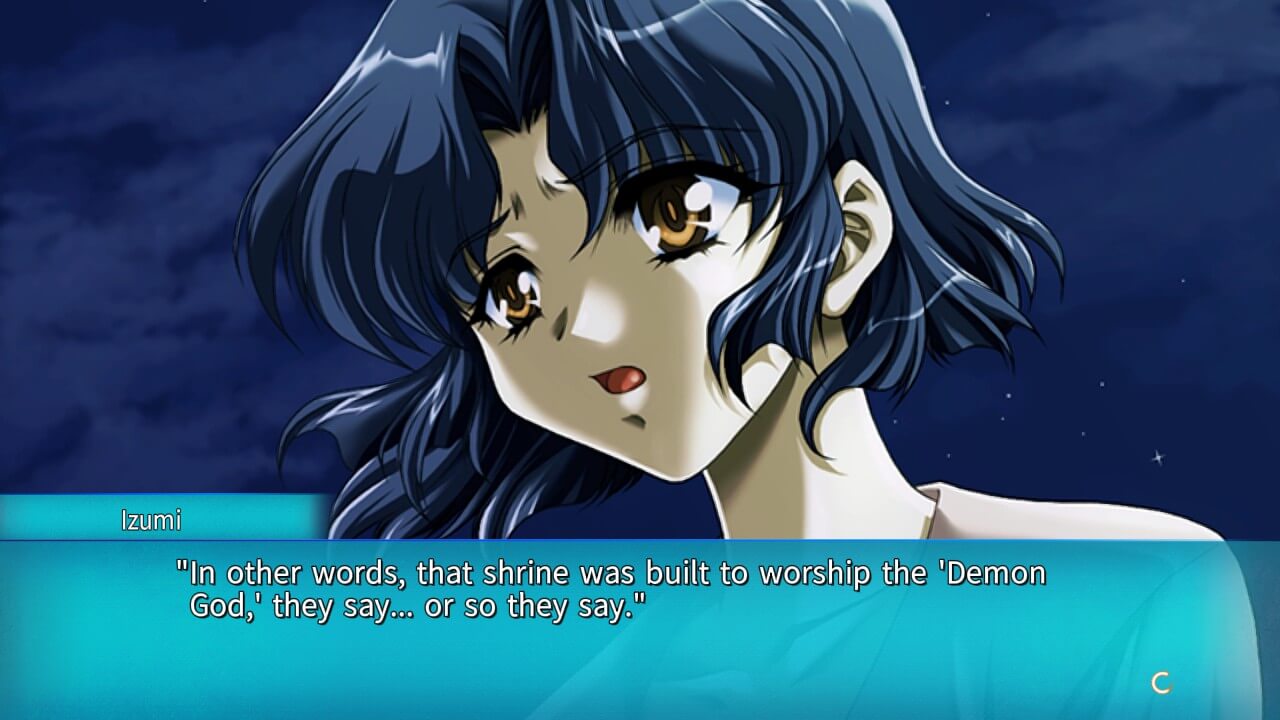
Consistent across the two games, however, is a stiff translation that sucks the life out of these stories. The translation quality (or lack thereof, rather) is the single most consistent criticism of these releases across all the reviews for them that are available, and it’s not hard to see why. Its best moments are painfully rigid. Its worst are clunky and feel devoid of much-needed editorial help. See the example below from Never 7:
Verdict
As these two games are ancestors to his later works, established Uchikoshi fans are sure to find more to enjoy here than the uninitiated. Newer fans, meanwhile—as well as those established fans after the luster of seeing the germs of themes and ideas Uchikoshi would later rework and reuse wears off—are left with a release that could be described as, “…Eh, more good than bad, I guess?” Ever17 is the obvious better of the two works, but it’s hard to shake the lingering disappointment that we can’t also enjoy the 2002 version—the one Uchikoshi actually worked on. Never 7 isn’t unplayably terrible, but is a lot more repetitive and doesn’t have as much meat to it. Their translations, meanwhile, stifle both of them considerably. Still, if you enjoy stories about time loops, these (and Ever17 in particular) will no doubt scratch that specific itch anyways.
Check out the publisher’s game page and purchase the games on the Nintendo store.
Article edited by: Adam Wescott
The Good
- Ever17, in particular, is an exciting title that shouldn’t be overlooked by visual novel fans.
The Bad
- While not awful, Never 7 pales in comparison to Ever17. The translation in both games is often stiff and lifeless. The original version of Ever17 isn’t present.
Big thank you to our supporters
From their continous support, we are able to pay our team for their time and hard work on the site.
We have a Thank-You page dedicated to those who help us continue the work that we’ve been doing.
See our thank you page