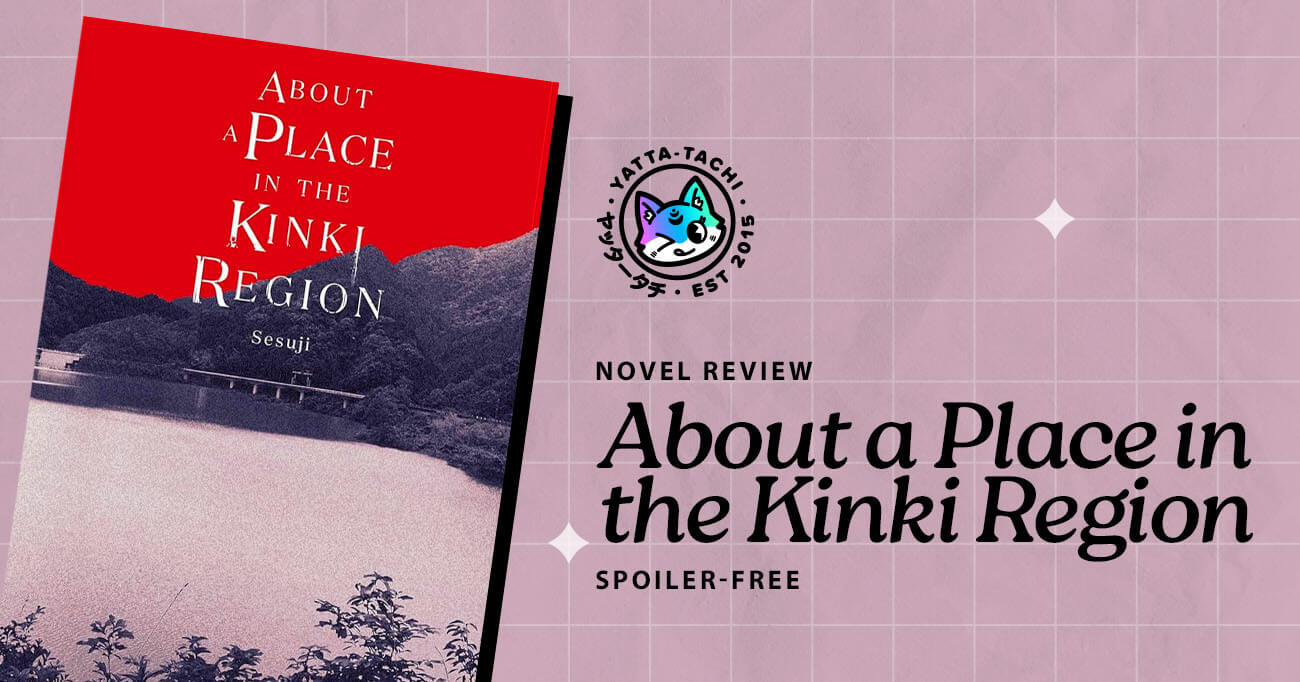
Synopsis
A tall white figure in the woods. A woman wearing a red coat who jumps in the air. Children’s games. A ruined house. An apartment building famous for suicides. Multiple missing person cases.
These are just a few examples of urban legends taking place around the Kinki region (or Kansai region, including Kyoto, Osaka and Nara). Many of them occur at a hotspot where several prefectures meet. Ozawa, a publishing employee, discovers this hotspot while organizing a “greatest hits” print supplement to a once-prominent occult magazine. He decides to get to the bottom of this mystery. Then he disappears. Now it’s up to his friend Sesuji, who wrote this book, to finish the job in his place.
Creepypasta
About a Place in the Kinki Region is best described to the unfamiliar as “creepypasta.” Like Ted the Caver or Candle Cove, it purports to be a real-life document written by ordinary people. The appearance of the supernatural is thus even more bizarre when contrasted with such banality. After all, while you might expect a monster to appear in a Stephen King novel, you wouldn’t necessarily expect it from a blog post or a forum for fans of children’s television. Would you?
What separates Sesuji’s book from these earlier works is just how extensive it is. This is a collage of multiple primary sources: short stories, anonymous forum threads, interviews, and letters. Many function as effective short horror pieces in their own right. But About a Place in the Kinki Region works best as a whole. As a reader, you learn to draw connections between each piece, spot recurring phenomena, and decide when and how the book is lying to you.
This is not a horror novel in the traditional sense. Most characters and places are referred to by initials, rather than by proper names. Even named characters like Ozawa and Sesuji aren’t particularly complex. The real “main character” is the mythology connecting these incidents, which shifts constantly throughout the book. The author, to their credit, leaves it open to interpretation. While the book ends with a “final solution” to the mystery, it acknowledges that parts of the solution are flawed. These contradictions are left to percolate in your brain.
Found Footage
About a Place in the Kinki Region is part of a growing “found footage” horror movement in Japan. Works like Fake Documentary “Q” and Saiko! The Large Family! hide terrifying secrets within unassuming material. The YouTuber Uketsu builds mysteries around pictures and floor plans. Then there’s Koji Shiraishi, whose Senritsu Kaiki File Kowasugi! series is perhaps horror’s greatest cinematic universe. It’s no surprise that Shiraishi directed the film adaptation of Sesuji’s book.
Today’s Japanese found footage horror has its roots in earlier material. The 2003 video game Siren grounds its horror lore in an extensive collection of documents, from magazine articles and photographs to internet posts. It also tells its story across multiple perspectives on a fractured timeline, requiring that the player work hard to uncover the truth of the story.
More recent is Fuyumi Ono’s 2012 novel Zan’e. Ono is best known among anime fans for Shiki, a story heavily inspired by Steven King’s Salem’s Lot that was adapted into an anime in 2010. Zan’e by comparison trades King-style novelistic horror for mythological excavation. “There are no great climaxes, no battles with evil,” writes Uketsu translator Jim Rion. “[The characters] encounter something odd, wonder where it came from, and find out…what Zan’e presents is a cosmology that truly is terrifying.”
Verdict
Excavation is also the heart of About a Place in the Kinki Region. Rather than traditional scare scenes, the real horror of the book is in recognition; figuring out, for instance, just how the mysterious woman in a red coat might be connected to the tall white figure in the woods. Or how the same apartment building reappears across decades as the site of mass tragedy. Often the characters narrating the stories you are reading are not aware of this context themselves. If Sesuji is a little too eager as an author to draw these connections for the reader, well, there’s a reason for that, too.
The ending of the book is effective, but also fairly typical for this kind of story. What will stick with me longer than its denouement is the experience of piecing About a Place in the Kinki Region together myself. Understanding the novel means following in Sesuji and Ozawa’s footsteps, until you, too, become one with their shared obsession. The story that haunted them is in you too now. And that is scarier than any monster or ghost.
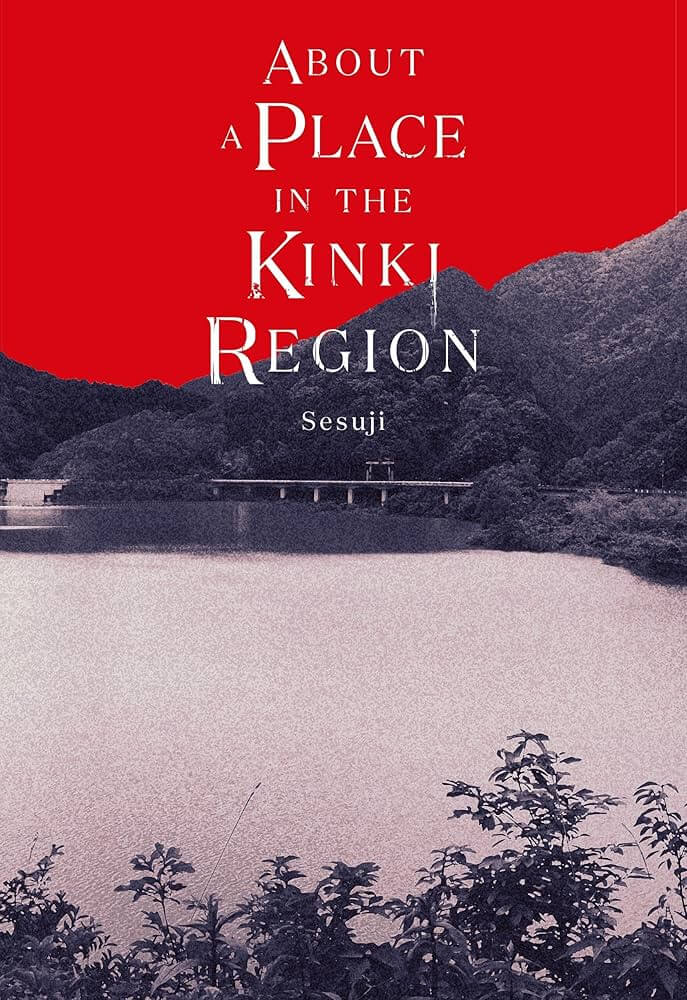
You can purchase About a Place in the Kinki Region via Bookshop, Amazon or Barnes & Noble.
If you liked About a Place in the Kinki Region, you might also like…
- Strange Pictures, by Ugetsu
- GEMINI HOME ENTERTAINMENT
- Higurashi When They Cry
Credits:
Writer: Sesuji
Translation: Michael Blaskowsky
Cover Photo: CURBON
Editor: Emma McClain
Design: Andy Swist
Publisher: Yen On
Thank you to Yen On for providing an advance review copy of this novel. Receiving an advance copy had no impact on the reviewer’s opinions.
Article edited by: Anne Estrada
Big thank you to our supporters
From their continous support, we are able to pay our team for their time and hard work on the site.
We have a Thank-You page dedicated to those who help us continue the work that we’ve been doing.
See our thank you page